





- BRNN
- BRI News
- BRNN News
- Database
Official Documents Polices and Regulations
Inter-government Documents International Cooperation BRI Countries
Business Guide Economic Data BRI Data
Trade
Investment Projects Latest projects
Cases - Content Pool
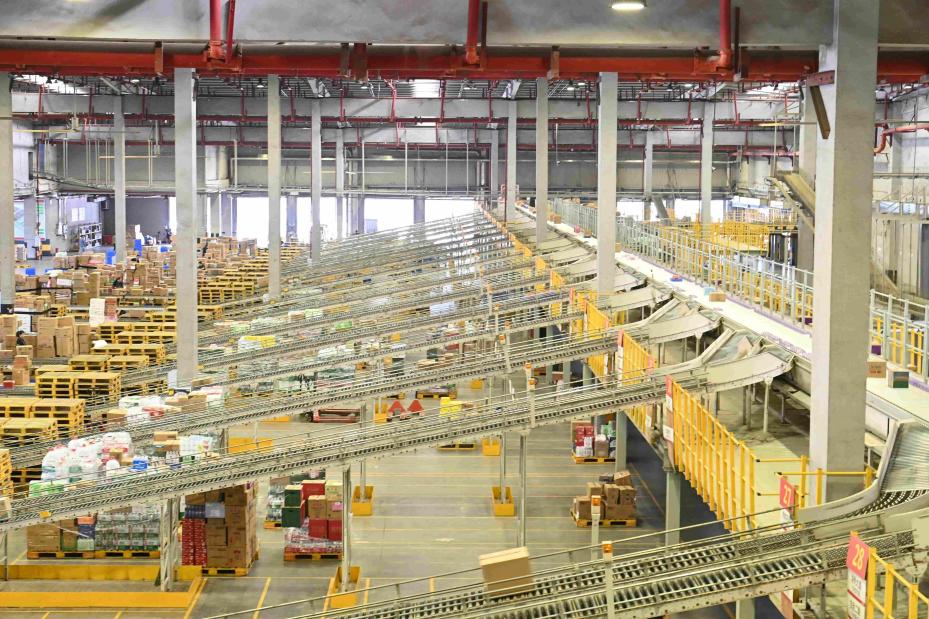
An automated sorting system works in a delivery center of Everglory Logistics in southwest China's Chongqing municipality. (Photo/Sun Kaifang)
"Digital" and "intelligent" are two buzzwords in China's recommendations for formulating the 15th Five-Year Plan, which calls for digital and intelligent development in the manufacturing sector, digital and intelligent transformation of the service sector, and upgrading and retrofitting traditional infrastructure with digital and intelligent technologies.
The evolution from "digital" to "digital and intelligent" reflects a deeper strategic shift. Digitalization involves the application of digital technologies to modernize and upgrade industrial and supply chains across the real economy. In contrast, intelligent digitalization builds upon this foundation by integrating technologies such as artificial intelligence (AI), enabling autonomous learning, optimized decision-making, and predictive analytics. This integration aims to enhance production efficiency, resource allocation, management, and innovation.
For example, a large supermarket chain under digitalization would collect real-time data on procurement, warehousing, and sales for analysis. Under intelligent digitalization, an AI system could dynamically adjust pricing and devise sales strategies based on factors like inventory levels and product shelf life.
This transition represents a strategic response to accelerating technological advancement. AI is emerging as a transformative technology on par with the steam engine, electricity, and the internet. Its rapid development is propelling the global economy into an era of intelligent transformation.
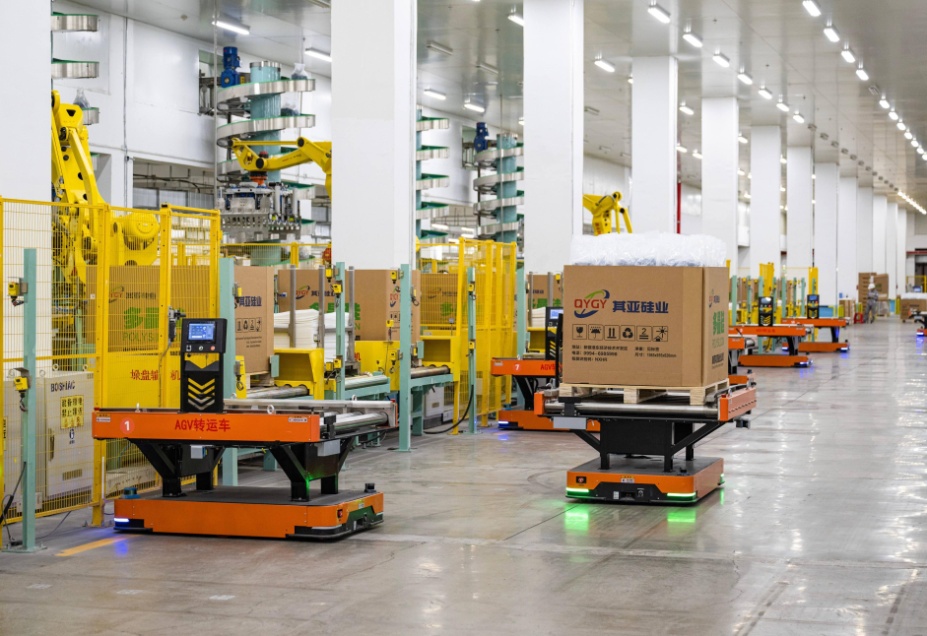
Automated guided vehicles carry polysilicon products in a workshop of Xinjiang Qiya Silicon Industry Co., Ltd. in northwest China's Xinjiang Uygur autonomous region. (Photo/He Long)
For instance, in synthetic biology factories, AI enables continuous, high-efficiency optimization of microbial fermentation, increasing efficiency tenfold. In high-speed train research and development, simulation models powered by AI have reduced aerodynamic calculation times from an entire day to mere seconds.
By emphasizing "intelligent digitalization," the recommendations for formulating the 15th Five-Year Plan demonstrate China's commitment to seizing the opportunities presented by AI and advancing its systematic application.
China is well-positioned to advance from "digitalization" to "intelligent digitalization."
In recent years, China's AI industry has grown rapidly and now ranks in the global top tier. China's AI sector has seen robust growth, with the number of enterprises exceeding 5,300 as of September, accounting for 15 percent of the global total. The industry's scale exceeded 900 billion yuan ($127.11 billion) in 2024, a year-on-year increase of 24 percent.
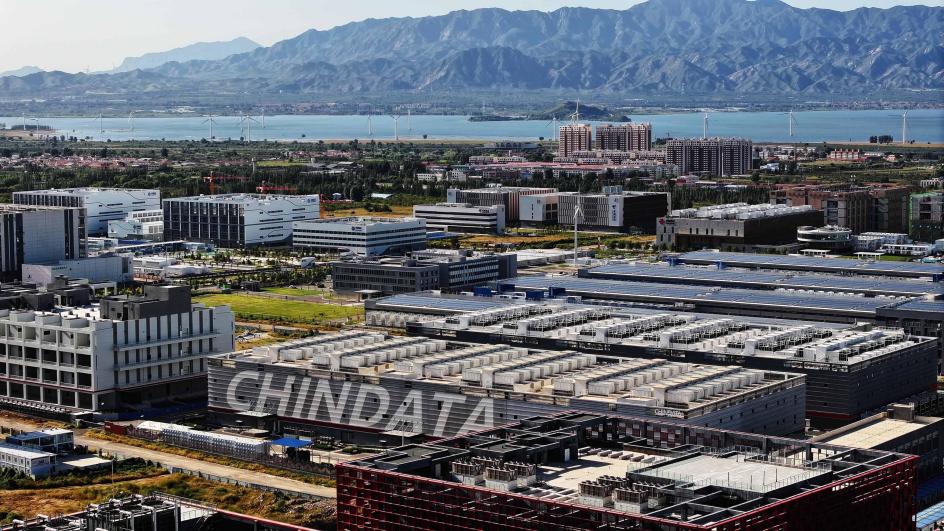
Photo shows a big data industrial park in Zhangjiakou, north China's Hebei province. (Photo/Chen Xiaodong)
Computing power infrastructure continues to expand. As of the end of June 2025, China had 10.85 million standard racks in operation nationwide, with its intelligent computing power reaching 788 EFLOPS, ranking among the top in the world.
Algorithm innovation is also flourishing. China had released 1,509 large AI models as of the end of June 2025, the highest number globally, accounting for a substantial share of the 3,755 models launched worldwide to date and supporting the global open-source ecosystem through models like DeepSeek and Qwen.
The transition from "digitalization" to "intelligent digitalization" hinges on the integration of AI across sectors to drive high-quality development. Effective AI advancement requires practical application. To this end, China is implementing the "AI Plus" initiative, which focuses on strengthening technological capabilities to foster the "intelligent industrialization" of AI while accelerating the intelligent transformation of traditional industries. These efforts aim to expand application scenarios, support the high-quality development of the AI industry, and enable AI to contribute more substantially and effectively to economic and social development.
Looking ahead, leveraging AI's "multiplier effect" will provide a robust material and technological foundation for advancing Chinese modernization.

Tel:86-10-65363107, 86-10-65368220, 86-10-65363106
 Scan the QR Code
 Follow Us