





- BRNN
- BRI News
- BRNN News
- Database
Official Documents Polices and Regulations
Inter-government Documents International Cooperation BRI Countries
Business Guide Economic Data BRI Data
Trade
Investment Projects Latest projects
Cases - Content Pool
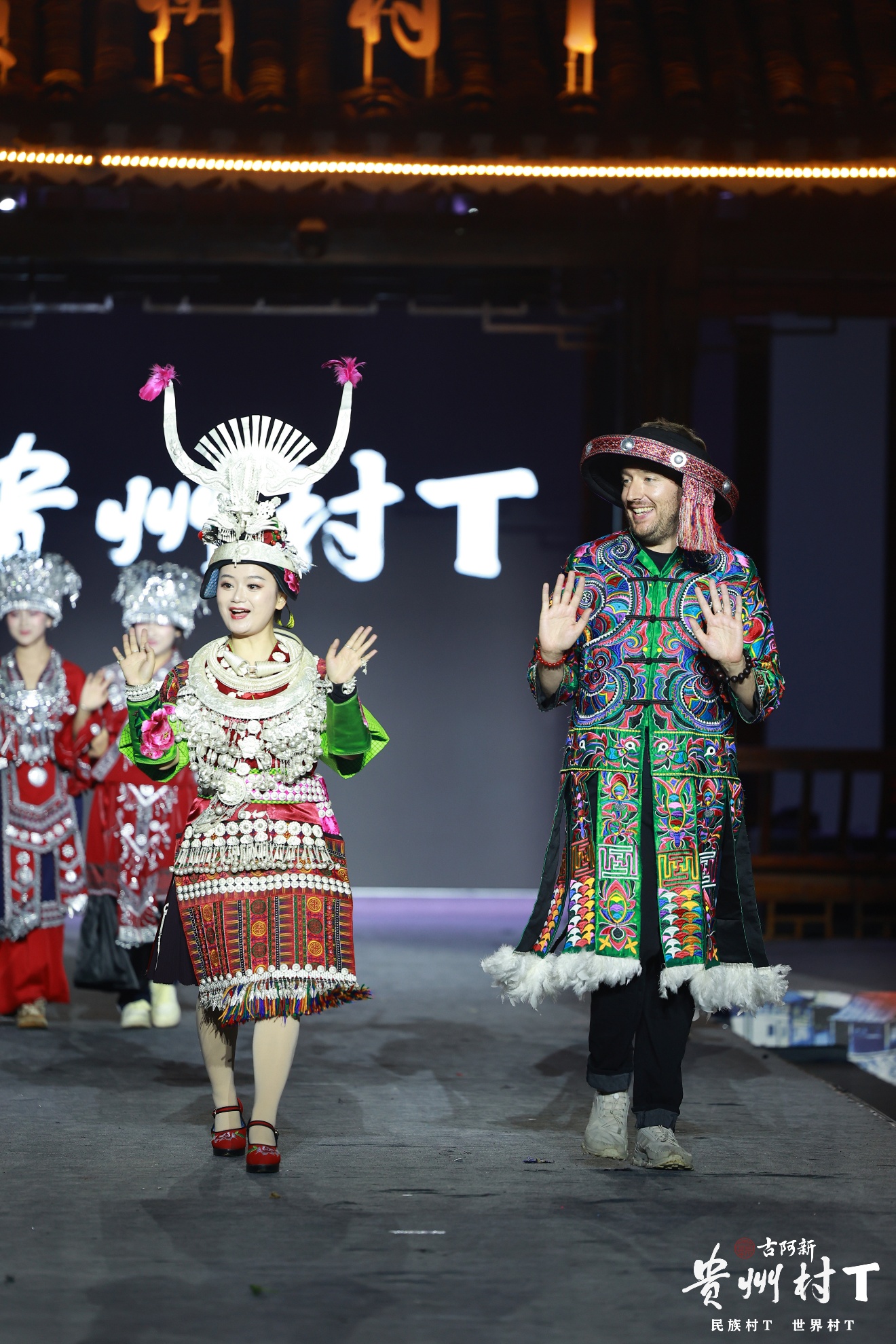
Michael Kurtagh walks the runway with Village T COO Yang Li in Kaili city, Qiandongnan Miao and Dong Autonomous Prefecture, southwest China's Guizhou Province. (Photo provided by Village T organizers)
"Anyone can walk?" I asked my colleagues.
"Yeah, we already signed you up," they replied.
That was how I found out I would be walking in Village T, known in Chinese as "Cun T," in Kaili city, Qiandongnan Miao and Dong Autonomous Prefecture, southwest China's Guizhou Province.
Village T is unlike any fashion show I had ever heard of. There are no professional models, no velvet ropes, no industry gatekeepers deciding who is worthy of the spotlight. Instead, locals take the runway themselves, dressed in clothing crafted by their own hands, putting China's ethnic minority culture on full and unapologetic display. The most human runway in the world, it turns out, is not in Paris or Milan. It is in a city in Guizhou, and on the night I visited, it belonged to farmers, teachers, students, grandmothers, and one very surprised American from halfway around the world.
What began as a local celebration has become something far bigger. Village T has already crossed borders, traveling to France and Hungary, carrying with it the embroidery, music, and living heritage of the Miao and Dong peoples. But its heart remains firmly rooted in the community it came from. Culture, after all, does not need a prestigious address to be worth celebrating. Sometimes the most meaningful stages are the ones built by the people standing on them.
I, apparently, was about to find that out firsthand.
The energy hit me before the show even started. Whether it was family members cheering on their loved ones, longtime locals who had watched Village T grow from a neighborhood event into a national phenomenon, or simply people who had shown up for a Friday night out, everyone was fully alive with excitement. The level of noise and passion reminded me less of a fashion show and more of a packed stadium before a championship game. People were not politely applauding. They were roaring.
What moved me most deeply, though, was the youth. Teenagers filled the stands. Kids dotted the runway waiting area. And what they showed was not simply the excitement of being at the biggest event of the night. It was something more considered, something more impressive. It was genuine pride.
I spoke with several young people throughout the evening, and they could name the different garments being worn, explain their cultural significance, and sing along effortlessly with the Miao and Dong songs being performed by the older embroidery grandmas on stage. Their knowledge was not surface-level trivia. They had absorbed it, grown up with it, made it their own. Whatever concerns exist globally about younger generations drifting away from traditional culture, the young people of Kaili on that Friday night had clearly not received that memo. They were not passive observers of their own heritage. They were its next custodians, and they seemed to know it.
But the moment that really set the tone for my night had actually happened the day before the show.
I spent that afternoon with several of the older women who would be walking alongside me as part of the Village T "Mama Group." Each ran their own small shop, selling clothing and embroidery pieces they had made entirely by hand. The welcome they extended to me was something I still find difficult to put into words.
They shared stories about their families and their lives. They showed me videos of the stages Village T had taken them to, cities far from Kaili, audiences in foreign countries encountering their work for the very first time. With great patience and even greater good humor, they searched through their collections to find traditional clothes that might fit my, let's say, generously proportioned frame. It took some creative effort, but they managed. And once we were dressed and waiting backstage for our turn, I was guided gently by hand to wherever I needed to be, offered fruit, and handed small fragrant sachets of herbs to keep the mosquitoes away during the long wait.
I had not expected to feel so completely looked after. I had come as a guest and was being treated like family. There is no better way to understand a culture than to be folded into it like that, quietly and without ceremony.
And then, before I had fully processed any of it, it was time.
By the time our group was finally called to the runway, the rain had thinned the crowd and the late hour had softened the energy in the stands. I will not pretend I was not nervous. I had never walked a runway in my life, let alone one in front of hundreds of people, dressed in Miao embroidery, in a city in Guizhou, with absolutely no prior experience and no idea what I was doing.
But somewhere in the waiting area, I had picked up company. A handful of children I had been talking with on and off throughout the evening had decided they were coming with me. Their questions had been endless: how did I speak Chinese, what was America like, did I like Chinese food, and most importantly, what did I think of Village T, of the clothes they were wearing, of the culture they had grown up in.
Two of them won out in the end. Each took one of my hands.
When we stepped out onto the runway together, there was a cheer from the remaining crowd. Voices called out "hello" and "welcome" from the stands. The nervousness did not disappear, but with a child holding each of my hands, it became something I could carry. It felt less like a performance and more like a shared moment, which is probably exactly what Village T has always been designed to be.
My answer to their questions about what I thought of their culture and their show? Resounding approval and appreciation. Standing on that runway with two small hands in mine, I meant every single word.
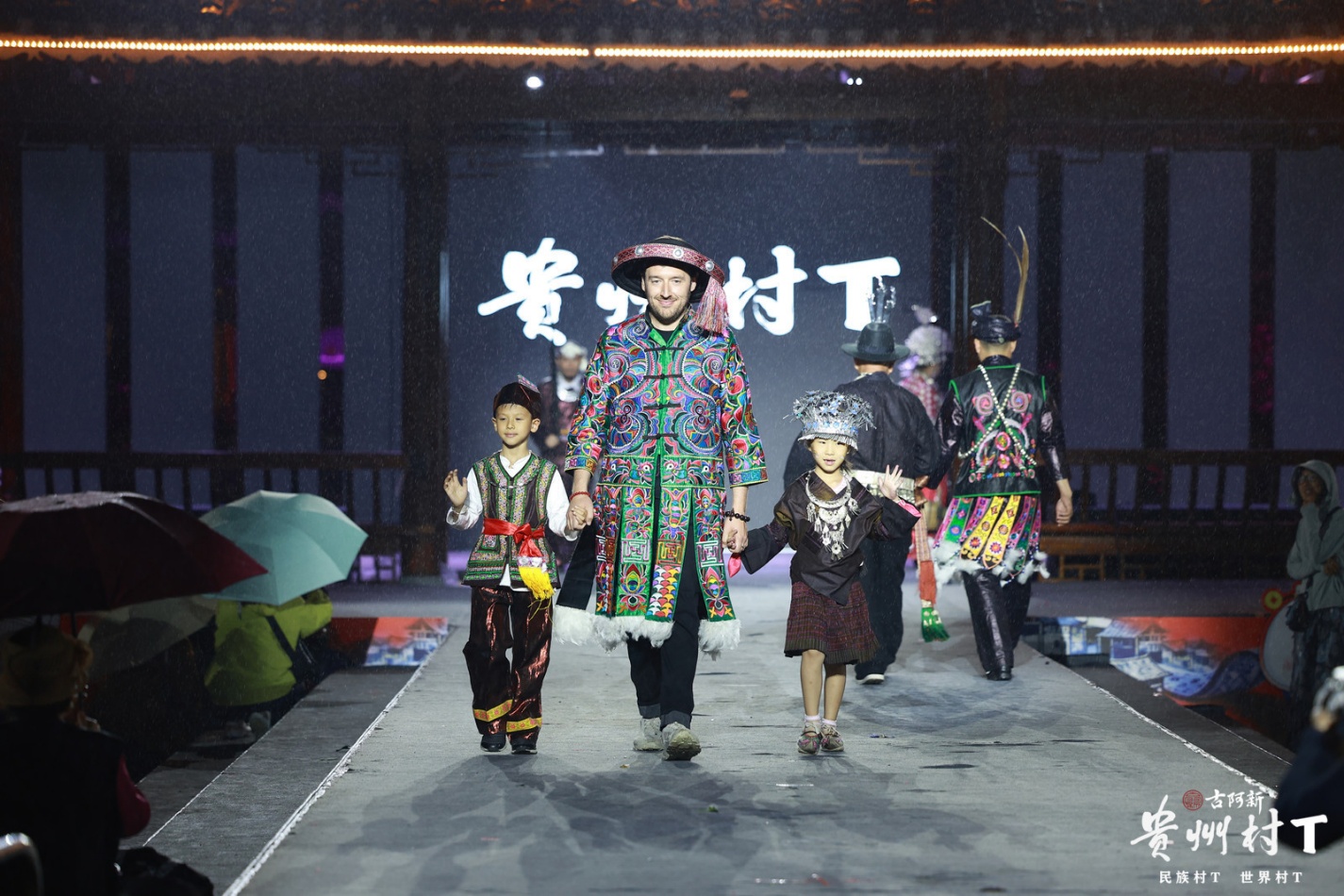
Michael Kurtagh walks the runway hand-in-hand with two little friends in Kaili city, Qiandongnan Miao and Dong Autonomous Prefecture, southwest China's Guizhou Province. (Photo provided by Village T organizers)
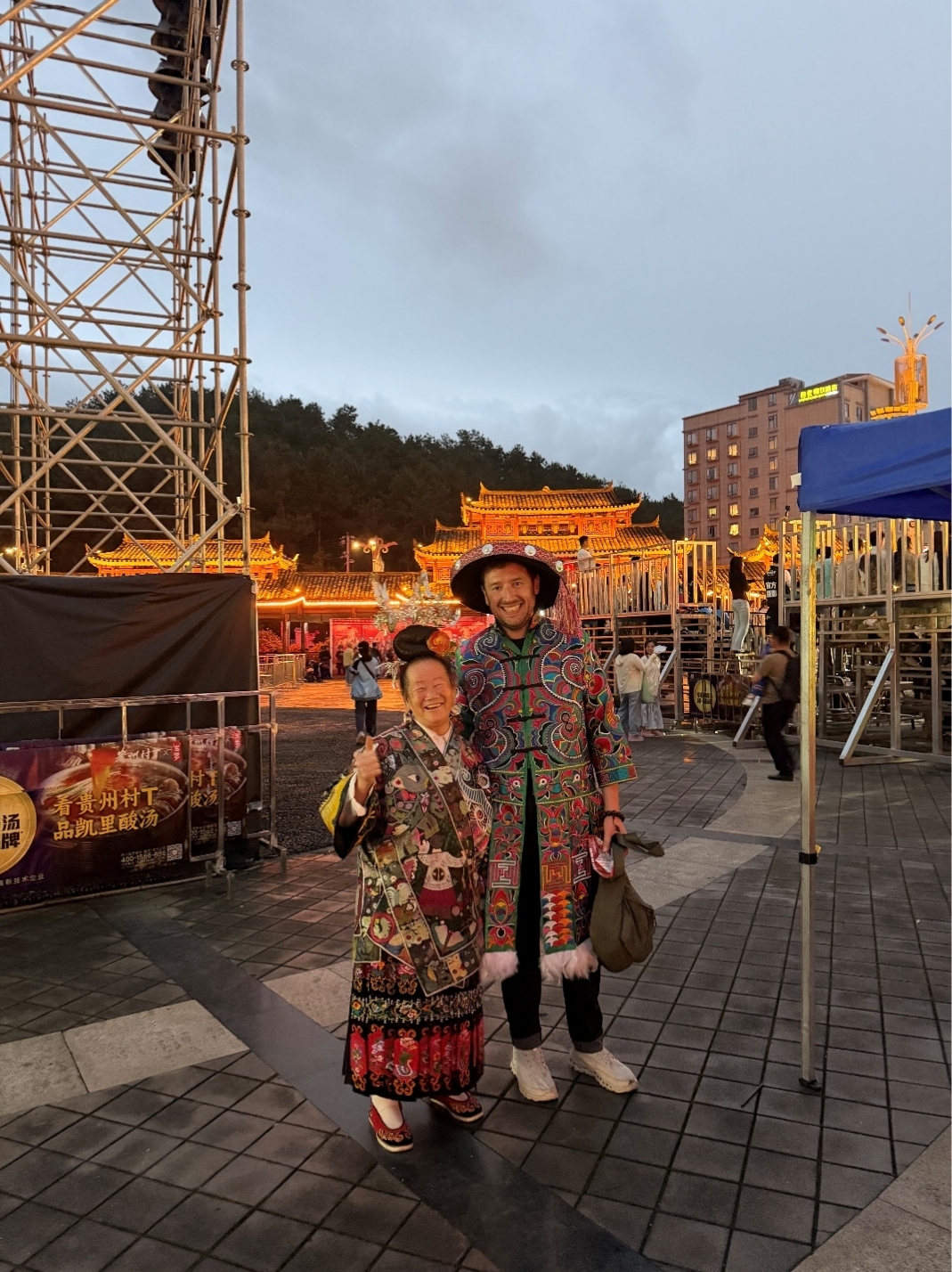
Michael Kurtagh poses with embroidery grandma in Kaili city, Qiandongnan Miao and Dong Autonomous Prefecture, southwest China's Guizhou Province. (People's Daily Online/Wang Hao)
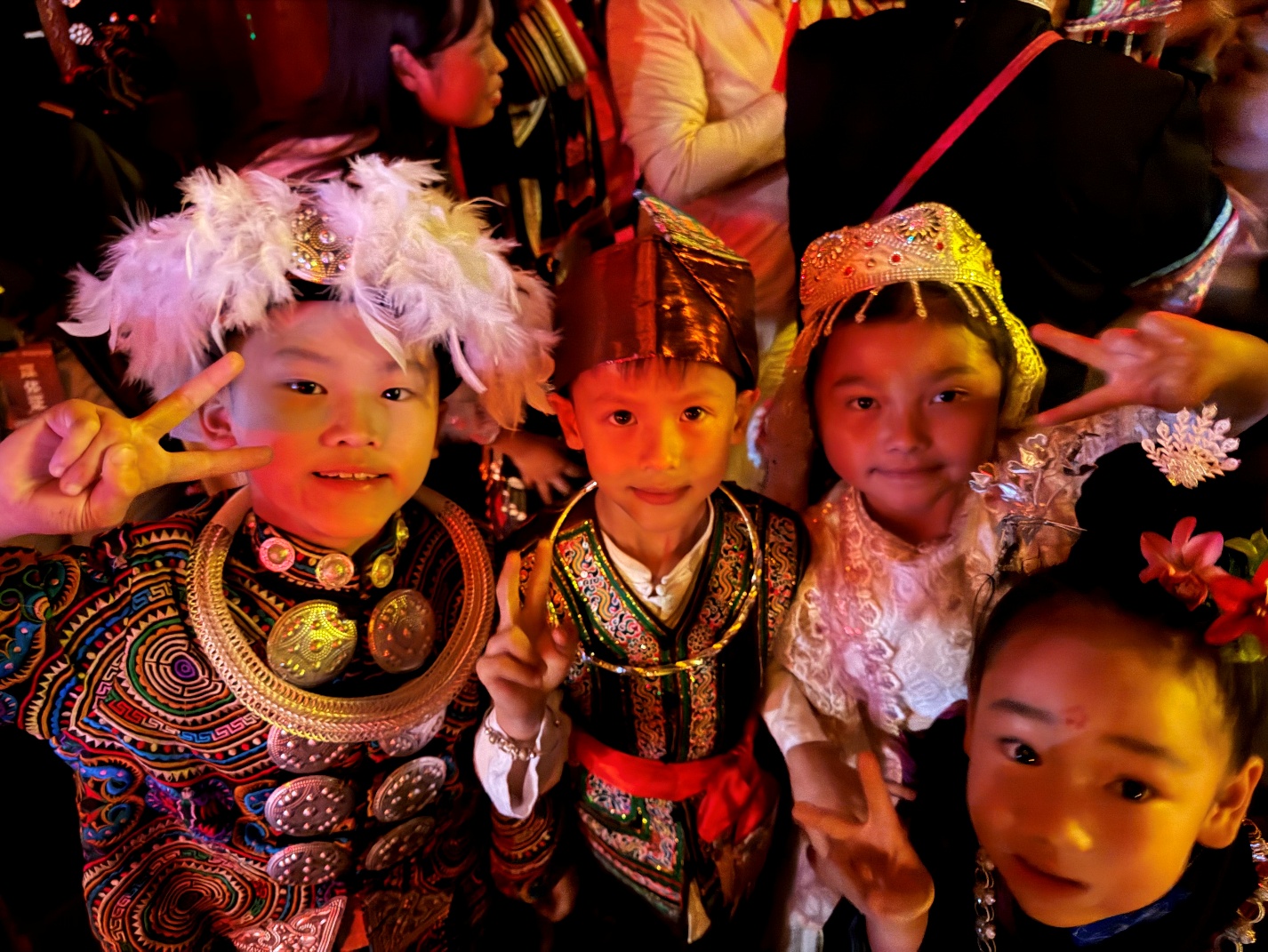
Children pose for a photo during Village T in Kaili city, Qiandongnan Miao and Dong Autonomous Prefecture, southwest China's Guizhou Province. (People's Daily Online/Michael Kurtagh)
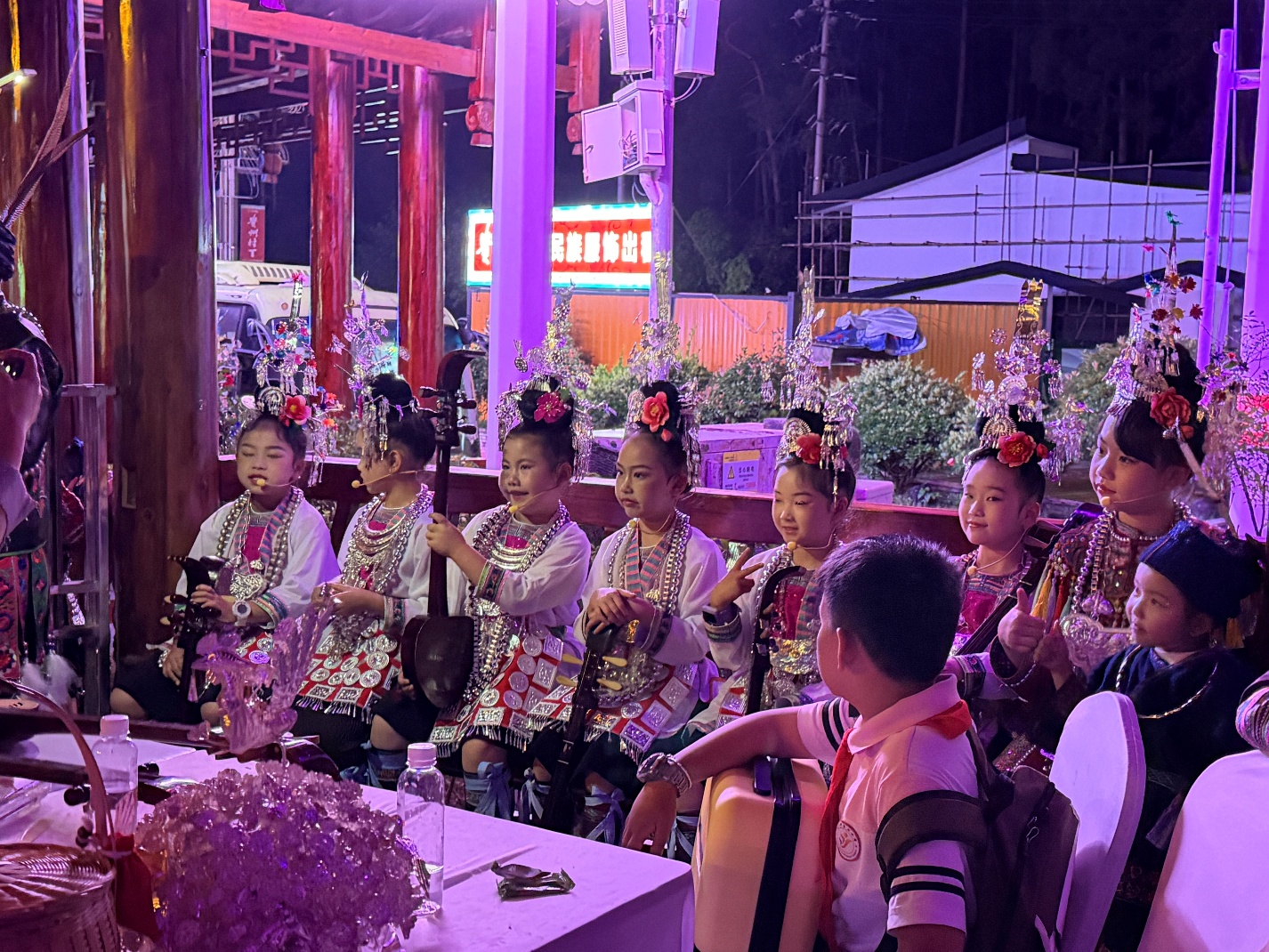
Children practice singing prior to walking Village T in Kaili city, Qiandongnan Miao and Dong Autonomous Prefecture, southwest China's Guizhou Province. (People's Daily Online/Michael Kurtagh)
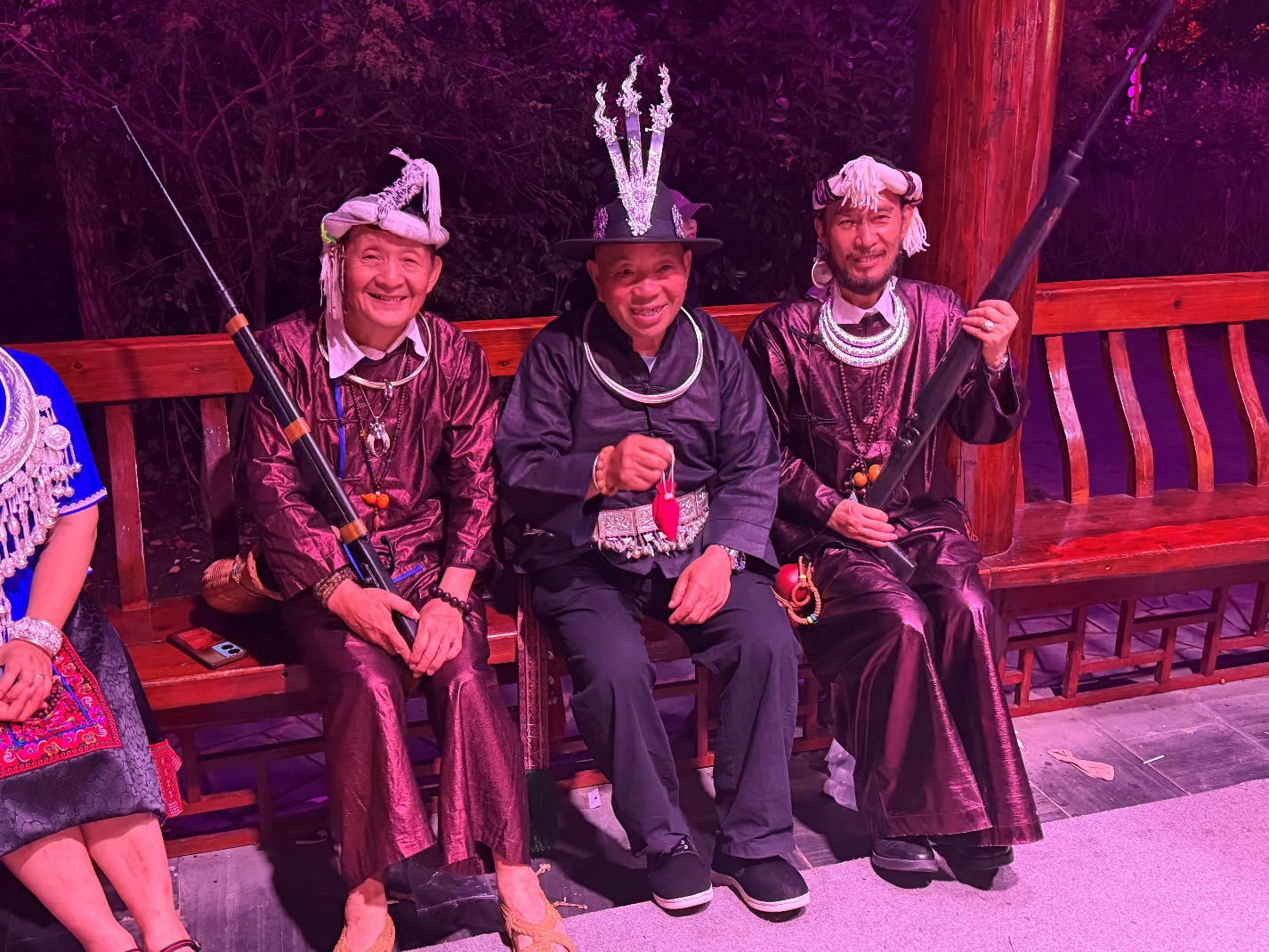
Village T models pose for a photo in Kaili city, Qiandongnan Miao and Dong Autonomous Prefecture, southwest China's Guizhou Province. (People's Daily Online/Michael Kurtagh)

Village T models pose for a photo in Kaili city, Qiandongnan Miao and Dong Autonomous Prefecture, southwest China's Guizhou Province. (People's Daily Online/Michael Kurtagh)
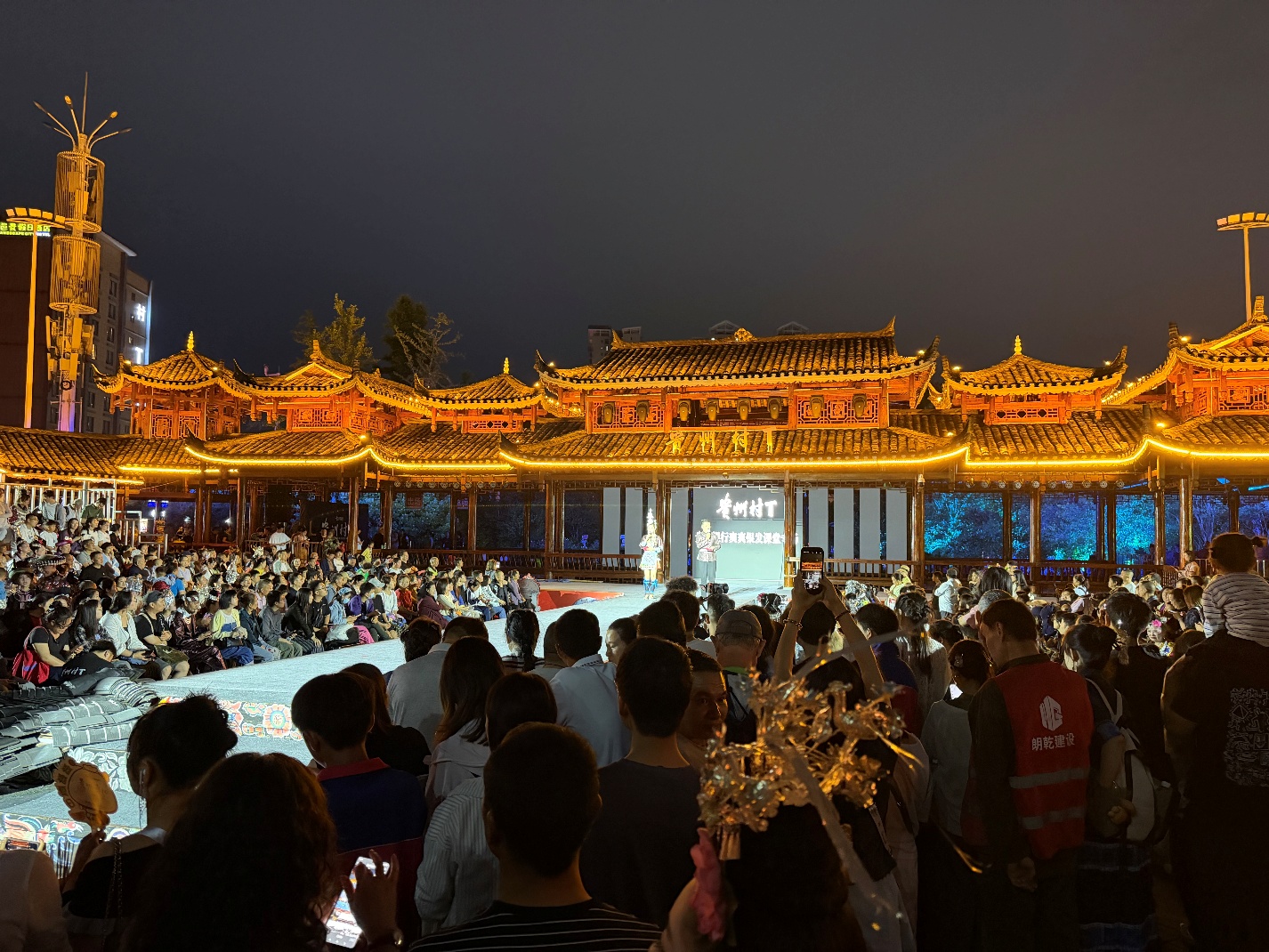
A scene from the Village T show in Kaili city, Qiandongnan Miao and Dong Autonomous Prefecture, southwest China's Guizhou Province. (People's Daily Online/Michael Kurtagh)

Tel:86-10-65363107, 86-10-65368220, 86-10-65363106
 Scan the QR Code
 Follow Us