





- BRNN
- BRI News
- BRNN News
- Database
Official Documents Polices and Regulations
Inter-government Documents International Cooperation BRI Countries
Business Guide Economic Data BRI Data
Trade
Investment Projects Latest projects
Cases - Content Pool
Turpan in northwest China's Xinjiang Uygur Autonomous Region has turned its extreme heat into an asset.
The city sees daily highs above 35 degrees Celsius on more than 100 days a year, and this July alone has already recorded 20 days topping 40 degrees Celsius. It recently recorded a high above 50 degrees Celsius, while ground temperatures often exceed 70 degrees Celsius. Annual average precipitation is just 14.7 millimeters, compared with annual evaporation of 2,477.5 millimeters.
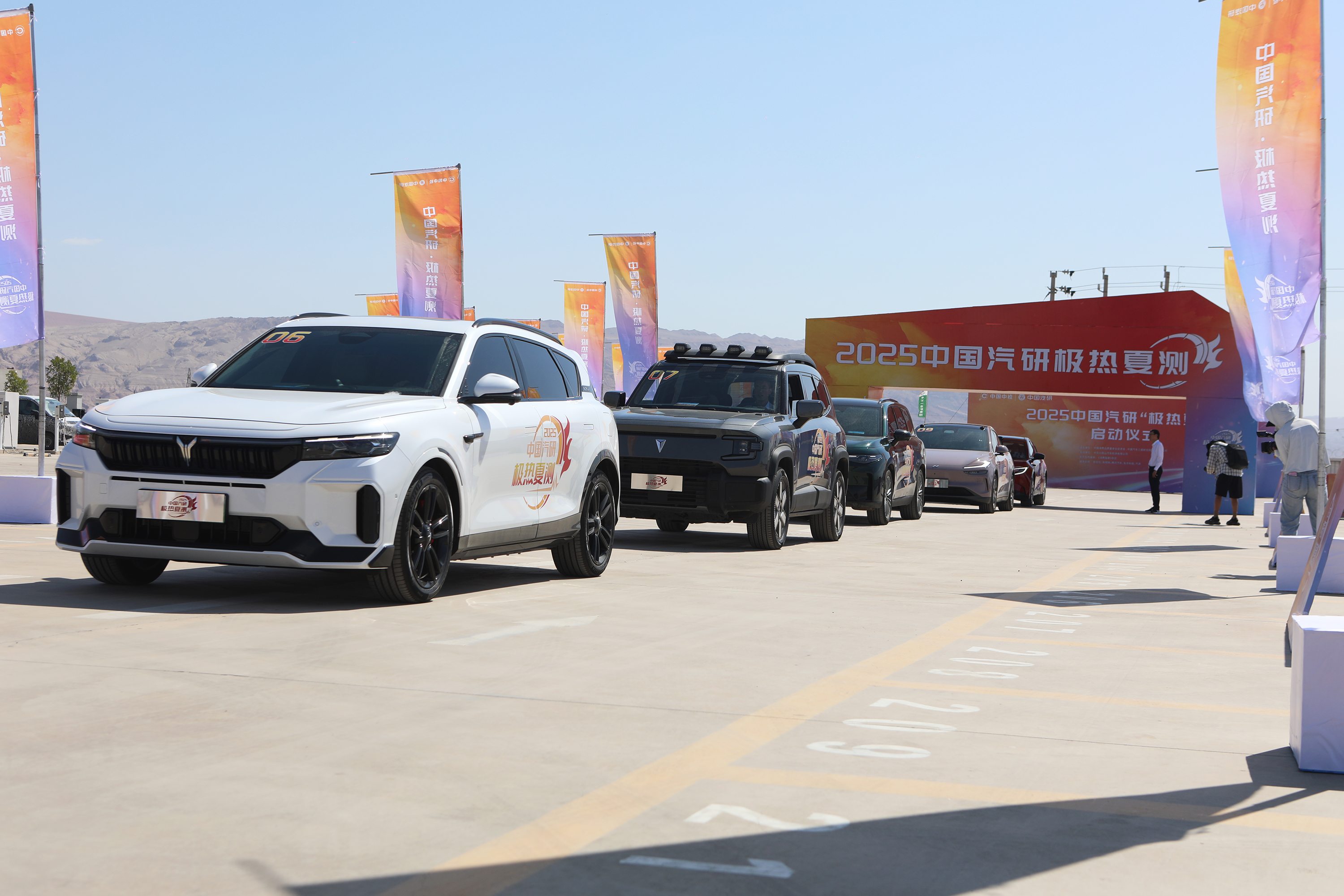
Photo shows vehicles undergoing high-temperature test at a testing center in Turpan, northwest China's Xinjiang Uygur Autonomous Region. (Convergence media center of Turpan/Liu Zi'ang)
That harsh climate has become an economic driver. More than 10,000 plastic, rubber and metal products, along with more than 1,000 new energy vehicles, undergo high-temperature and dry-heat testing in Turpan each year from June to September, supporting an industry worth more than 100 million yuan ($14 million) annually.
New energy vehicles bound for the market typically require high-temperature, high-altitude and cold-weather testing, and Turpan's natural conditions make it an ideal location for high-temperature and dry-heat tests, said Zeng Wenbo, a test engineer at the new energy vehicle testing center operated by Huoyanshan Automobile Inspection Co., Ltd., a subsidiary of China Communications Construction Company Limited. Zeng is overseeing a 10-day outdoor exposure trial at the testing ground.
The subsidiary plans to test 20 models and more than 80 vehicles in Turpan this year.
Dozens of sensors are attached to a vehicle's dashboard, steering wheel, seats, door handles and body to continuously monitor temperatures. After exposure, interior temperatures can climb above 70 degrees Celsius, with the surfaces of the steering wheel, gear shift and seats reaching 90 degrees Celsius. The hottest spot on the dashboard can reach 110 degrees Celsius.
"Extensive real-world test data helps improve heat-resistant designs for vehicle components and enhance anti-scalding measures," Zeng said.
After the 10-day stationary exposure trial, the vehicle undergoes road testing to verify battery safety, vehicle power and heat-dissipation durability, air conditioning and ride comfort, as well as the reliability of electronics and sealing.
"As the country's first third-party testing ground to conduct high-temperature and dry-heat tests on vehicles, we can offer a wider range of trials than automakers' own facilities, helping reduce their costs," said Yu Shengli, deputy general manager of the subsidiary.
More than 70 vehicle brands from more than 50 automakers now use the site, with about 1,500 vehicles tested annually, he added.
Turpan is now home to five such testing sites, handling more than 90 percent of the country's high-temperature and dry-heat vehicle tests.
Drones are also put through their paces. Test engineer Luo Hao is conducting a three-month trial of an inspection drone at the subsidiary's low-altitude testing zone, which was approved in 2025.
The airspace, centered on the testing ground and extending within a 5-kilometer radius and up to 600 meters in altitude, is open for tests of low-altitude aircraft. These focus mainly on power battery safety, flight control and motor performance, and airframe structure and sealing.
The Xinjiang Turpan Natural Environment Experimental Research Center is China's largest outdoor natural dry-heat testing and research facility. It can test eight categories of products, including automobiles, plastics and metallic materials, covering 31 product types and more than 300 parameters.
Guo Chunyun, the center's deputy director, said 10 solar companies currently commission tests at the center.
To date, the center has tested more than 42,000 products, providing data for the development of natural-aging standards for dry-heat environments and advancing research into testing techniques and methods.

Tel:86-10-65363107, 86-10-65368220, 86-10-65363106
 Scan the QR Code
 Follow Us