





- BRNN
- BRI News
- BRNN News
- Database
Official Documents Polices and Regulations
Inter-government Documents International Cooperation BRI Countries
Business Guide Economic Data BRI Data
Trade
Investment Projects Latest projects
Cases - Content Pool
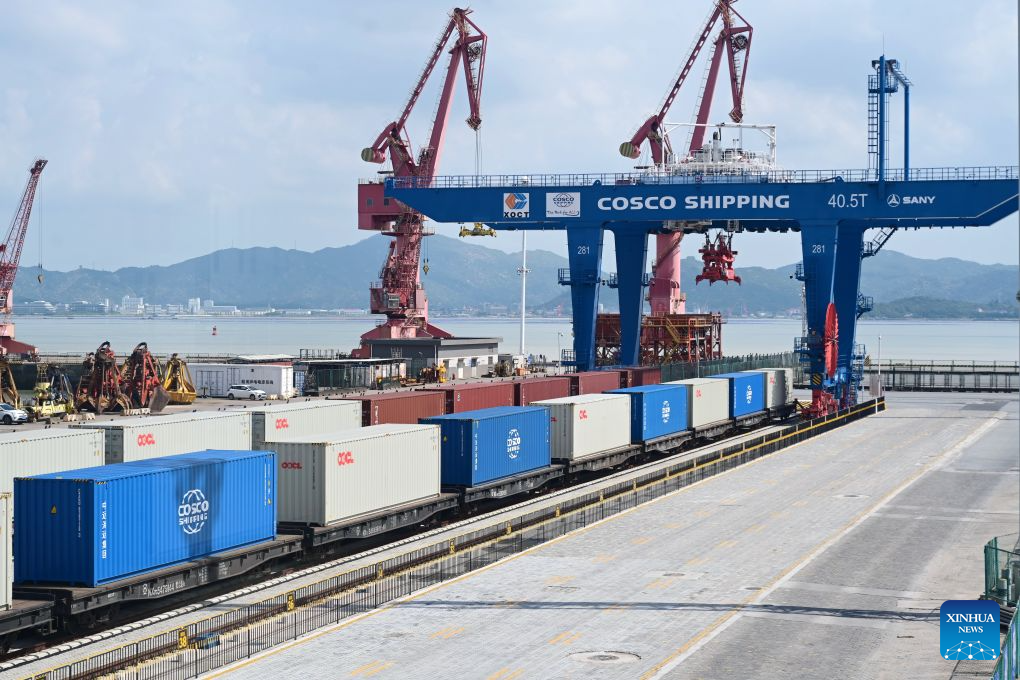
This photo taken on July 29, 2026 shows a sea-rail intermodal rail line at a quay in Xiamen, southeast China's Fujian Province. The sea-rail intermodal rail line is among China's first batch of key projects promoting the integration of transport and logistics. Stretching 1,586 meters, it is designed to handle an annual throughput of 250,000 TEUs of containers and 250,000 tonnes of bulk cargo.
Running perpendicularly to the shoreline and located just 70 meters from the quay apron, the rail line enables cargo to be transferred directly from ships to trains for onward transport. (Xinhua/Lin Shanchuan)
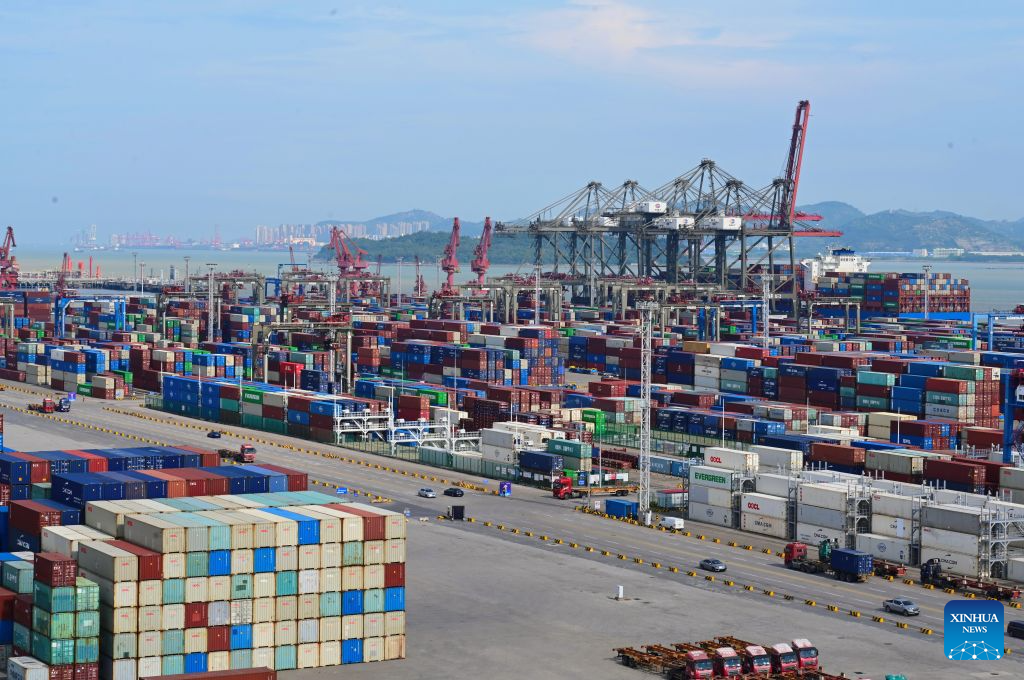
This photo taken on July 29, 2026 shows a view of a quay in Xiamen, southeast China's Fujian Province. The sea-rail intermodal rail line is among China's first batch of key projects promoting the integration of transport and logistics. Stretching 1,586 meters, it is designed to handle an annual throughput of 250,000 TEUs of containers and 250,000 tonnes of bulk cargo.
Running perpendicularly to the shoreline and located just 70 meters from the quay apron, the rail line enables cargo to be transferred directly from ships to trains for onward transport. (Xinhua/Lin Shanchuan)
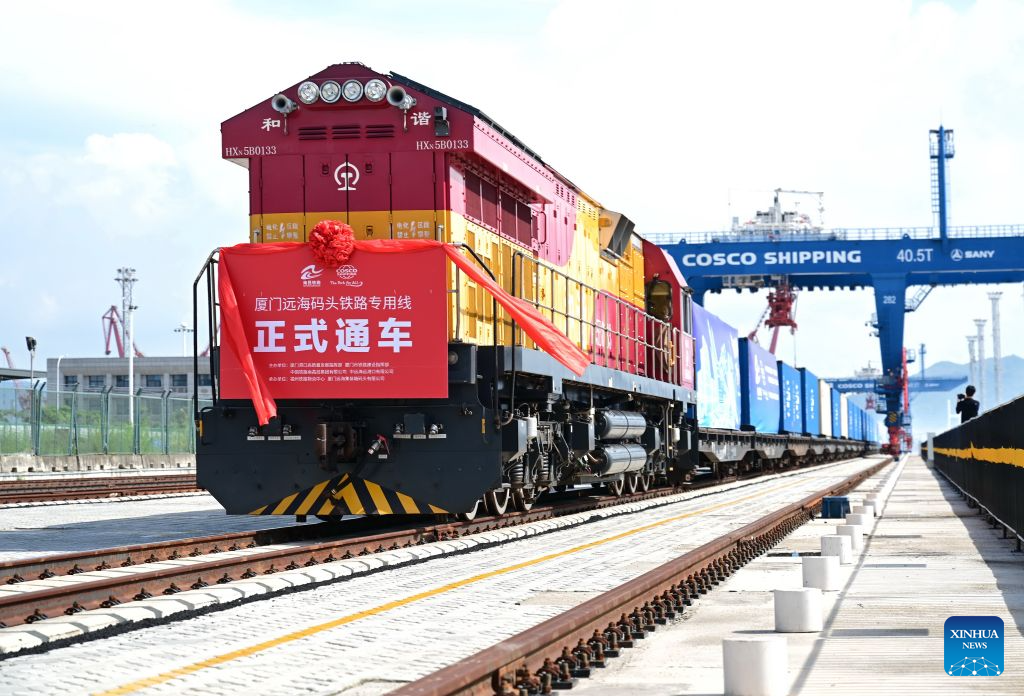
A freight train loaded with containers on a sea-rail intermodal rail line is pictured departing from a quay in Xiamen, southeast China's Fujian Province, July 29, 2026. The sea-rail intermodal rail line is among China's first batch of key projects promoting the integration of transport and logistics. Stretching 1,586 meters, it is designed to handle an annual throughput of 250,000 TEUs of containers and 250,000 tonnes of bulk cargo.
Running perpendicularly to the shoreline and located just 70 meters from the quay apron, the rail line enables cargo to be transferred directly from ships to trains for onward transport. (Xinhua/Lin Shanchuan)
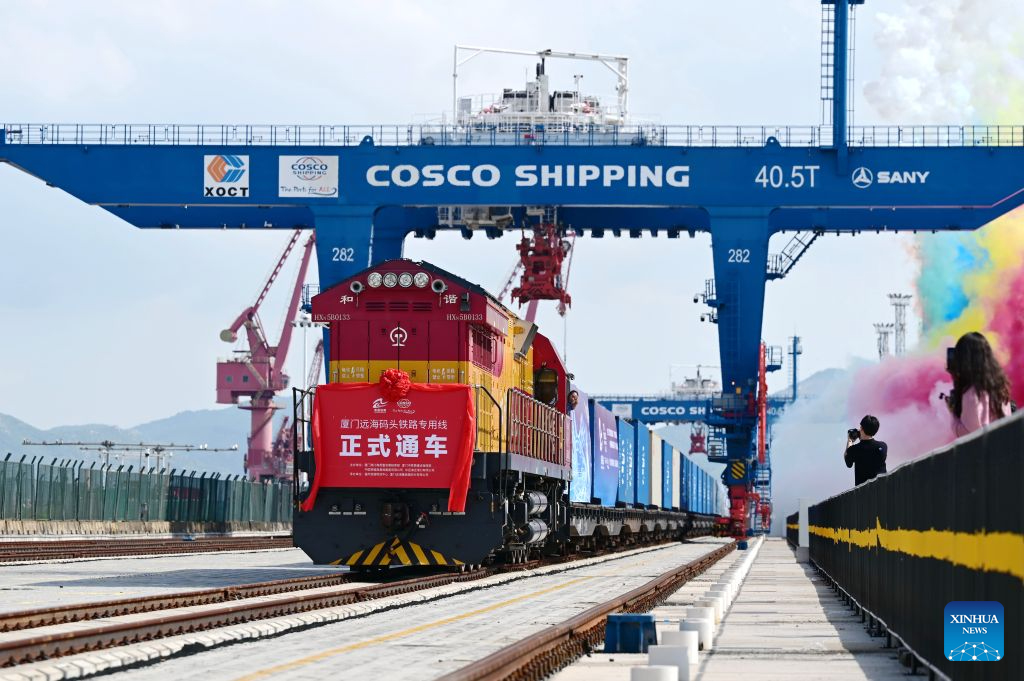
A freight train loaded with containers on a sea-rail intermodal rail line is pictured departing from a quay in Xiamen, southeast China's Fujian Province, July 29, 2026. The sea-rail intermodal rail line is among China's first batch of key projects promoting the integration of transport and logistics. Stretching 1,586 meters, it is designed to handle an annual throughput of 250,000 TEUs of containers and 250,000 tonnes of bulk cargo.
Running perpendicularly to the shoreline and located just 70 meters from the quay apron, the rail line enables cargo to be transferred directly from ships to trains for onward transport. (Xinhua/Lin Shanchuan)
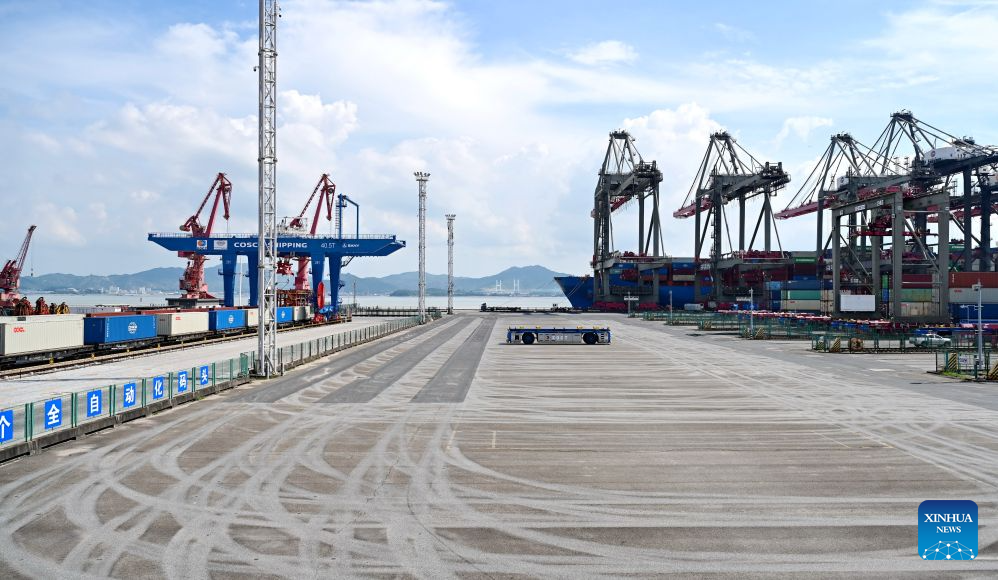
This photo taken on July 29, 2026 shows a view of a sea-rail intermodal rail line (L) at a quay in Xiamen, southeast China's Fujian Province. The sea-rail intermodal rail line is among China's first batch of key projects promoting the integration of transport and logistics. Stretching 1,586 meters, it is designed to handle an annual throughput of 250,000 TEUs of containers and 250,000 tonnes of bulk cargo.
Running perpendicularly to the shoreline and located just 70 meters from the quay apron, the rail line enables cargo to be transferred directly from ships to trains for onward transport. (Xinhua/Lin Shanchuan)
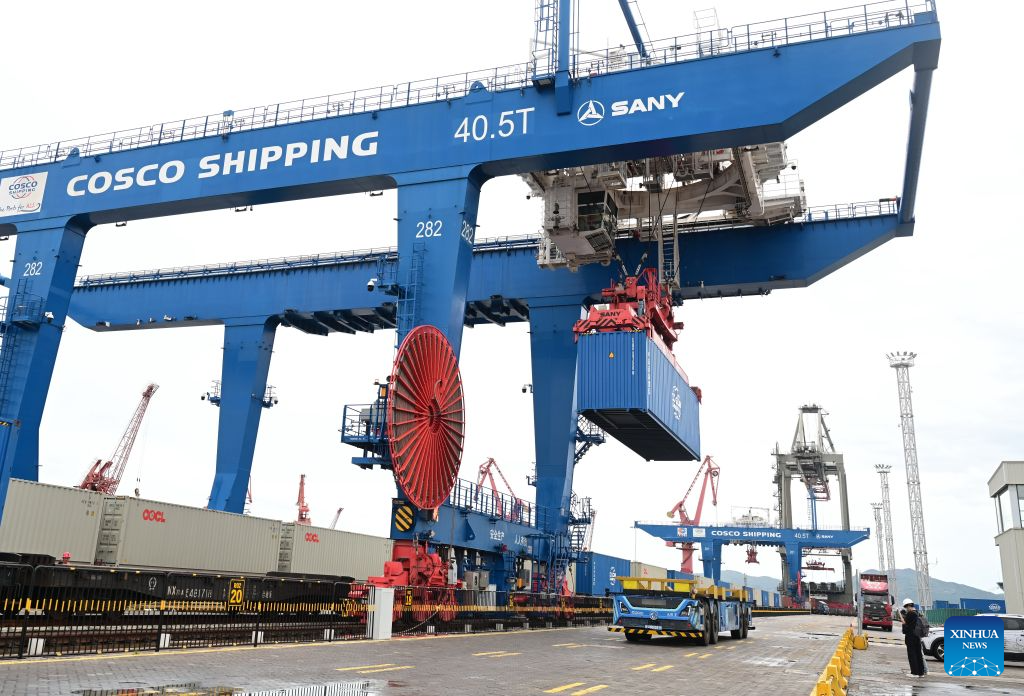
A container is hoisted onto a freight train on a sea-rail intermodal rail line at a quay in Xiamen, southeast China's Fujian Province, July 28, 2026. The sea-rail intermodal rail line is among China's first batch of key projects promoting the integration of transport and logistics. Stretching 1,586 meters, it is designed to handle an annual throughput of 250,000 TEUs of containers and 250,000 tonnes of bulk cargo.
Running perpendicularly to the shoreline and located just 70 meters from the quay apron, the rail line enables cargo to be transferred directly from ships to trains for onward transport. (Xinhua/Lin Shanchuan)
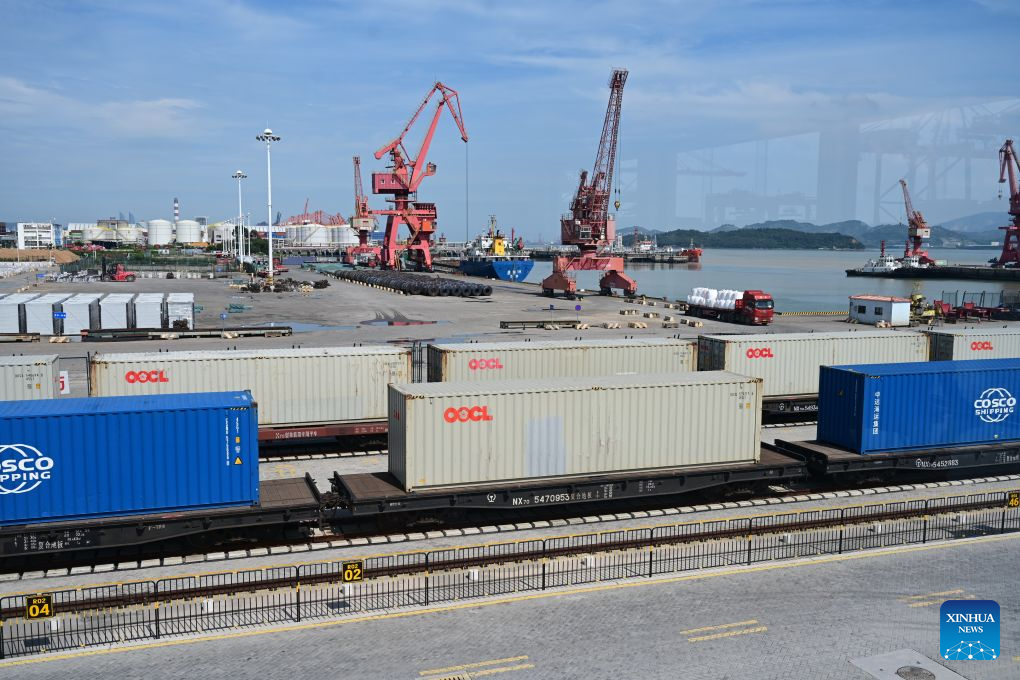
This photo taken on July 29, 2026 shows freight trains at a quay in Xiamen, southeast China's Fujian Province. The sea-rail intermodal rail line is among China's first batch of key projects promoting the integration of transport and logistics. Stretching 1,586 meters, it is designed to handle an annual throughput of 250,000 TEUs of containers and 250,000 tonnes of bulk cargo.
Running perpendicularly to the shoreline and located just 70 meters from the quay apron, the rail line enables cargo to be transferred directly from ships to trains for onward transport. (Xinhua/Lin Shanchuan)

Tel:86-10-65363107, 86-10-65368220, 86-10-65363106
 Scan the QR Code
 Follow Us