





- BRNN
- BRI News
- BRNN News
- Database
Official Documents Polices and Regulations
Inter-government Documents International Cooperation BRI Countries
Business Guide Economic Data BRI Data
Trade
Investment Projects Latest projects
Cases - Content Pool
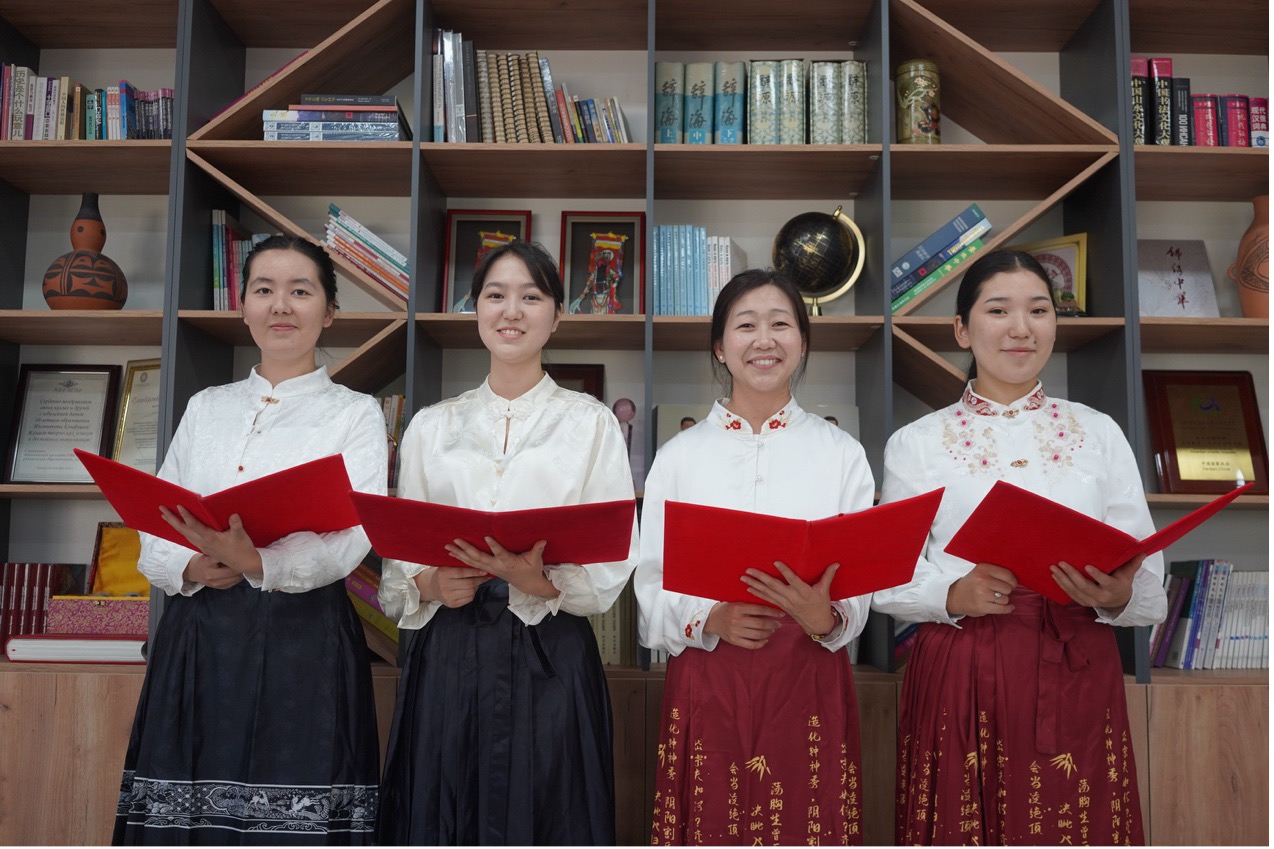
Young people from the Confucius Institute at Bishkek State University read the poem "To the Oak Tree" in Chinese. (People's Daily Online/Chu Mengqi)
China and Kyrgyzstan share a long border and an even longer friendship. In the past few years that friendship has quickened. Chinese classrooms in Bishkek fill early. Confucius Institutes stay noisy after dark. Young Kyrgyz students are learning not only the language, but a country that no longer feels distant or abstract.
Five of them, all from the Confucius Institute at Bishkek State University, talk about how China entered their lives.
Batyrkanova Kanykei
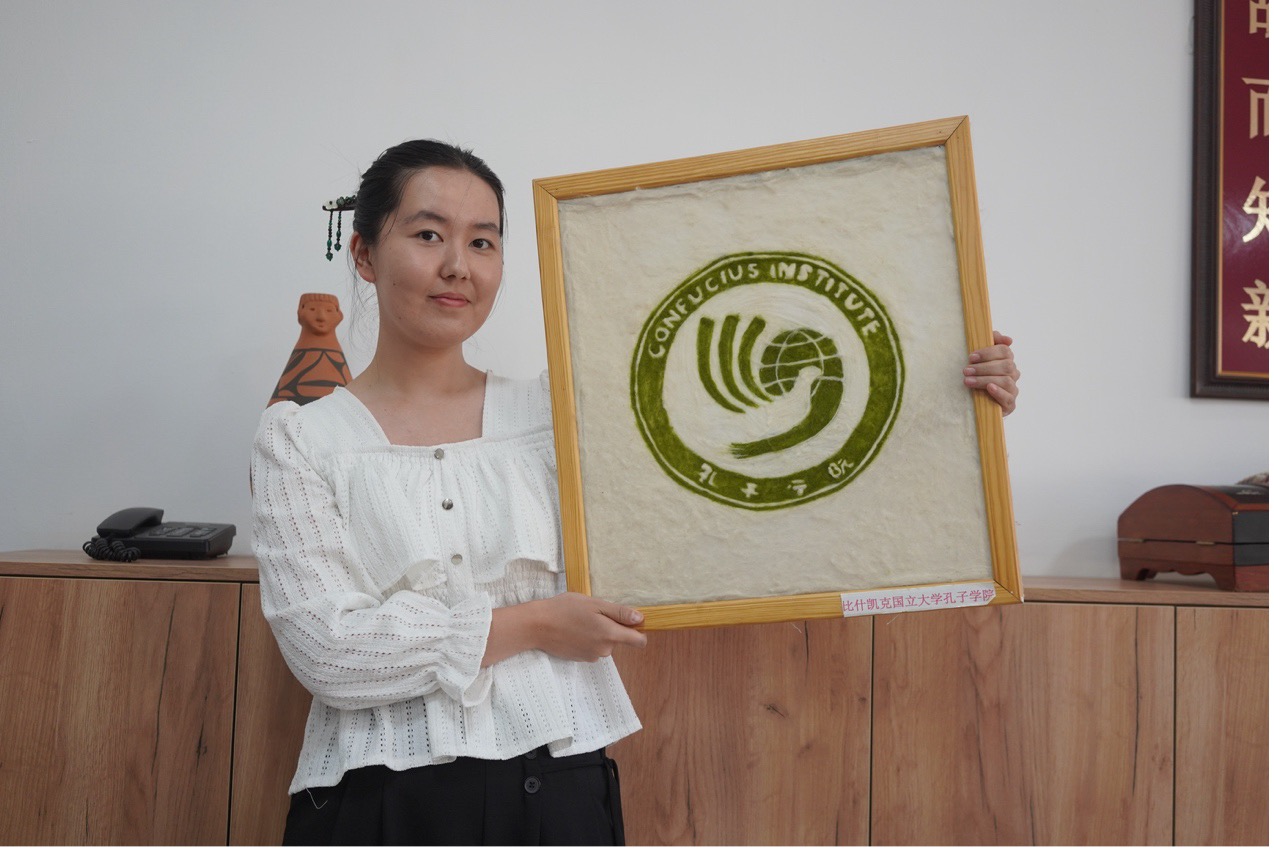
Batyrkanova Kanykei, student at the Confucius Institute at Bishkek State University. (People's Daily Online/Chu Mengqi)
Batyrkanova Kanykei got her Chinese name Yang Yaning from her teacher. She disliked it at first. The characters looked cramped to her, "like a little mountain." Five years later she uses the name without thinking about it. Chinese friends tell her it sounds lovely, and she can answer them in Chinese. "I grew into it," she says, "The name, the language, and then China."
She had not meant to study Chinese. Her uncle told her that the two countries were drawing closer and that the language would matter for work. She is glad she listened. As her feelings for the language changed, so did Bishkek. When she started university, there were only a couple of Chinese restaurants. Now she can find Sichuan food, Zhejiang dishes, Peking duck. One afternoon she followed the smell of hotpot down the stairs of her building and knocked. The neighbor was Chinese.
She reads Chinese web novels, follows comics, and spends her free time on Chinese apps and television. She would like to subtitle more of those shows for people in Kyrgyzstan. She would also like her Chinese friends to visit her world: a yurt, a horse, the pace of a family that still knows the steppe. She hopes to work in an embassy. "That seems like a place where I can build a cultural bridge that brings our people together."
Beishekeeva Nurisa
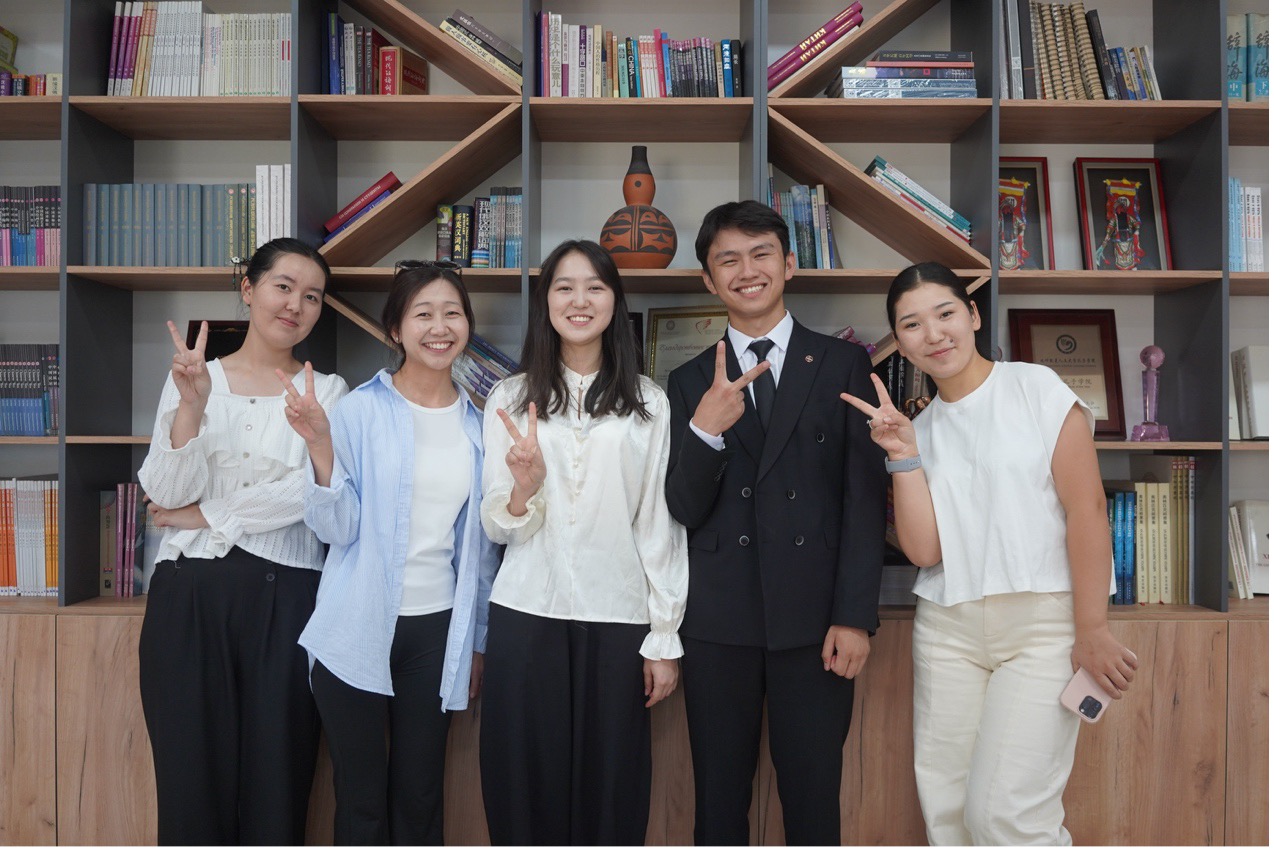
Beishekeeva Nurisa (second from left), student at the Confucius Institute at Bishkek State University. (People's Daily Online/Chu Mengqi)
Beishekeeva Nurisa's Kyrgyz name means sun. Her teacher called her Yangyang. A few years ago she chose Chinese out of curiosity. This September she will begin a master's degree at Zhejiang University to study international Chinese language education.
Shanghai was her first stop in China, and she was impressed by its international and modern atmosphere. After studying there and coming home, she found Bishkek different: more Chinese visitors, more shops, new restaurants and supermarkets. "You can meet Chinese people at the bank and in the mall." Many of the electric cars in the city are Chinese. "Families can afford them. They're clean, and people like driving them."
Learning the language, she says, meant learning how people live. She was pleased when Bishkek screened Chinese films, because a film can explain a country's habits more quickly than a classroom can. "I want to make contributions to such cultural exchanges, offering opportunities for our people to better appreciate each other."
Kanyshai Zhakhanshaeva
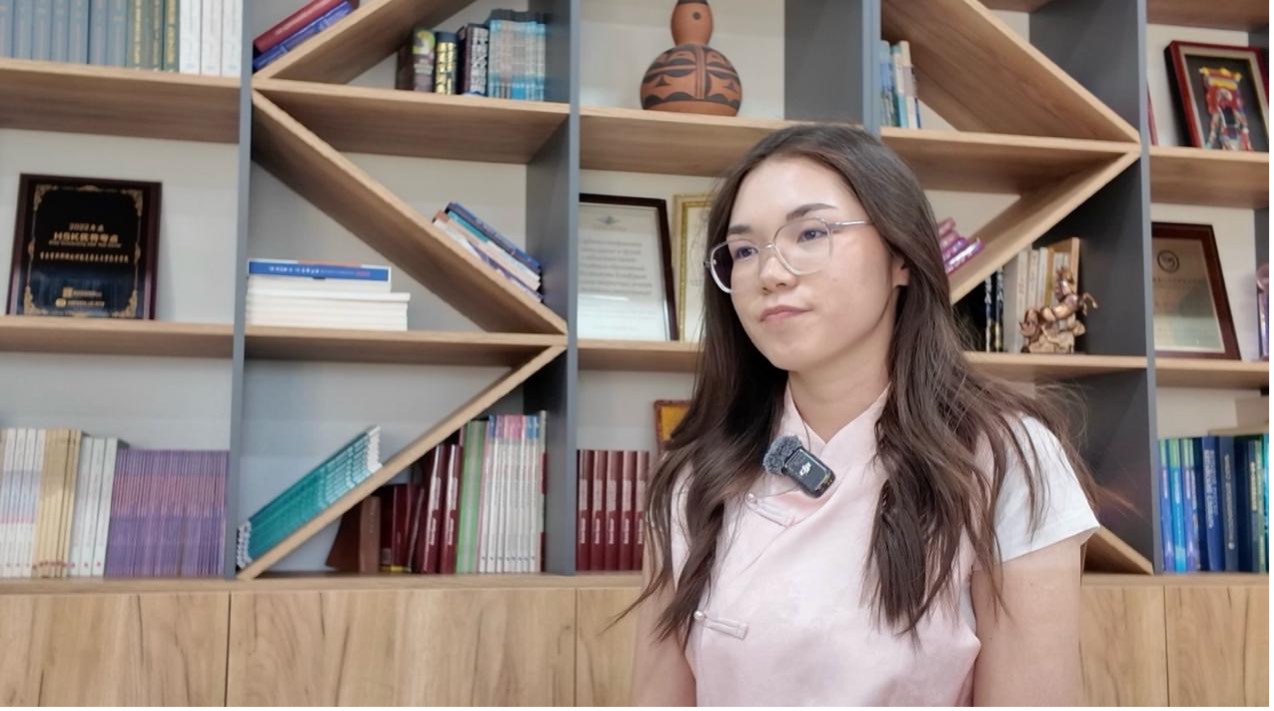
Kanyshai Zhakhanshaeva, student at the Confucius Institute at Bishkek State University. (People's Daily Online/Chu Mengqi)
Kanyshai Zhakhanshaeva has studied Chinese for four years. She chose it because China felt impossible to ignore, and because the language would help her work and study.
She listens to Jay Chou, especially his song "Blue and White Porcelain." Chinese social media platforms WeChat and Xiaohongshu are part of her day; so are Chinese e-commerce platforms like Pinduoduo. Most of the parcels are small: pens, stickers, things for a desk.
She has also watched the larger change around her, in trade, in classrooms, and in the number of people moving between the two countries. She wants to work as a translator, to help the relationship between the two nations keep moving.
Zhyrgalbaev Kanybek
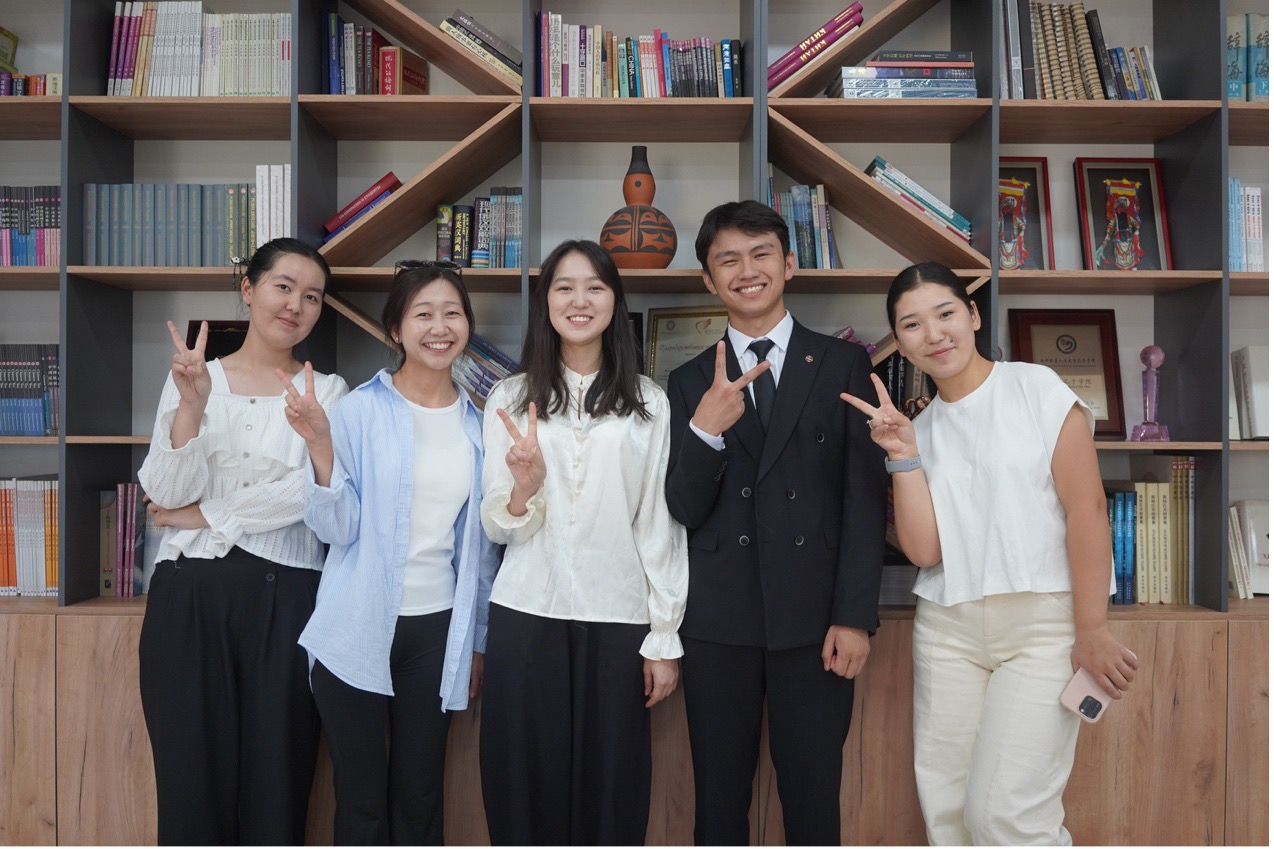
Zhyrgalbaev Kanybek (second from right), student at the Confucius Institute at Bishkek State University. (People's Daily Online/Chu Mengqi)
Zhyrgalbaev Kanybek's Chinese teacher named him Xue Pei. He has a keen interest in traditional Chinese culture. He loves calligraphy and can recite "Invitation to Wine" by Tang poet Li Bai. "Chinese calligraphy is fascinating," he says. "There is always another style."
In Bishkek, Chinese cars and goods have become an ordinary sight. Shopping on Chinese e-commerce platforms, a rarity only a few years ago, has become a part of everyday life. "If you order something, it can be here in two weeks."
He wants to become a translator whose work carries real strength—the kind that takes meaning from one language and sets it down in another.
Almazbek Kyzy Umut
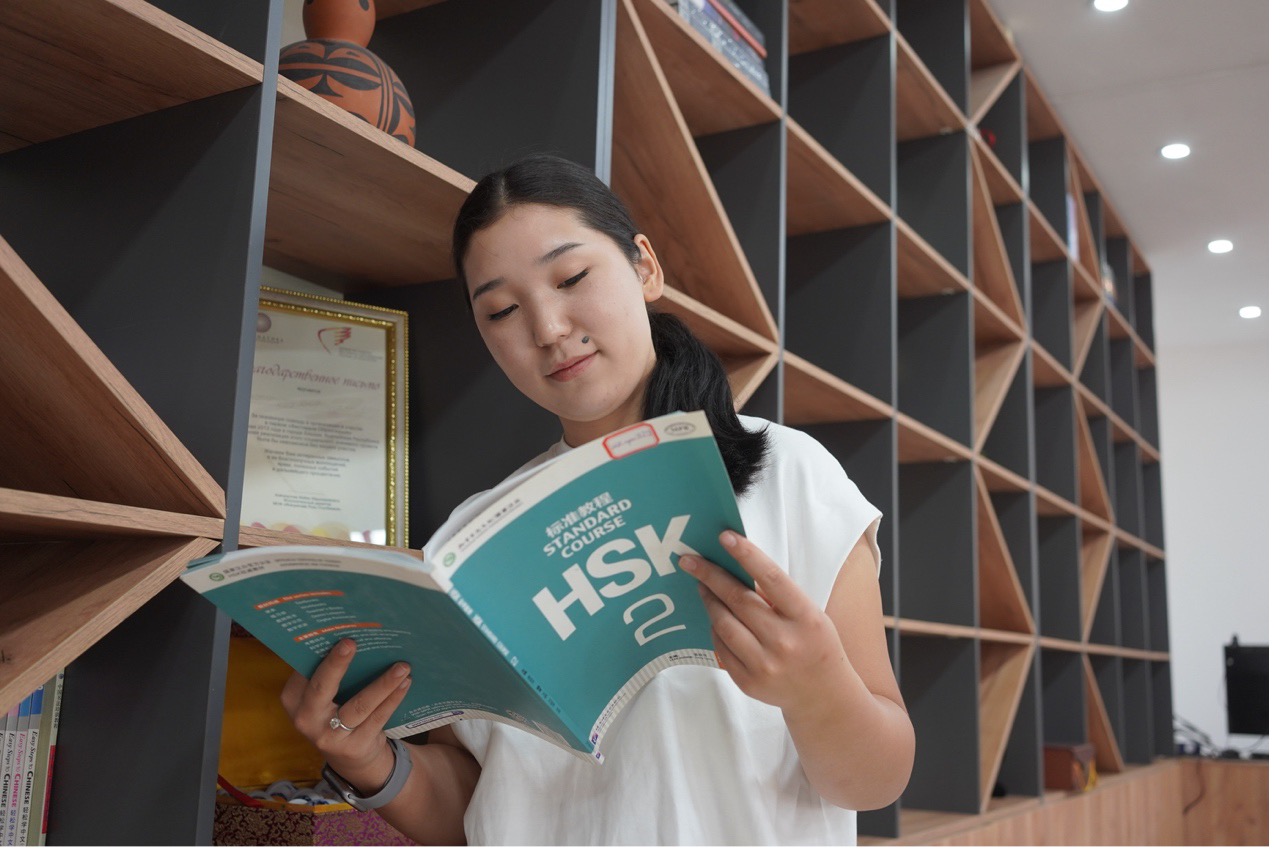
Almazbek Kyzy Umut, student at the Confucius Institute at Bishkek State University. (People's Daily Online/Chu Mengqi)
"I didn't want to learn Chinese. It looked too hard," Almazbek Kyzy Umut says frankly. Her father said the language would matter, so she chose Chinese as her major, struggled, and then found she liked it.
Last year, she made it to the global finals of the "Chinese Bridge" Chinese language proficiency competition and visited Beijing, Nanping, Fuzhou, Quanzhou and other places in China. This year she has been to Guangzhou, Chengdu, Shenzhen, Shanghai and Zhangjiajie. Of all the cities, Chengdu is her favorite. "People there know how to enjoy life. They love taking walks and dancing, and the architecture is also fascinating. Guangzhou and Shanghai have a fast‑paced vibe, but in Chengdu you can unwind and feel completely at ease."
She believes China‑Kyrgyzstan relations will keep getting better. "There are abundant opportunities for both friendly cooperation and economic and trade exchanges." After travelling across many cities in China, she is more convinced that to understand a language is to draw closer to a country. She hopes to bring home what she has seen and felt on her journey, and share stories of her homeland with more Chinese friends.

Tel:86-10-65363107, 86-10-65368220, 86-10-65363106
 Scan the QR Code
 Follow Us