Indigo dyeing of Dong ethnic group brings prosperity in SW China's Guizhou
Vats of indigo dye ripple gently in the workshop as visitors stream through the sales area at the traditional crafts farmers' cooperative in Zhaoxing Dong Village, Liping county, Qiandongnan Miao and Dong Autonomous Prefecture, southwest China's Guizhou Province.
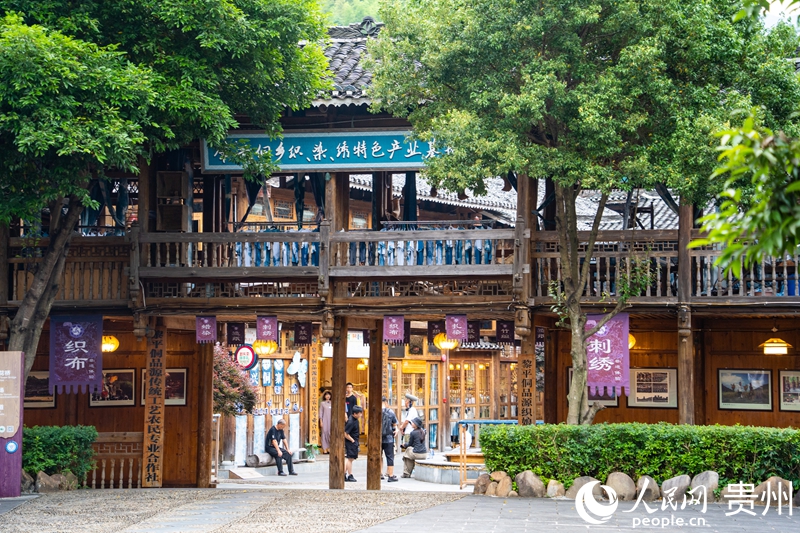
Photo shows the traditional crafts farmers' cooperative in Zhaoxing Dong Village, Liping county, Qiandongnan Miao and Dong Autonomous Prefecture, southwest China's Guizhou Province. (People's Daily Online/Yang Qian)
"Here, traditional ethnic culture is reflected in distinctive products designed for everyday use," said Lu Yongmei, head of the cooperative and a provincial-level representative inheritor of Dong indigo dyeing.
Indigo dyeing is deeply rooted in the daily lives of the Dong people in Zhaoxing Dong Village, one of the largest Dong villages in the country. It is both a traditional craft and an important means of passing down their culture.
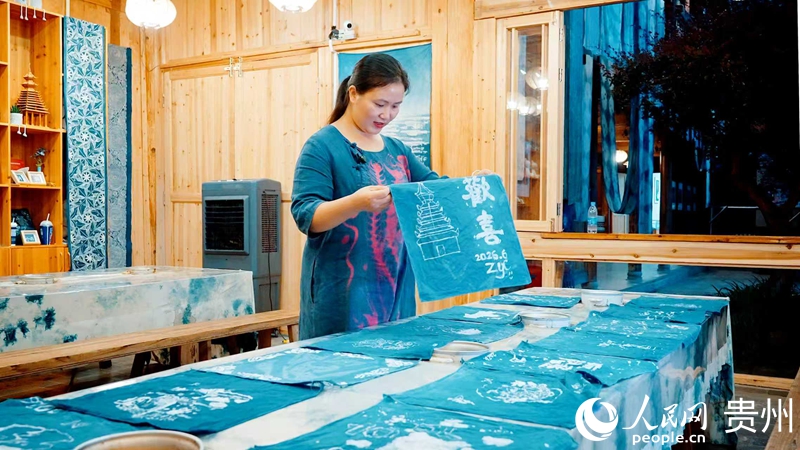
Lu Yongmei arranges creative cultural products at the traditional crafts farmers' cooperative in Zhaoxing Dong Village, Liping county, Qiandongnan Miao and Dong Autonomous Prefecture, southwest China's Guizhou Province. (People's Daily Online/Tu Min)
In 2014, Lu, who learned to spin yarn and grow indigo plants with her mother from an early age and grew up in her grandfather's dyeing workshop, took the lead in establishing the cooperative. She visited artisans in more than 100 nearby villages to rescue and revive endangered techniques. The cooperative also began collecting and restoring old embroidered pieces.
Initially, the cooperative focused on traditional Dong ceremonial attire. However, limited occasions for wearing it and a lack of broader appeal led to unsold stock. In 2016, the cooperative ran into a cash-flow crisis.
Lu soon shifted its focus, repurposing traditional Dong fabrics, drawing on classic ethnic motifs and adapting traditional techniques to modern tastes to create creative cultural products for everyday use.
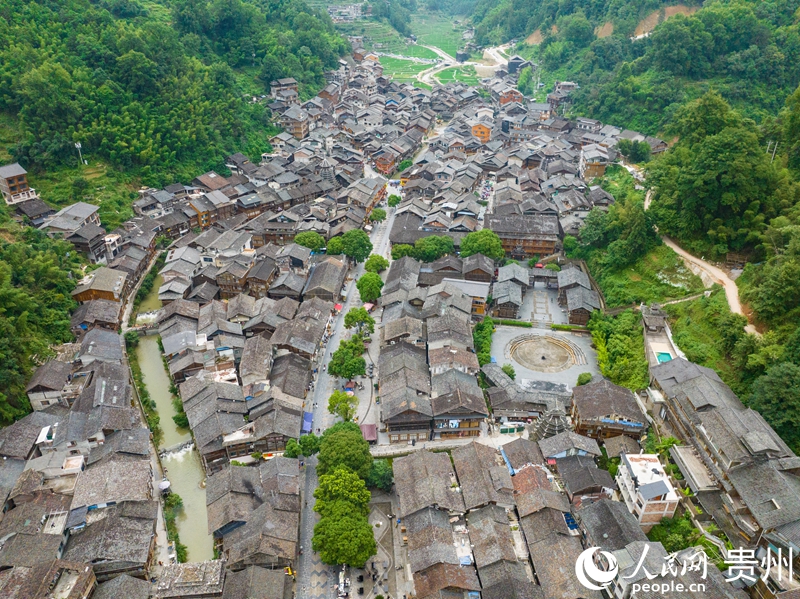
Photo shows an aerial view of Zhaoxing Dong Village, Liping county, Qiandongnan Miao and Dong Autonomous Prefecture, southwest China's Guizhou Province. (People's Daily Online/Yang Qian)
"Traditional crafts once emphasized full, elaborate designs and striking visual effects to showcase craftsmanship. For our new products, we use lighter colors and techniques such as tie-dyeing, preserving the fabric's texture while reducing production time and complexity," Lu said. However, the approach met with strong opposition from some villagers and veteran embroiderers.
Nevertheless, Lu pressed ahead with her vision. She changed the product forms while preserving traditional techniques, embracing innovation without losing sight of the craft's roots. The cooperative kept traditional production processes while adapting product designs and the use of motifs. Sales of its first batch of creative cultural products exceeded 100,000 yuan (about $14,939), causing those initially opposed to come around.
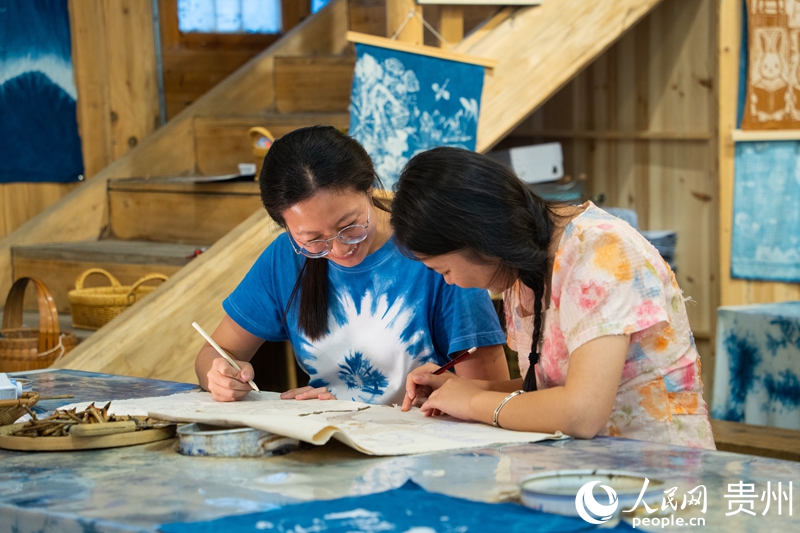
Visitors try their hand at traditional crafts at the traditional crafts farmers' cooperative in Zhaoxing Dong Village, Liping county, Qiandongnan Miao and Dong Autonomous Prefecture, southwest China's Guizhou Province. (People's Daily Online/Yang Qian)
Alongside product innovation, Lu led her team in cataloging more than 300 traditional Dong motifs and building a digital pattern library. The cooperative also introduced hands-on workshops, giving visitors the chance to experience the craft firsthand.
"In 2025, the cooperative's annual output value exceeded 20 million yuan, providing more than 1,000 Dong women with jobs and opportunities to earn income close to home," said Lu.
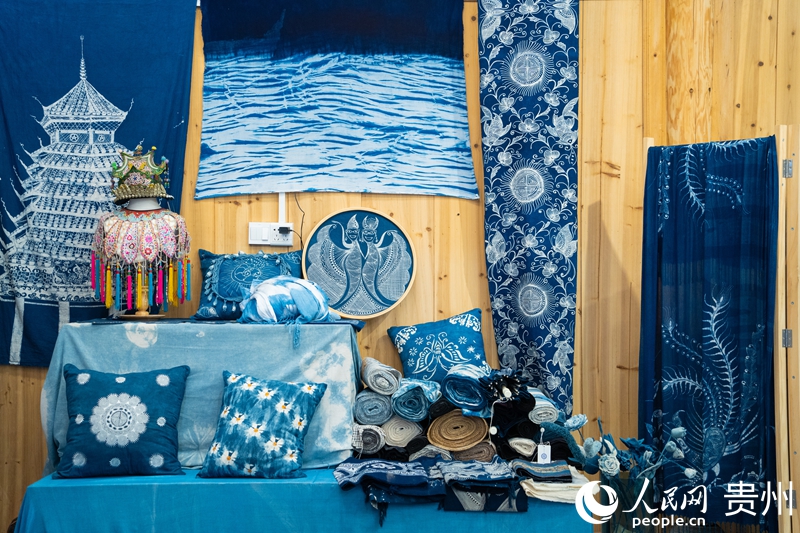
Photo shows indigo-dyed products on display in the store at the traditional crafts farmers' cooperative in Zhaoxing Dong Village, Liping county, Qiandongnan Miao and Dong Autonomous Prefecture, southwest China's Guizhou Province. (People's Daily Online/Yang Qian)

 Follow Us
 Scan the QR Code
