





- BRNN
- BRI News
- BRNN News
- Database
Official Documents Polices and Regulations
Inter-government Documents International Cooperation BRI Countries
Business Guide Economic Data BRI Data
Trade
Investment Projects Latest projects
Cases - Content Pool
A fashion show featuring traditional attire recreated using artificial intelligence captivated audiences in Xi'an, northwest China's Shaanxi Province, on the evening of Dec. 18, 2025. Fourteen sets of traditional Chinese garments were presented on stage.
The garments were made possible by Xi'an Polytechnic University's cutting-edge digital restoration technology, which is powered by a large 3D database of traditional Chinese clothing.
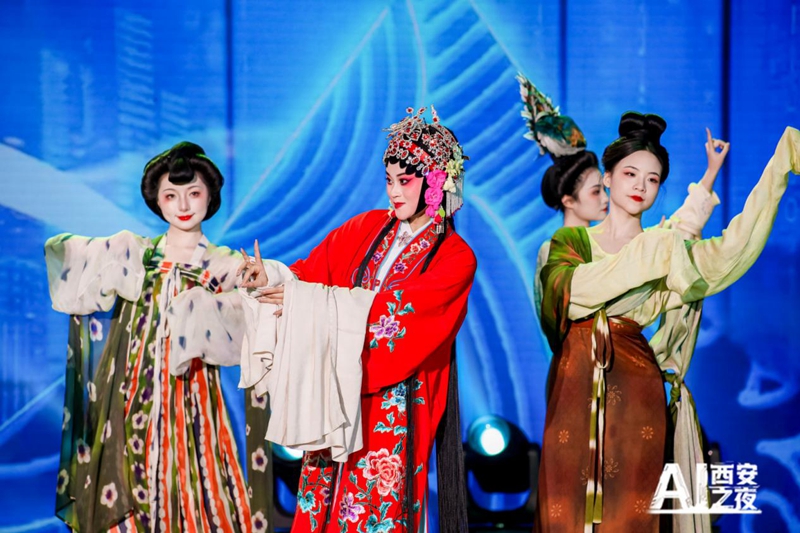
Models present traditional attire recreated using artificial intelligence at a fashion show in Xi'an, northwest China's Shaanxi Province, on the evening of Dec. 18, 2025. (People's Daily Online/Sun Ting)
The database, developed under the leadership of Liu Kaixuan, vice dean of the School of Apparel and Art Design at Xi'an Polytechnic University, was built with the support of AI technologies. It contains more than 50,000 3D garment models spanning the pre-Qin period (before 221 B.C.) through the Ming and Qing dynasties (1368-1911). The collection includes attire worn by people across different social strata.
The reconstructions draw on a wide range of archaeological and historical sources, including excavated textiles, surviving garments, scroll paintings, murals, ceramic figurines, and pictorial bricks and stone reliefs.
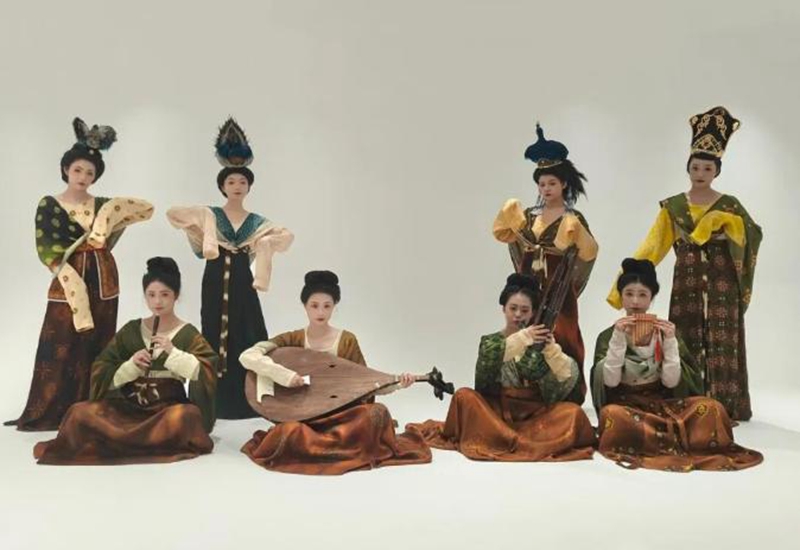
An artistic recreation of Tang Dynasty (618-907) court dance costumes. (Photo courtesy of the Hanfu Research Institute at Xi'an Polytechnic University)
"The database also includes dedicated sections for accessories such as footwear, headwear, hairstyles and makeup. Specialized collections have also been developed for opera costumes, ethnic minority attire and qipao. When integrated with independently developed virtual reality software for ancient costume display, the platform enables users to experience traditional clothing culture in an immersive and interactive way," Liu said.
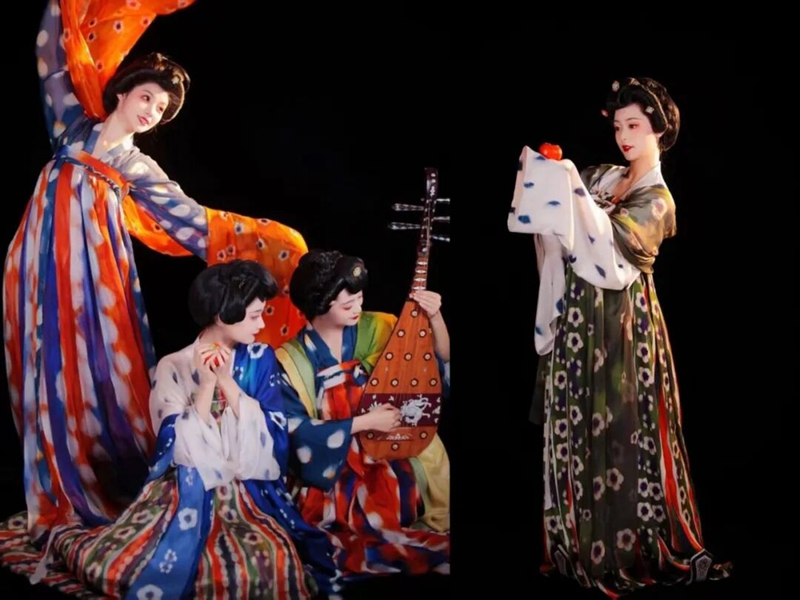
An artistic recreation of costumes worn by female tomb figurines from the Tang Dynasty (618-907). (Photo courtesy of the Hanfu Research Institute at Xi'an Polytechnic University)
Since the database's establishment in 2017, more than 100 faculty members and students have contributed each year to its maintenance and expansion. What began with 1,000 garments has grown to over 50,000, with expanded scope, richer categories and increasingly refined detail, Liu said.
Liu added that the university has secured cooperation agreements with several companies. Moving forward, elements from the database will be integrated into modern school uniforms and everyday clothing, creating designs that both reflect the aesthetic essence of traditional Chinese attire and meet the practical needs of contemporary life.

Tel:86-10-65363107, 86-10-65368220, 86-10-65363106
 Scan the QR Code
 Follow Us