





- BRNN
- BRI News
- BRNN News
- Database
Official Documents Polices and Regulations
Inter-government Documents International Cooperation BRI Countries
Business Guide Economic Data BRI Data
Trade
Investment Projects Latest projects
Cases - Content Pool
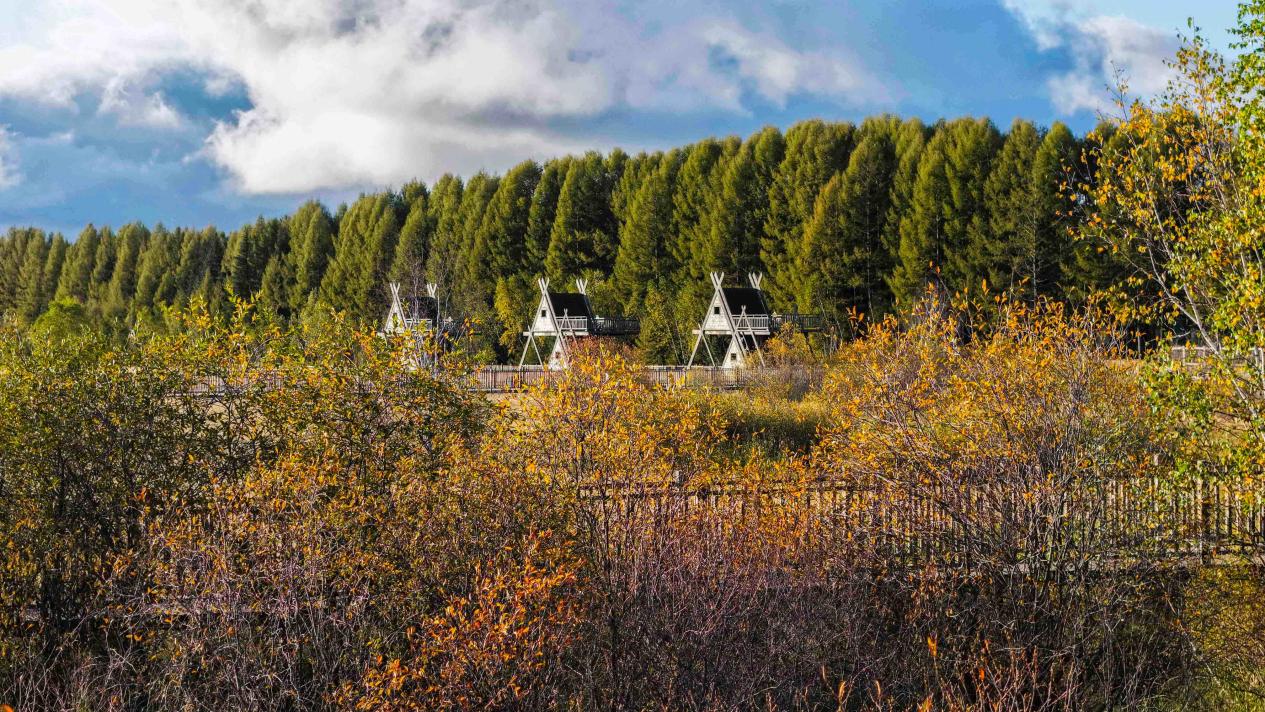
Photo shows forests in Saihanba. (Photo/Liu Mancang)
After a snowfall, the vast man-made forests in Saihanba were blanketed in pristine white. Beneath the snow-covered canopy, the footsteps of forest rangers—together with satellites overhead, watchtowers perched on mountain peaks, high-definition cameras, and ground-based Internet of Things monitoring equipment—interweaved into an integrated sky–air–ground monitoring and protection network, safeguarding this hard-won expanse of green.
Located at the northernmost edge of Hebei province in north China and along the southern fringe of the Hunshandak Sandland on the Inner Mongolian Plateau, Saihanba was, more than half a century ago, a remote, desolate, and bitterly cold land. Across three generations, workers at the Saihanba Forest Farm persevered in afforestation under extremely harsh natural conditions, ultimately building the world's largest man-made forest.
Recently, the Saihanba mechanized forest farm successfully passed the CFCC (China Forest Certification Council) / PEFC (Programme for the Endorsement of Forest Certification) forest management certification. The certification is valid from December 2025 to December 2030 and covers an area of 93,337.62 hectares—equivalent to the forest farm's entire managed area of 1.4 million mu. This achievement further broadens the pathways for transforming ecological value and opens the door for Saihanba's forest products to reach global markets.
What is the value of this "green certification?"
According to Guo Zhifeng, deputy director of the Saihanba mechanized forest farm, obtaining this certification means that the forest farm's management philosophy, management system, and technical standards have gained international recognition. It will help increase market acceptance, products' added value and international competitiveness. "Put simply," Guo explained, "this certification is a 'green pass' to the international market."
Yet earning this certification was no easy task.
Entrusted with the assessment, Zhonglin Tianhe Forest Certification Center (ZTFC), a Chinese forest certification body, conducted the CFCC/PEFC forest management certification. The CFCC and PEFC achieved mutual recognition in 2014. Tan Tuanyuan, an executive with ZTFC, explained that the certification standards mainly cover social, economic, and environmental performance.
"The certification involves 10 principles, 46 standard clauses, and 143 indicators," Guo noted. Statistics show that among more than 4,200 state-owned forest farms nationwide, only a small number of them have successfully passed CFCC/PEFC forest management certification.
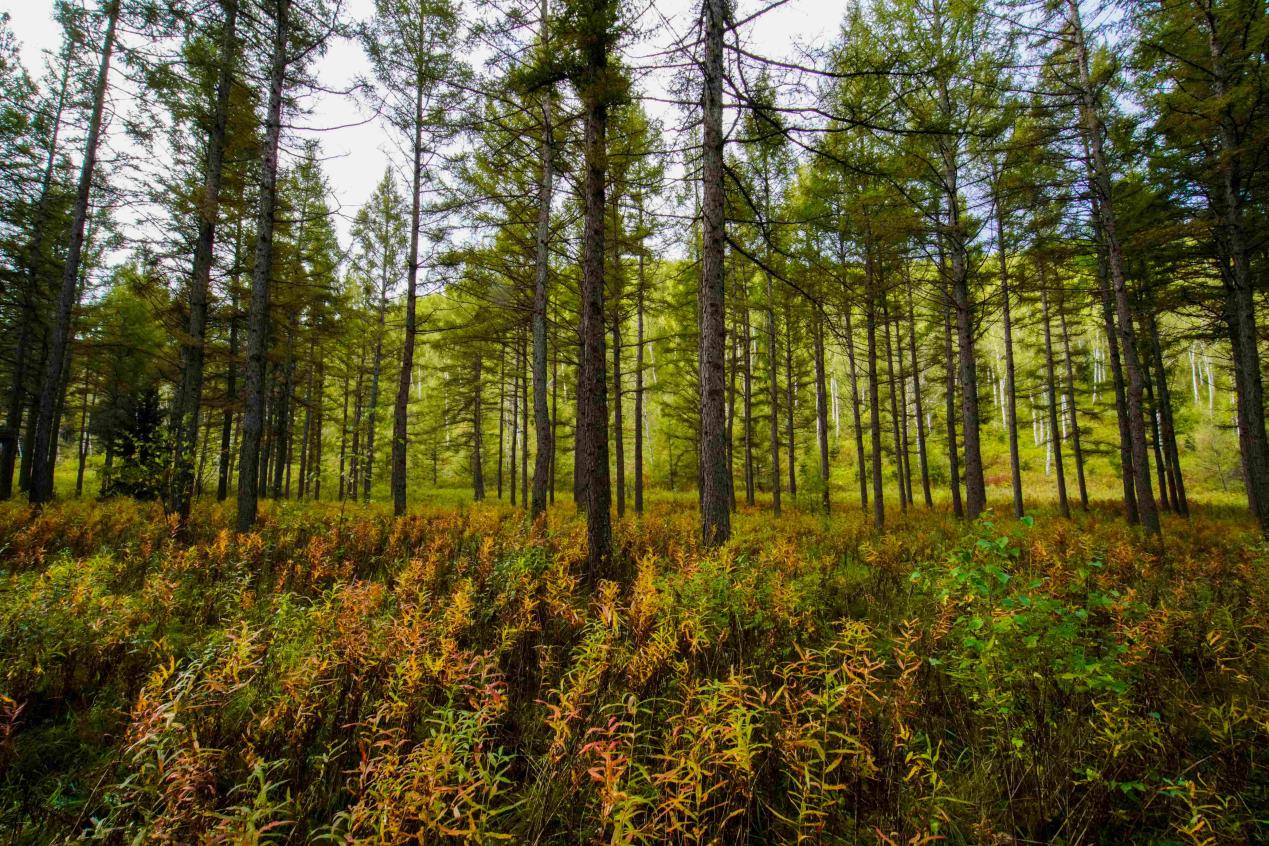
Photo shows forests in Saihanba. (Photo/Liu Mancang)
In the first half of 2025, an expert team from ZTFC entered the vast forests of Saihanba to conduct a comprehensive "physical examination" of the forest farm's management practices.
Visiting all six sub-farms of the Saihanba mechanized forest farm, their inspections covered the entire lifecycle of forest management—from seedling cultivation and afforestation to tending, harvesting, and protection. Even routine management meeting records and warehouse inventory checks were carefully reviewed.
After the first round of inspections, the forest farm received a lengthy list of required rectifications. "Quite a few issues were raised," Guo recalled. In response, the forest farm mobilized concentrated efforts to make improvements, bringing everything—from management approaches and scientific seedling cultivation to every detail of resource protection—into line with the required standards.
Following two rounds of rigorous review, the forest farm finally obtained the CFCC/PEFC certification at the end of 2025.
"This certification affirms our long-term commitment to science-based forestry and sustainable management," said Chang Weiqiang, head of the forest management department of the forest farm. It requires that the entire forest management process be orderly, sustainable, and eco-friendly, he added.
Going forward, Saihanba's forest products will be able to enter markets in Europe, the United States, and elsewhere more smoothly, while also providing support for downstream enterprises along the industrial chain as they expand overseas.
In recent years, the forest farm has taken targeted measures to improve forest quality. In response to issues such as structural monotony and ecological degradation in large-scale plantations, the forest farm has pioneered the implementation of techniques including high-density initial planting and multiple rounds of tending and utilization. It has actively promoted the development of mixed-species forests, steadily enhancing the diversity, stability, and sustainability of forest ecosystems.
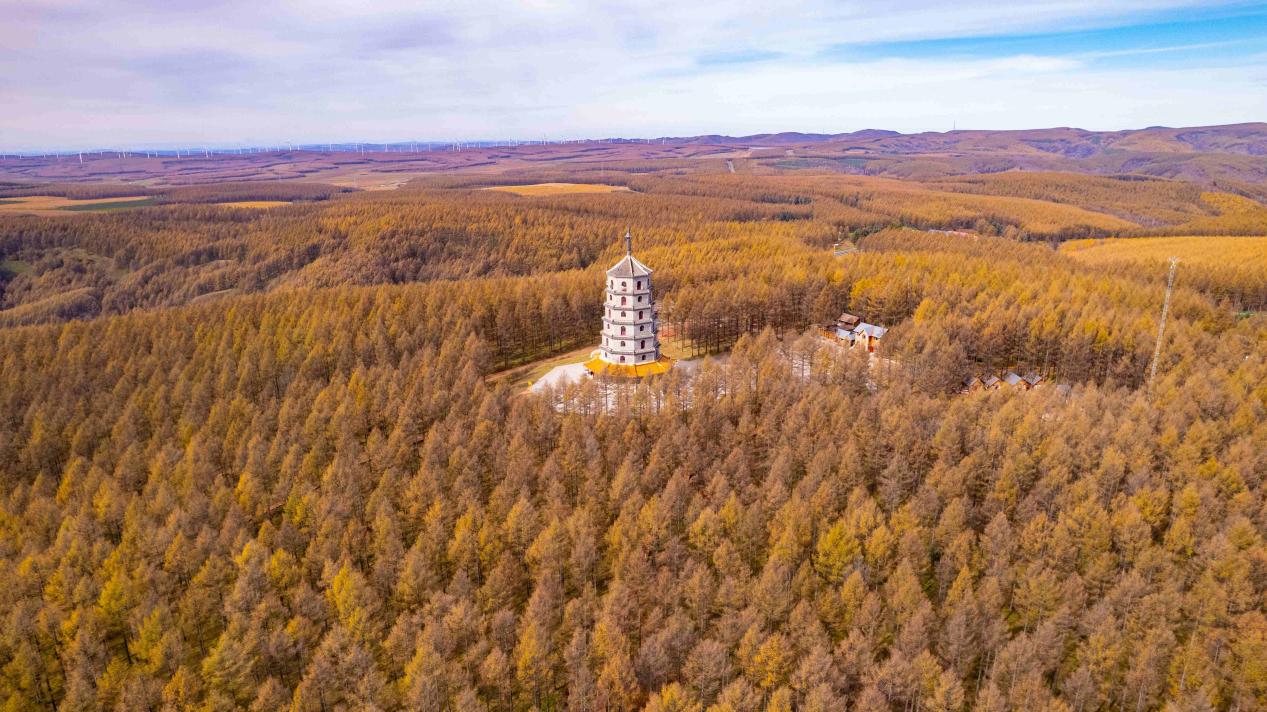
Photo shows forests in Saihanba. (Photo/Sun Zhanjun)
Over the past five years, the forest farm has completed forest tending over a cumulative area of 542,000 mu. The proportion of mixed forests has risen from 21.4 percent to 26.9 percent. Saihanba has been recognized as a national pilot for sustainable forest management and as a demonstration unit under the UN Forest Instrument. By 2040, the area of mixed forests will increase by another 244,000 mu, accounting for more than 40 percent of the total forest area.
In exploring mechanisms for maximizing the economic value of ecological products, the Saihanba mechanized forest farm has kept breaking new ground. After becoming the first state-owned forest farm in North China to develop a national-level certified forestry carbon sink project in 2016, it went on in 2022 to develop 330,000 mu of forest carbon sequestration products in Hebei province. The verified carbon sink amounted to 2.25 million tons, generating revenue of 10.68 million yuan ($1.53 million). Through scientific tending, the forest farm now achieves an annual carbon sequestration of 860,300 tons—equivalent to offsetting the annual emissions of approximately 860,000 family cars.

Tel:86-10-65363107, 86-10-65368220, 86-10-65363106
 Scan the QR Code
 Follow Us