





- BRNN
- BRI News
- BRNN News
- Database
Official Documents Polices and Regulations
Inter-government Documents International Cooperation BRI Countries
Business Guide Economic Data BRI Data
Trade
Investment Projects Latest projects
Cases - Content Pool
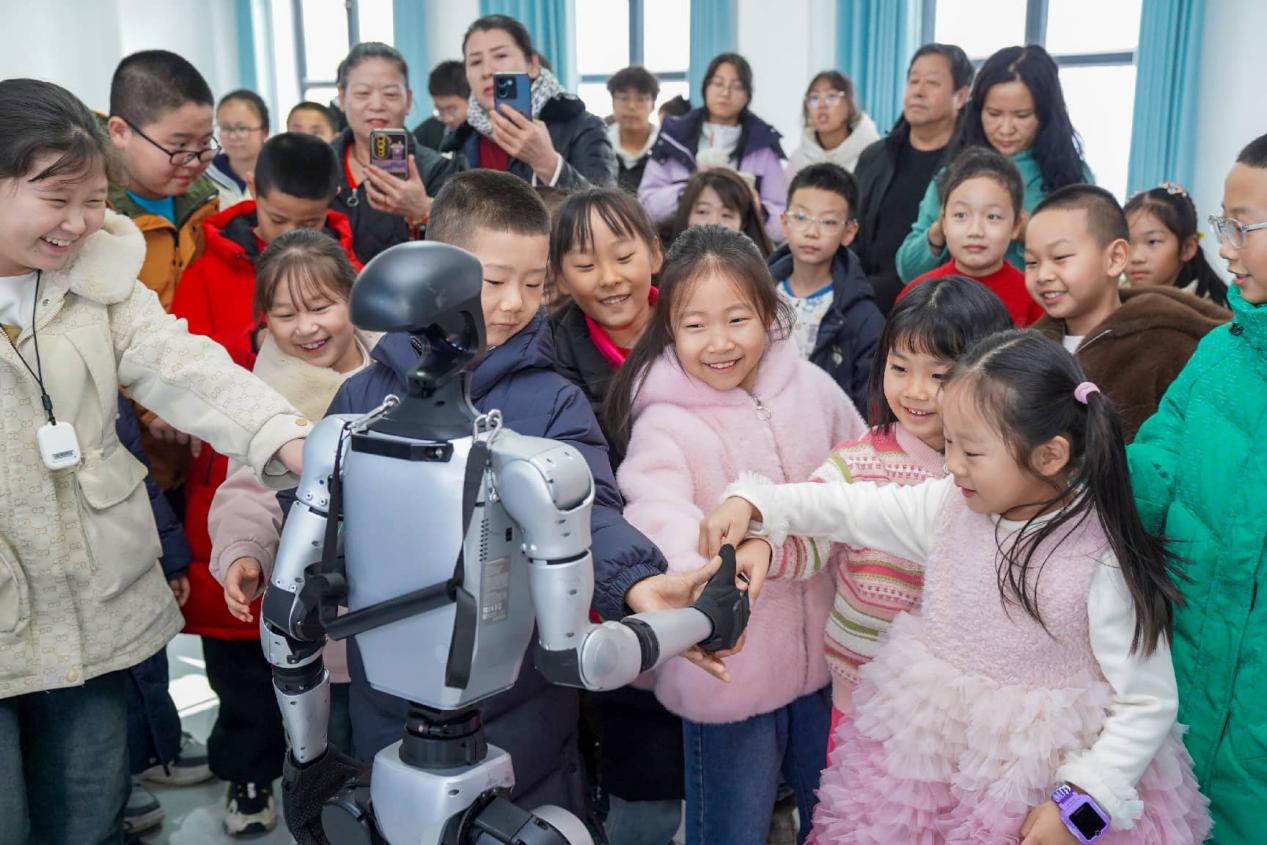
A robot shakes hands with children in Wusu, northwest China's Xinjiang Uygur autonomous region. (Photo/Li Renxi)
In China, AI technologies are advancing at an unprecedented pace, entering a phase of explosive growth. From the meteoric rise of DeepSeek to the viral popularity of Seedance, alongside breakthroughs in humanoid robotics and increasingly sophisticated smart vehicles -- not to mention the rapid expansion of smart factories and ever-evolving smart city ecosystems -- AI is unlocking transformative potential across industries and daily life.
As a strategic technology driving the next wave of scientific and industrial transformation, AI has received significant national focus in China. The country's overall strength in the field continues to grow.
By the end of 2025, China was home to over 6,000 AI enterprises, with its core AI industry valued at more than 1.2 trillion yuan ($174.3 billion). At the same time, China's intelligent computing power capacity has exceeded 1,590 EFLOPS.
In recent years, China has continued to strengthen basic research in AI. Both the quantity and quality of AI research papers produced in the country rank among the top globally. Data released in 2025 by the World Intellectual Property Organization showed that China has become the world's largest holder of AI patents, accounting for as much as 60 percent of the global total.
Innovation-driven progress has fortified China's AI sector with robust core technologies. The country has launched multiple AI chips, accelerated the development of high-quality industry datasets, and cultivated domestically developed large-scale models that contribute to the global open-source ecosystem. These advances reinforce China's capacity to maintain control over critical AI technologies amid growing international competition.
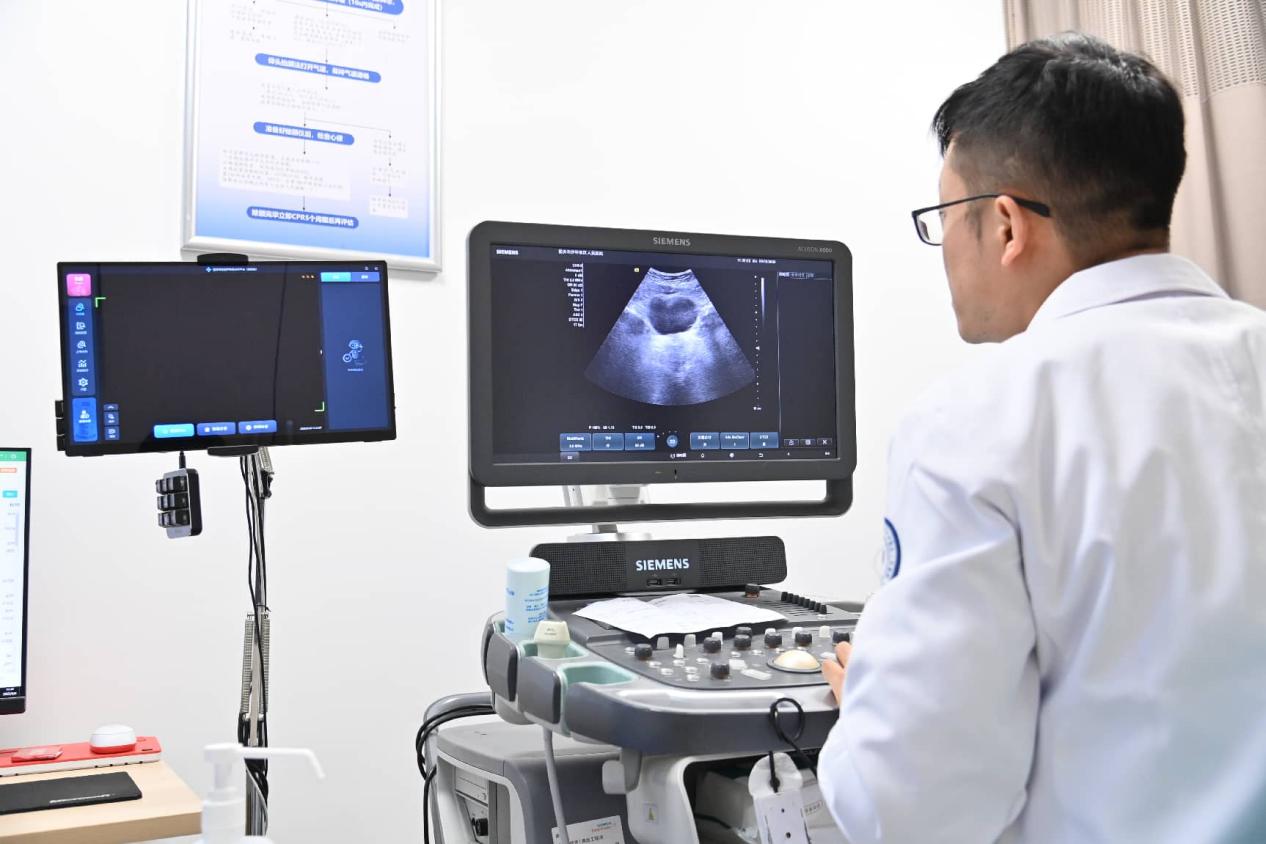
A doctor uses an AI-assisted medical system for color ultrasound diagnosis at Shapingba Hospital affiliated to Chongqing University. (Photo/Sun Kaifang)
AI's impact is amplified through diverse real-world applications. Industrially, it is revitalizing traditional sectors while catalyzing growth in strategic emerging and future industries. Socially, AI is enhancing public well-being by seamlessly integrating into daily life -- enriching work, education, and leisure experiences.
China has seen rapid growth in both the scale and penetration of generative artificial intelligence. According to the 57th Statistical Report on Internet Development in China released by the China Internet Network Information Center, the number of generative AI users in China reached 602 million by December 2025, up 141.7 percent from the end of 2024. The penetration rate climbed to 42.8 percent, representing a substantial year-on-year increase of 25.2 percentage points.
During the 14th Five-Year Plan period (2021-2025), generative AI has rapidly integrated into both production and daily life, becoming a key engine driving China's digital and intelligent transformation of its economy and society.
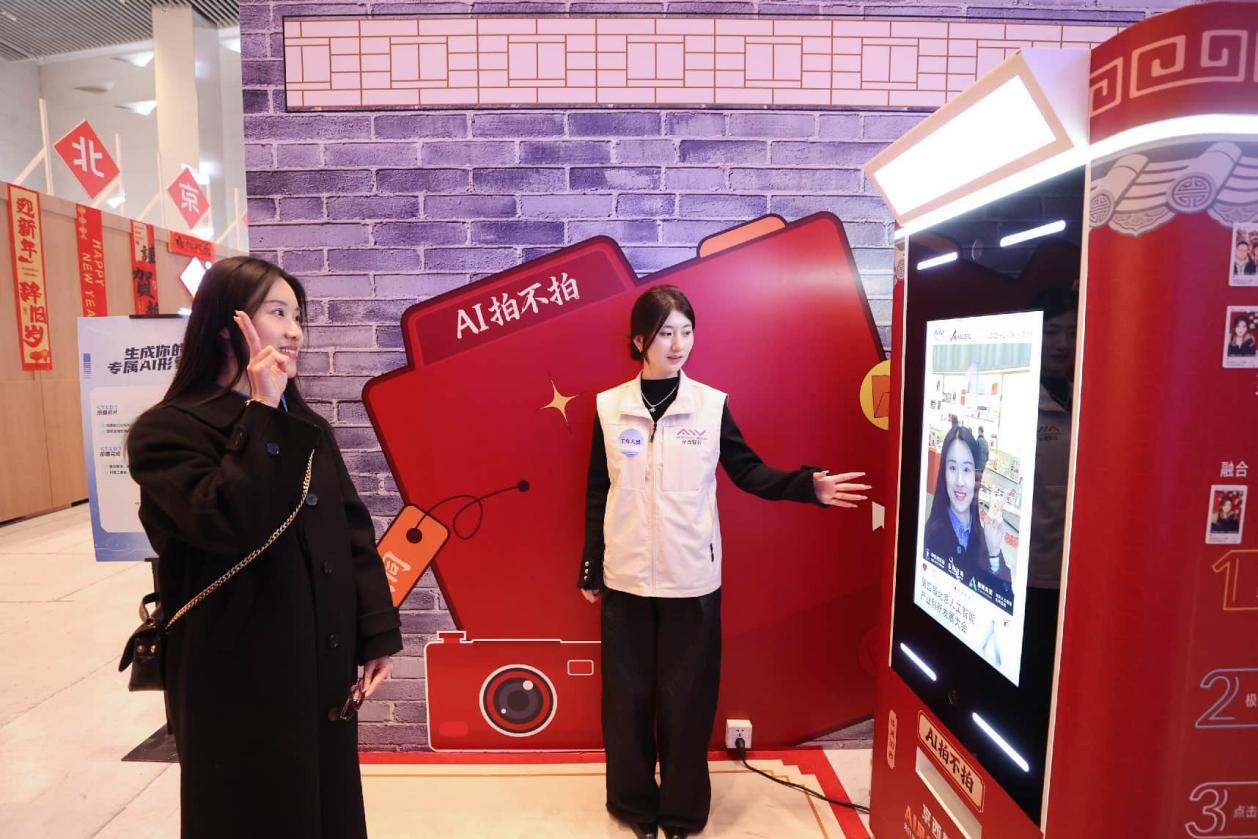
A woman takes a selfie using an AI-assisted system at the 4th Beijing Artificial Intelligence Industry Innovation and Development Conference, Feb. 28, 2026. (Photo/Chen Xiaogen)

Tel:86-10-65363107, 86-10-65368220, 86-10-65363106
 Scan the QR Code
 Follow Us