





- BRNN
- BRI News
- BRNN News
- Database
Official Documents Polices and Regulations
Inter-government Documents International Cooperation BRI Countries
Business Guide Economic Data BRI Data
Trade
Investment Projects Latest projects
Cases - Content Pool
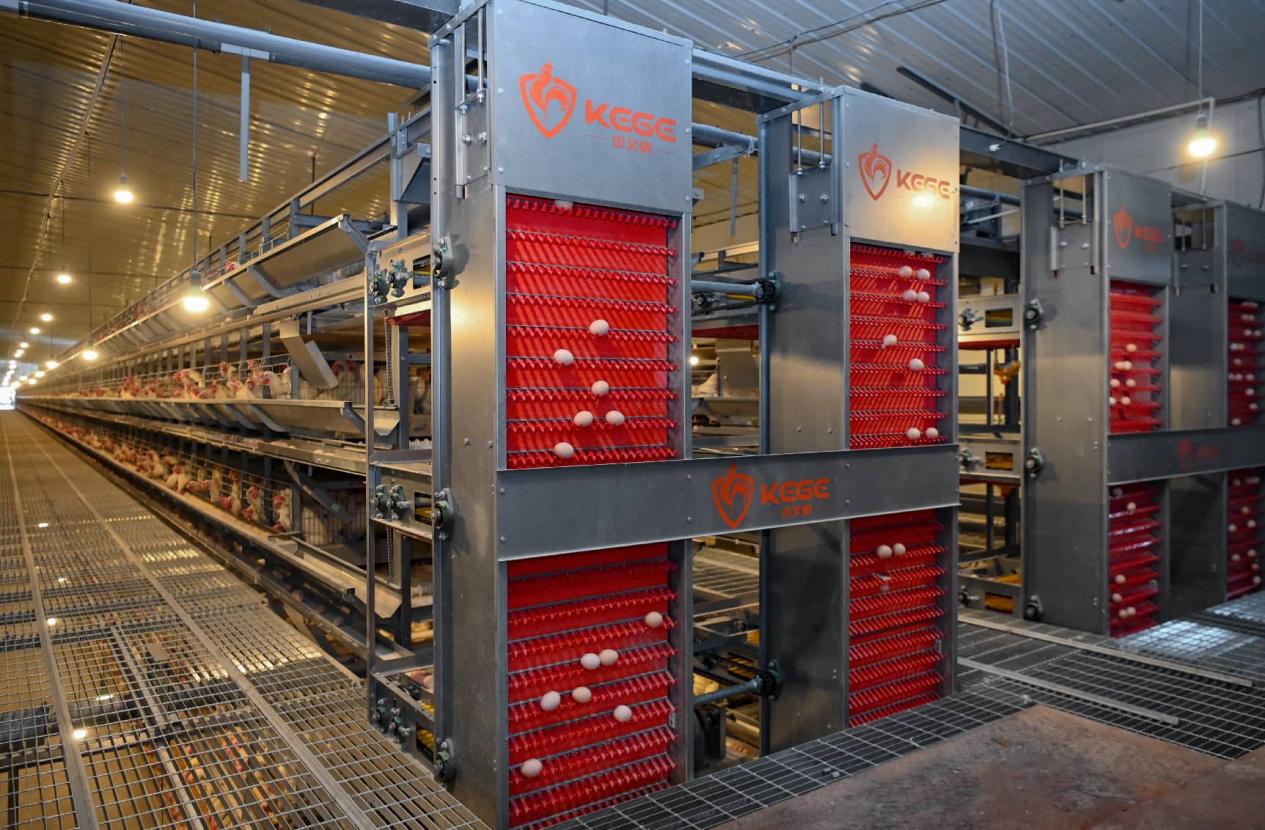
Photo shows an automatic sorting device of a poultry farm in Qinglong county, southwest China's Guizhou province. (Photo/Jia Zhi)
China is the world's largest producer of eggs, consistently leading globally in both output and industry scale. Eggs are a staple nutritional source on Chinese tables.
The journey from henhouse to table requires significant effort to ensure safe, high-quality eggs. A recent People's Daily investigation provides insights.
"Eggs are a primary agricultural product, and the most fundamental requirement is safety," said Zhang Junmin, director of the Institute of Animal Science of the Chinese Academy of Agricultural Sciences and chief scientist of the national chicken layer industry technology system. Put simply, healthy hens lay good eggs, Zhang added.
So how is the health of hens ensured?
At 7 a.m., at a breeding base operated by Sundaily Farm Ecological Food Co., Ltd. in Zitong, Mianyang, southwest China's Sichuan province, farm managers put on protective clothing and undergo full-body disinfection before entering the henhouses to start their day.
Inside, fresh air systems run steadily, and automated equipment promptly processes chicken manure into organic fertilizer. The temperature is maintained at 22 to 26 degrees Celsius, humidity at 60 to 70 percent, and ammonia levels below 10 ppm.
"A comfortable environment is vital for hen health and egg nutritional quality," said Qi Sharina, the company's director of product development.
Qi emphasized strict controls over feed varieties, sourcing, freshness, and mycotoxin levels, alongside balanced diets. Drinking water meets potable standards and is monitored throughout. "Targeted vaccination and antibiotic-reduction strategies also eliminate drug residues at the source," she added.
Ensuring egg cleanliness and safety is another critical step.
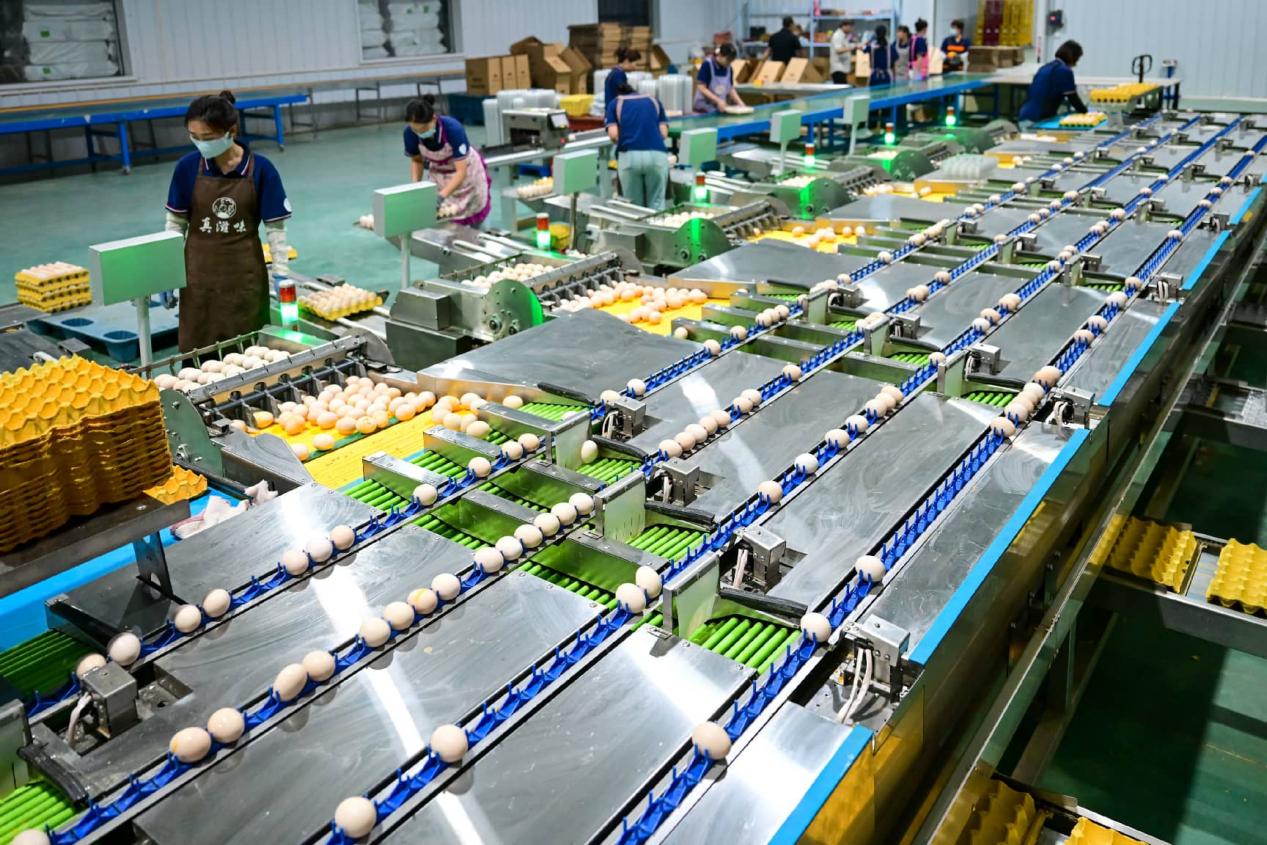
Eggs are sorted and packed at a sorting center of a poultry company in Luoyang, central China's Henan province. (Photo/Li Weichao)
Qi pointed to a fully automated production line where eggs moved orderly on conveyors. Robotic arms handled them with precision and care.
"Here, eggs go through multiple processes, including spraying, cleaning, air-drying, and ultraviolet sterilization, which effectively eliminate bacteria such as E. coli and salmonella on the shell surface," she explained.
Digital technology makes every egg traceable. Picking up an egg marked with a traceability code, Qi explained that the code allows consumers to track the entire process from chick breeding to storage and transport. The company's digital platform integrates farm management and production traceability, creating a closed-loop, data-driven system linking research and production.
In the mid-1990s, imported laying hens once accounted for more than 80 percent of China's market. Wu Guiqin, deputy general manager of Beijing-based Yukou Poultry, recalled that an imported hen could lay more than 300 eggs annually, while a domestic one produced just over 100, a significant gap.
To address this, Chinese scientists began systematically collecting genetic resources in the 1990s, laying a solid foundation for future breeding efforts.
At a national core breeding farm in Beijing's Pinggu district, technicians used smart devices to collect data on each hen, including egg production and egg weight. Eggs were then tested for shell strength, Haugh units, and other quality indicators. All data were fed into a performance database, forming the basis for selective breeding.
In 2009, a breakthrough arrived with two high-performance domestic breeds: "Jinghong No.1" and "Jingfen No.1." Each capable of producing over 330 eggs annually, these breeds successfully broke the foreign dominance. After more than a decade of further research, Yukou Poultry established a fully commercialized independent breeding system.
"Today, domestic breeds account for over 60 percent of the market," Wu said. "Our breeding stock is also exported to countries such as Tanzania and Laos."
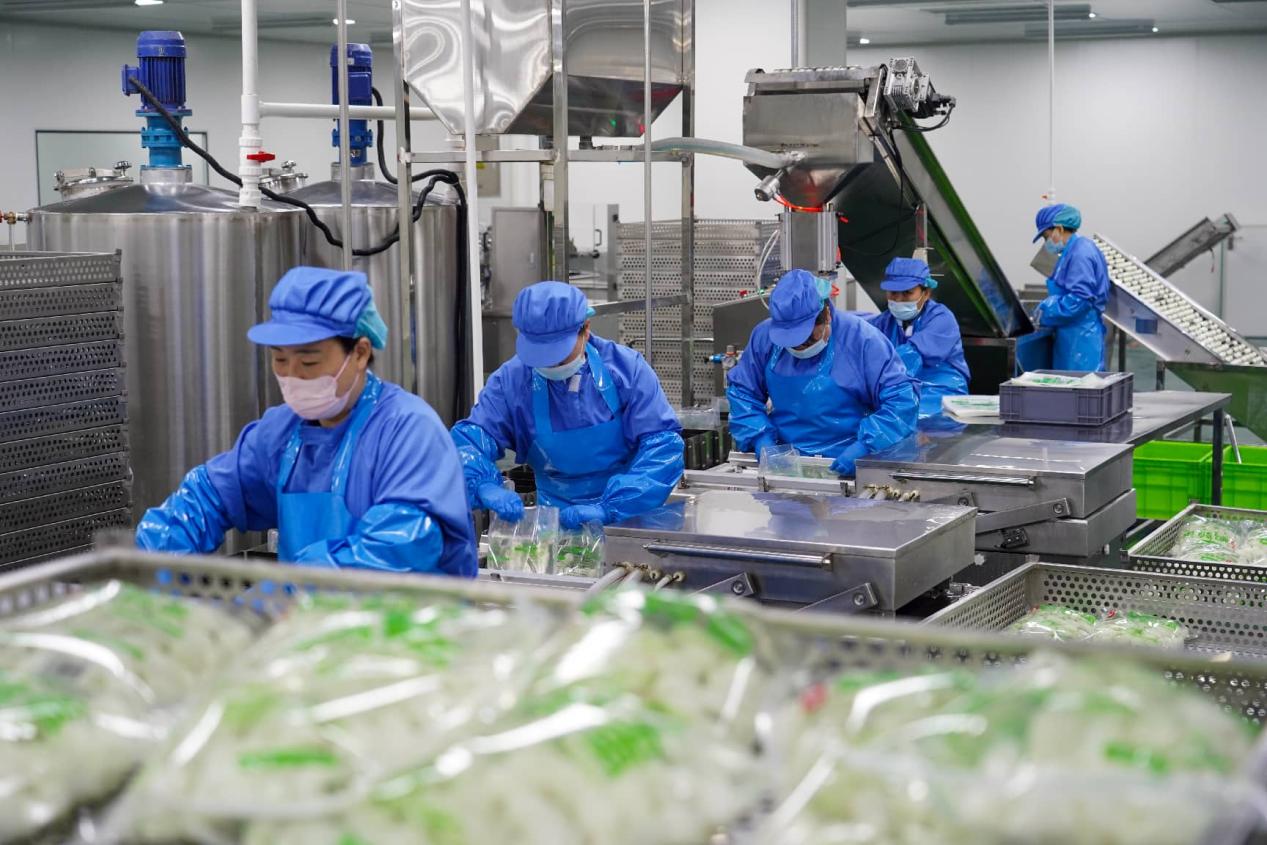
Egg products are produced and packed in a workshop of an egg processing company in Heze, east China's Shandong province. (Photo/Zang Dongming)
Beyond safety, nutrition, and breeding independence, China is also strengthening the entire industrial chain. At an egg products R&D center of egg producer Hanovo in Dalian, northeast China's Liaoning province, technicians are testing the foaming properties of newly developed enzymatically hydrolyzed egg protein powder.
"We focus on applications such as baking, improving solubility and foaming performance so that egg-based ingredients better meet industrial needs," said Wang Hongrong, the company's general manager.
"Currently, deep processing accounts for only about 8 percent of China's egg industry, leaving significant room for growth compared with developed countries," Wang noted. As China's catering industry becomes more industrialized and the baking sector expands, demand for standardized, high-quality egg ingredients continues to rise.
"Advanced processing is key to increasing added value," said Han Jianchu, general manager of Hanovo's parent company Hanwei Group. By processing fresh eggs at scale into products such as liquid eggs, egg powder, and soft-boiled eggs, the company is transforming primary agricultural products into standardized industrial ingredients and convenient foods. Its products are now exported to more than 10 countries and regions.

Tel:86-10-65363107, 86-10-65368220, 86-10-65363106
 Scan the QR Code
 Follow Us