





- BRNN
- BRI News
- BRNN News
- Database
Official Documents Polices and Regulations
Inter-government Documents International Cooperation BRI Countries
Business Guide Economic Data BRI Data
Trade
Investment Projects Latest projects
Cases - Content Pool
The 27th Chinese (Hunan) Medical Team to Sierra Leone has introduced Fu's Subcutaneous Needling (FSN), an innovative modern acupuncture technique, into local clinical practice, achieving promising results in the treatment of pain-related disorders and offering a new example of how Traditional Chinese Medicine can serve communities abroad.
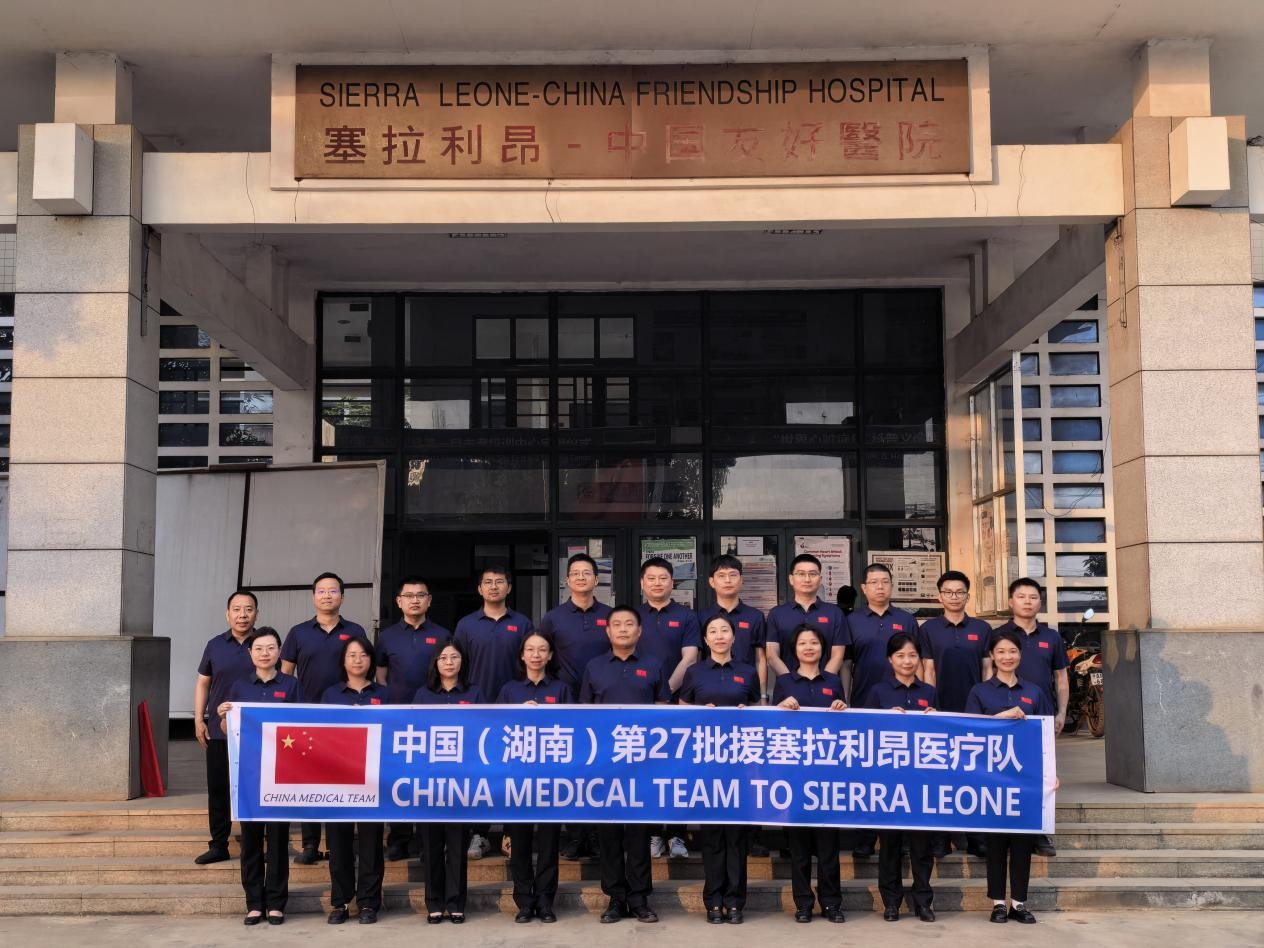
(Photo provided to People's Daily Online)
Sierra Leone still faces relatively limited medical resources, particularly in the standardized management of pain-related conditions. In response, the Chinese (Hunan) medical team, based on local healthcare needs, actively explored ways to adapt TCM techniques to local clinical settings and systematically applied FSN in Sierra Leone for the first time.
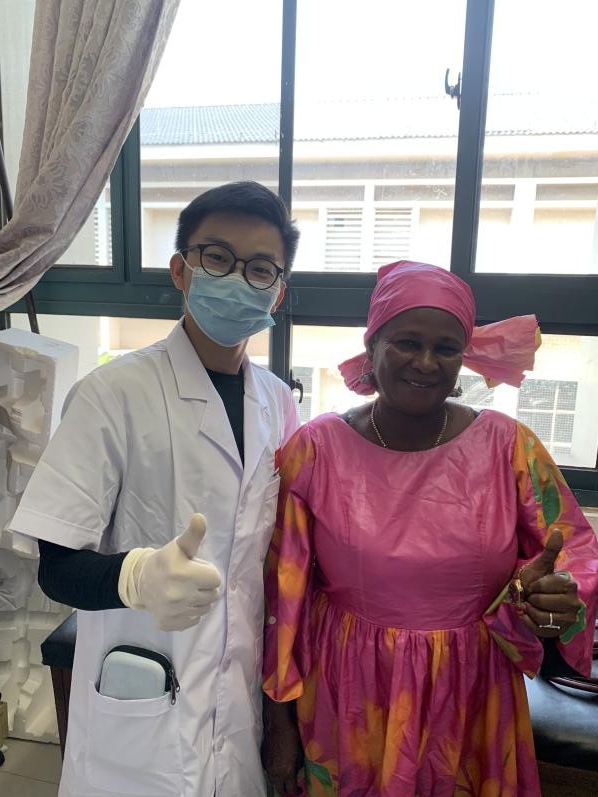
“Fast results with minimal discomfort” has become the most common response from local patients. Clinical observations show that among patients who received FSN treatment, nearly 90 percent experienced marked pain relief immediately after treatment.
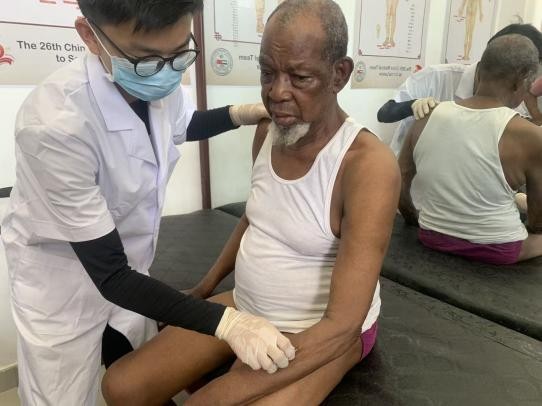
Unlike traditional acupuncture, which is based on the theory of meridians and acupoints, FSN is grounded in a modern theory of qi and blood circulation. It emphasizes precise intervention by focusing on muscles, fascia, and local blood flow at the site of dysfunction. In clinical practice, the medical team has made full use of FSN’s diagnostic framework—differentiating the disease, the condition, and the affected muscle—to formulate individualized treatment plans, significantly improving precision and effectiveness.
(Photo provided to People's Daily Online)
In practical operation, FSN is performed mainly through sweeping movements in the superficial subcutaneous fascia layer, combined with reperfusion approach. This helps rapidly relieve muscle spasms, improve local circulation, and promote pain relief as well as functional recovery. Because the procedure is minimally invasive and only mildly stimulating, it substantially reduces patients’ fear of needling and is more readily accepted by local communities.
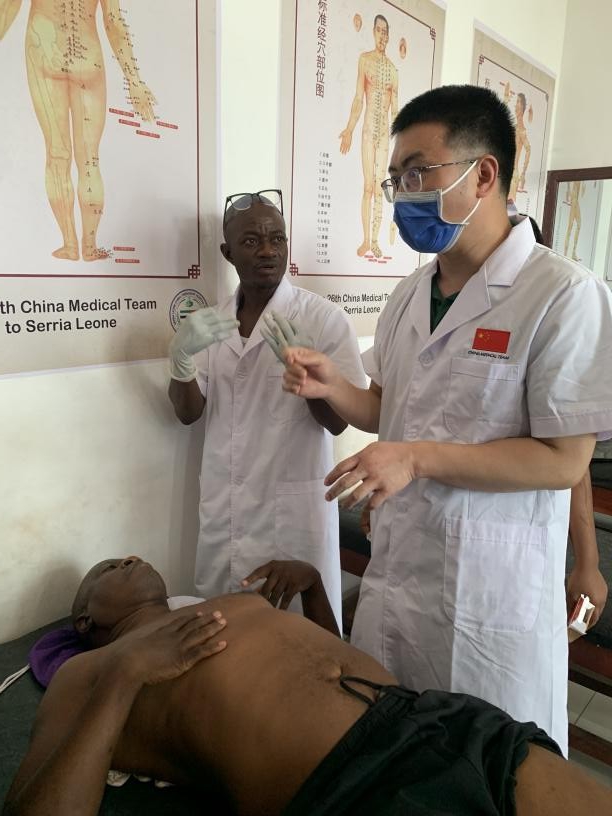
Zhou Shengqiang, an associate chief physician and director of the China-Sierra Leone TCM Center, said that FSN has four major advantages: safety, rapid effect, minimal pain, and reproducible therapeutic outcomes. These strengths make it especially suitable for promotion in primary healthcare settings. With standardized training, local medical personnel can also acquire the technique relatively quickly, laying a foundation for its continued application and wider dissemination.
(Photo provided to People's Daily Online)
China’s overseas medical assistance is evolving from a model of short-term support to one focused on sustainable local capacity building. The successful introduction of FSN in Sierra Leone has not only improved local care for pain-related disorders, but also provided a practical and replicable example for the international promotion of TCM.
Through concrete action, the 27th Chinese (Hunan) Medical Team to Sierra Leone is helping advance China-Africa health cooperation, enabling more original Chinese medical innovations to benefit people around the world and contributing to the building of a global community of health for all.
(Photo provided to People's Daily Online)

Tel:86-10-65363107, 86-10-65368220, 86-10-65363106
 Scan the QR Code
 Follow Us