





- BRNN
- BRI News
- BRNN News
- Database
Official Documents Polices and Regulations
Inter-government Documents International Cooperation BRI Countries
Business Guide Economic Data BRI Data
Trade
Investment Projects Latest projects
Cases - Content Pool
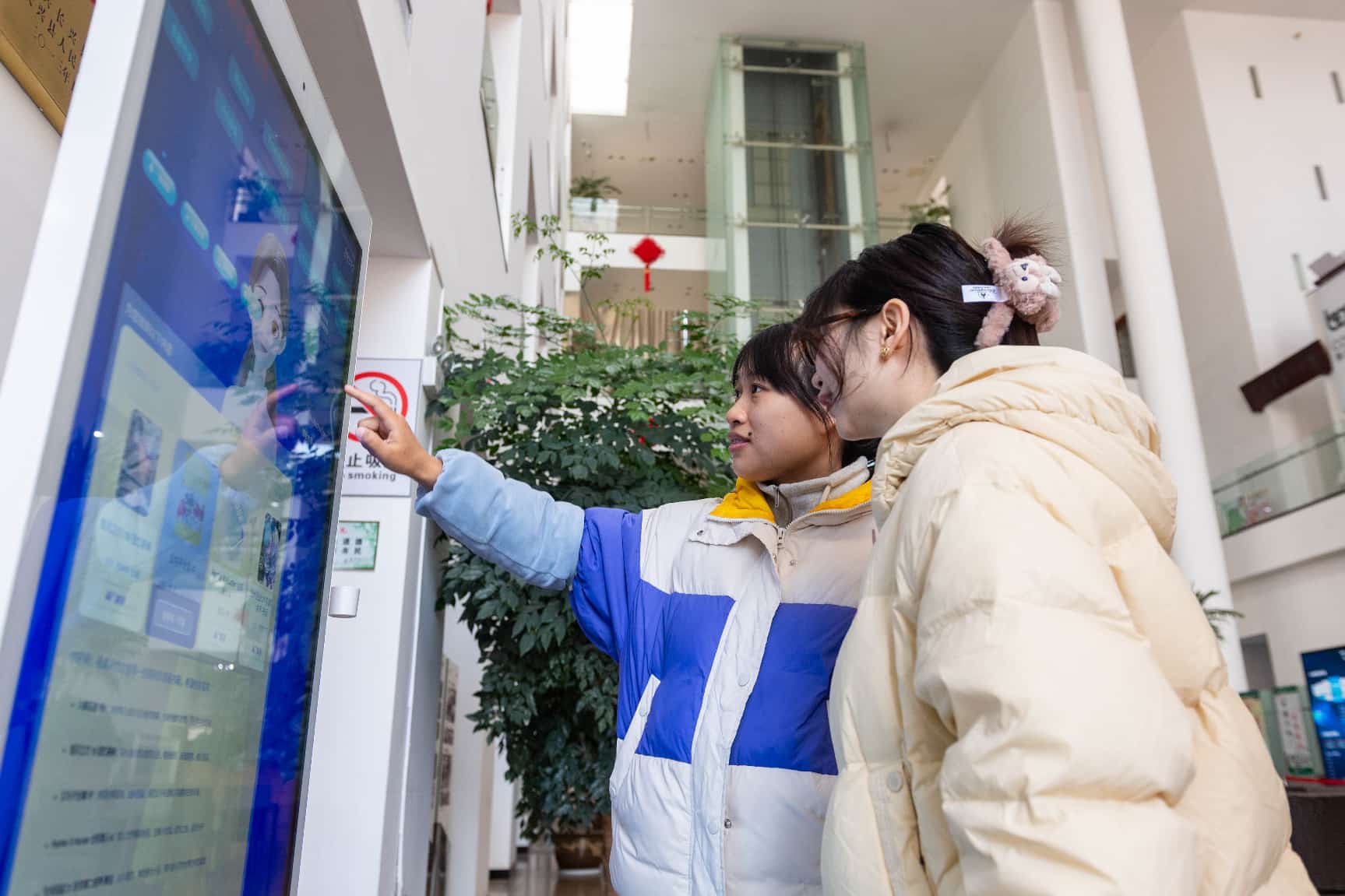
Readers interact with a "digital service provider" at a library in Changxing county, Huzhou, east China's Zhejiang province. (Photo/Xu Yang)
Artificial Intelligence (AI) is now integrated into a vast array of practical applications, from searching information and writing code to refining content, financial risk management, intelligent customer service, and code correction. Behind each of these applications lies the extensive use of a fundamental unit: the Token.
A token represents the smallest unit of information processed by large AI models. "At their core, AI large models are complex mathematical systems. They cannot directly understand text, sound or images in the human way," said Tang Huabin, deputy director of the Network and IT Technology Research Institute at the China Mobile Research Institute.
"They first convert raw data into a processable form, and Tokens are the basic units of that 'language,'" Tang added.
In March 2026, China's average daily token usage exceeded 140 trillion, representing a more than thousand-fold increase in just two years.
"The most direct driver of this explosive growth is the improvement in model capabilities," said Wu Di, head of intelligent algorithms at Volcano Engine, a cloud service platform under ByteDance. "Each advancement in model performance unlocks new applications, leading directly to surges in Token consumption." For example, generating a one-minute video using Doubao's (ByteDance's AI tool) Seedance 2.0 video generation model consumes over one million Tokens.
During March 2026, China ranked among the world's most active users of large AI models, with weekly token usage leading globally for three consecutive weeks.
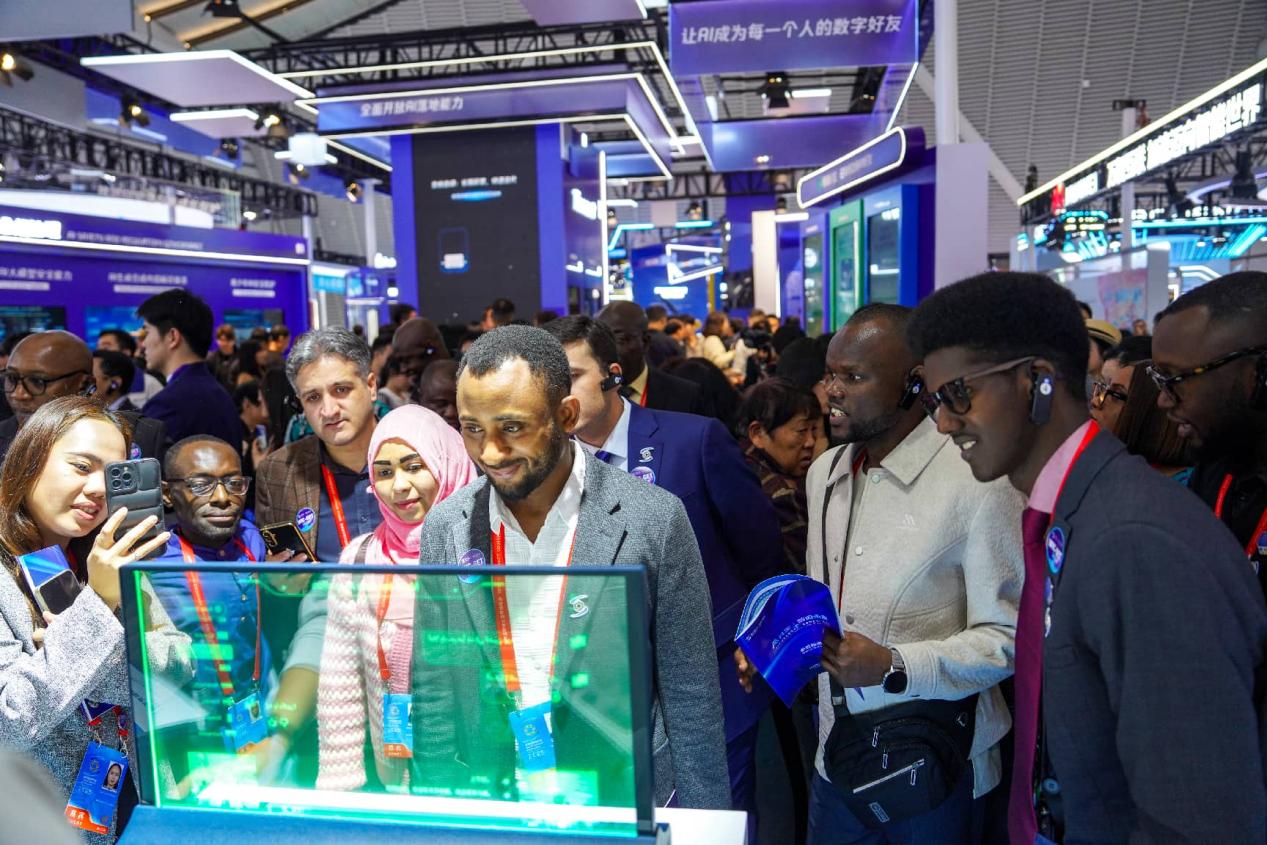
International participants in The Light of Internet Expo held in Wuzhen, east China's Zhejiang province, interact with an AI model, Nov. 6, 2025. (Photo/Yang Meiqing)
New application formats and business models are also fueling rapid growth. "Simple tasks may only require a few thousand tokens, but more complex tasks involving dozens of tool interactions can consume tens of thousands or more," Wu said. The emergence of AI agents and other new forms of application is pushing token usage into a fast-growth phase.
Li Jiayi, founder of software and information technology services company Love Q&A Technology (Beijing) Co., Ltd., used around 6 billion tokens over the past year.
At a 16-square-meter studio in the AI Genesis Community in Beijing's Haidian district, Li's team is currently testing a newly developed AI-powered toy.
"To make the toy interactive requires supporting software. Previously, developing such a system would take at least six months and require a team effort," Li said. Leveraging AI models and coding assistance tools -- at a cost of hundreds of millions of Tokens -- the development cycle has been reduced to just two months.
Li, without formal computer science training, began using AI-assisted programming tools in early 2025, overcoming traditional technical barriers. "Within a year, we developed two apps and one AI toy. Recently, we also showcased our self-developed AI hardware at the Consumer Electronics Show (CES)," he said. AI has significantly reduced development costs while enabling small and micro-sized businesses to explore innovation more effectively.
Overall, token usage is most concentrated in sectors with higher information density, faster product iteration cycles and closer integration between models and production systems. According to Wu, the internet industry leads in token usage in Doubao, followed by consumer electronics, finance, new retail and business services.
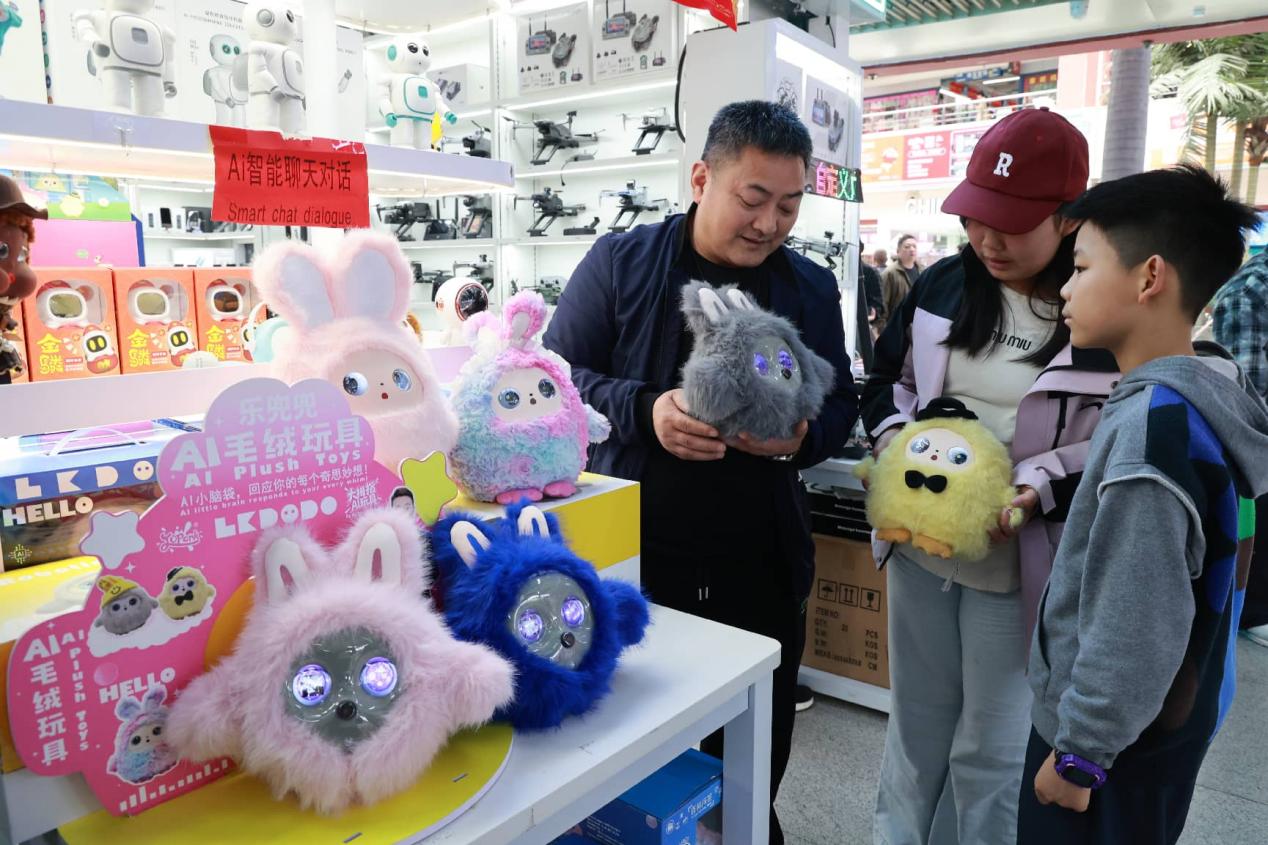
Consumers buy AI-powered stuffed toys at Yiwu International Trade Market in east China's Zhejiang province. (Photo/Pan Qiuya)
Looking ahead, application scenarios such as software development, in-depth research and personal assistants are expected to drive further growth in token consumption.
"In software development in particular, AI is evolving from writing code to understanding entire projects. It can now identify errors, optimize performance and even complete development tasks autonomously through agents," Tang said. "With longer code contexts and more interaction rounds, enterprises are more willing to pay for efficiency gains. This will become a major source of demand growth."
"Since late January this year, some model companies have achieved revenue in just 20 days that exceeds their total earnings for all of 2025," said Liu Liehong, head of China's National Data Administration. "This reflects the rapid emergence of a new business logic built on Token-based pricing."
Tokens are measurable, linked to computing power consumption and applicable across multiple modalities, making them an effective unit for connecting technological supply with commercial demand. "You can think of it this way: the intelligence output of large models is like electricity, while intelligent computing centers are like power plants. Electricity is measured in kilowatt-hours, and AI usage is measured in tokens," said Huang Shan, strategy director of Lenovo Infrastructure Solutions Group.
Looking ahead, as society becomes increasingly intelligent, AI is expected to function as a basic resource—like water or electricity—available on demand, with users paying only for what they consume, Huang added.

Tel:86-10-65363107, 86-10-65368220, 86-10-65363106
 Scan the QR Code
 Follow Us