Chinese transport projects so stunning they look AI-generated — but aren't
Videos and photos highlighting the almost sci-fi look of China's transport infrastructure have sparked widespread curiosity on overseas social media, with some viewers even wondering whether they are AI-generated. People's Daily Online presents a series of visually striking infrastructure projects that have drawn significant international attention.
Beijing Daxing International Airport connects the world
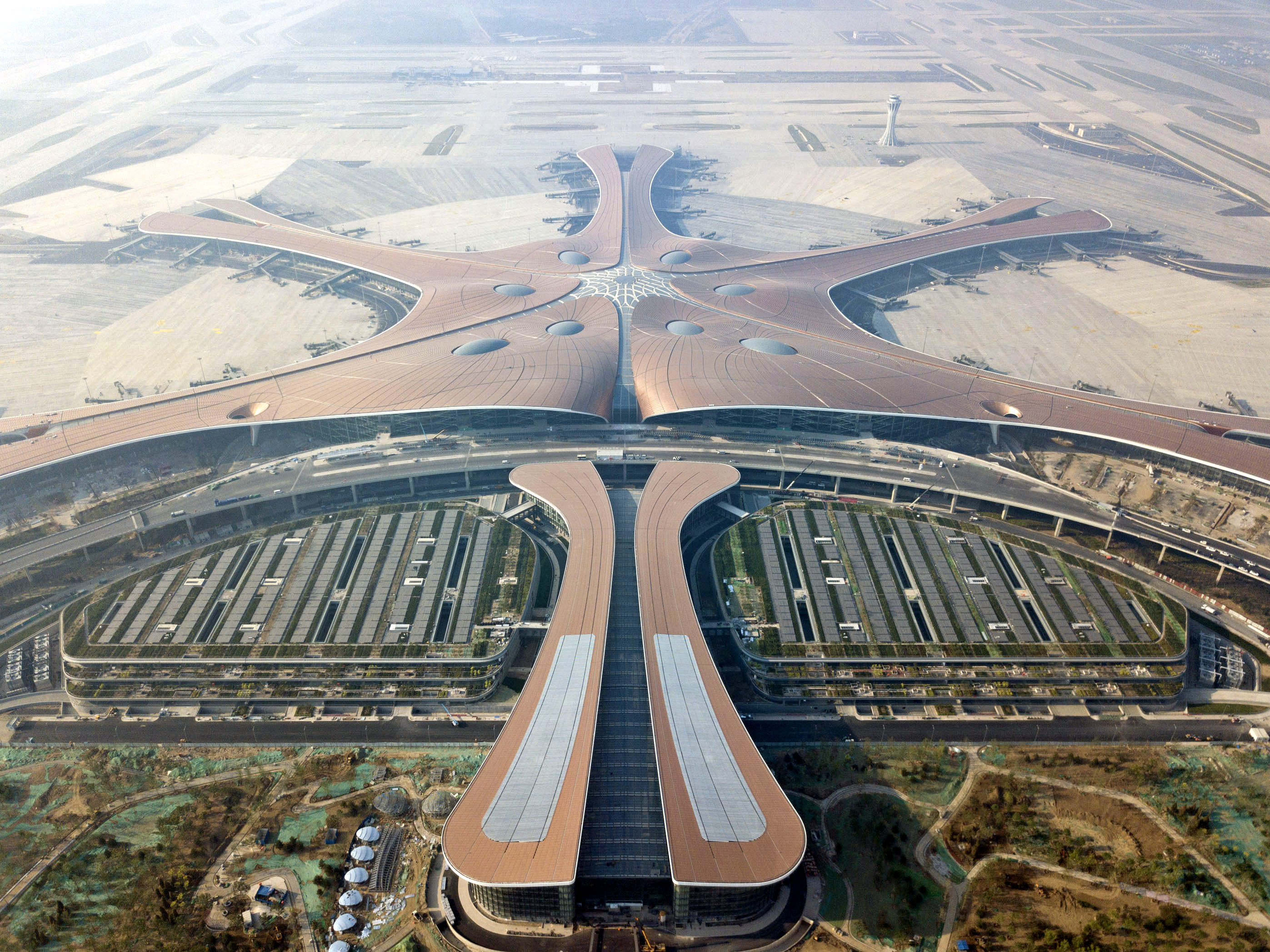
Exterior view of the terminal building of the Beijing Daxing International Airport in Beijing, capital of China. (Xinhua/Cai Yang)
Beijing Daxing International Airport is located 46 kilometers south of downtown Beijing. Designed in the shape of a phoenix, its combination of steel structures and glass walls creates a sleek, modern aesthetic that feels open and airy.
The C-shaped columns are a highlight of the airport's integrated structure design, allowing maximum natural light into the terminal. The design blocks 59 percent of direct sunlight, balancing brightness with heat control.
As of March 31, 2026, the airport had handled over 1.52 million flights and 211 million passenger trips, including 14.29 million inbound and outbound passenger trips. In 2025, its annual passenger throughput exceeded 50 million for the first time. In the first quarter of 2026, the airport handled around 450,000 foreign arrivals and departures.
Hong Kong-Zhuhai-Macao Bridge boosts development of Greater Bay Area
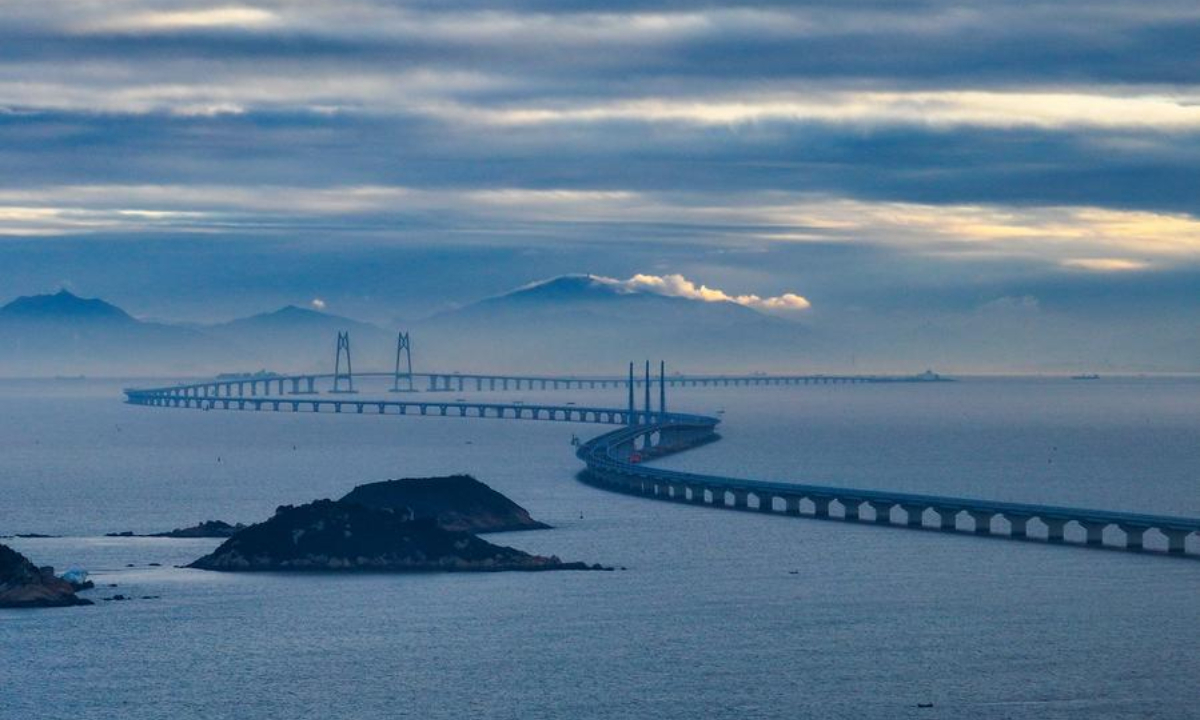
An aerial drone photo taken on Dec. 15, 2023, shows a view of the Hong Kong-Zhuhai-Macao Bridge in south China. (Photo/Xinhua)
The Hong Kong-Zhuhai-Macao Bridge spans 55 kilometers. Designed to last 120 years, it holds multiple world records, including the longest overall span, the longest steel bridge structure and the longest immersed tube tunnel.
The bridge is a premier example of industrialized construction, with approximately 95 percent of its components prefabricated at factories. Two artificial islands, each covering 100,000 square meters, were completed in just 215 days.
The 6.7-kilometer undersea tunnel was the most challenging section of the project. It consists of 33 prefabricated tubes, each 180 meters long and weighing 80,000 tonnes, which were sunk and precisely aligned in water more than 40 meters deep.
The Zhuhai land port of the Hong Kong-Zhuhai-Macao Bridge had handled over 100 million passenger trips as of January this year. In 2025, the total import and export value of goods passing through the port exceeded 300 billion yuan ($43.91 billion) for the first time.
Huajiang Grand Canyon Bridge, world's highest and largest-span bridge built in a mountainous area
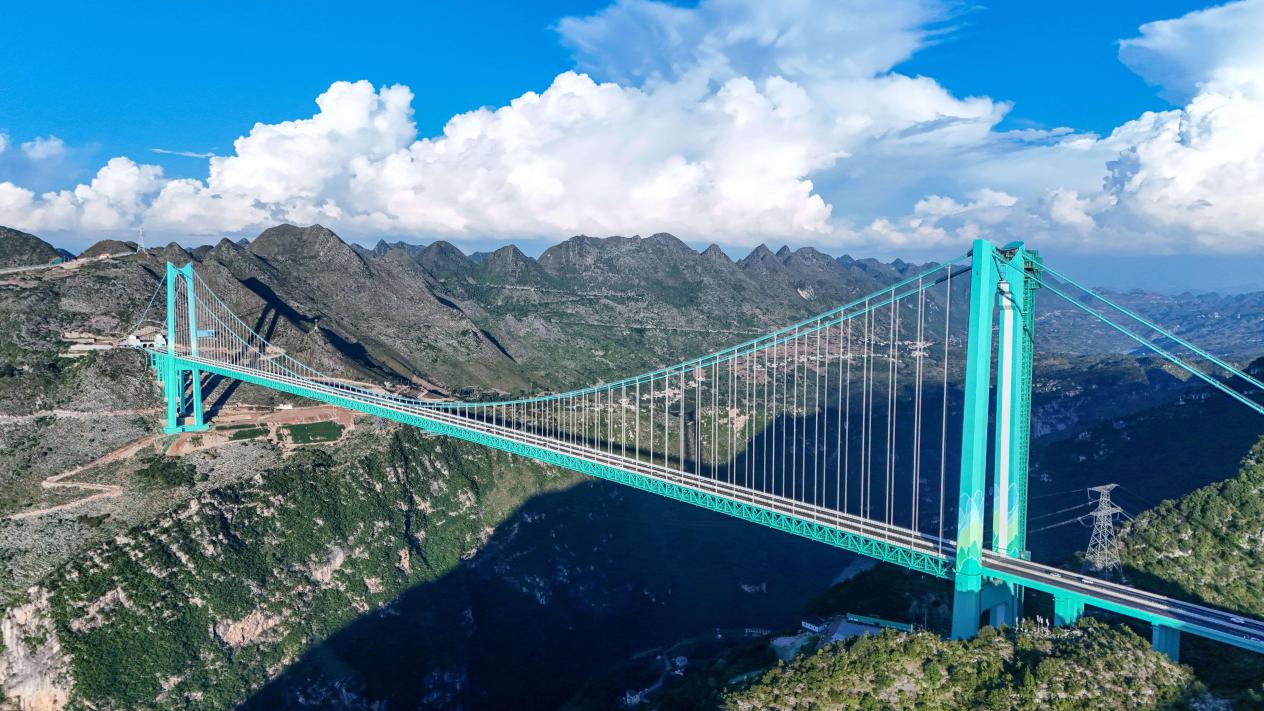
The Huajiang Grand Canyon Bridge, the world's tallest bridge, in southwest China's Guizhou province opens to traffic, Sept. 28, 2025. (Photo/Li Yunfeng)
The Huajiang Grand Canyon Bridge opened to traffic in September 2025 in southwest China's Guizhou Province. The bridge rises 625 meters above the water, earning it the title of the world's highest bridge. Its main span stretches 1,420 meters, making it the world's longest-span bridge in a mountainous region.
Wang Songyu, a deputy project manager from the Guizhou Bridge Construction Group who took part in the project from start to finish, recalled that the bridge faced formidable challenges at every stage, including complex geology, strong canyon winds and extremely high precision requirements for high-altitude work.
The builders met each challenge head-on. They leveraged the BeiDou Navigation Satellite System for lifting operations and deployed intelligent inspection robots to patrol the bridge daily.
The bridge has slashed travel time between Zhenfeng county and Guanling Buyi and Miao Autonomous County, on opposite sides of the canyon, from two hours to just two minutes.
The Huajiang Grand Canyon Bridge has become a destination in its own right, offering sightseeing, sports experiences and tourism services. It was named by Time magazine as one of "The World's Greatest Places of 2026."
Lhasa-Nyingchi railway brings Fuxing bullet trains to SW China's Xizang
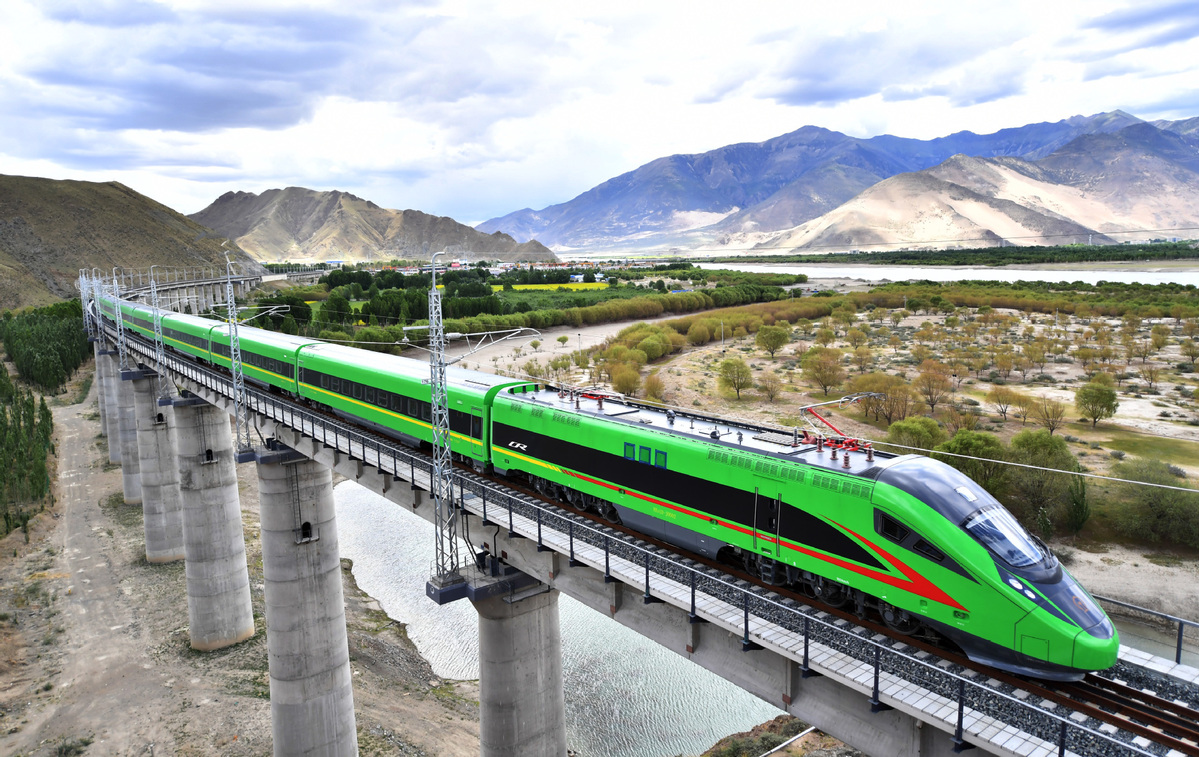
A Fuxing bullet train runs on the Lhasa-Nyingchi railway during a trial operation in Shannan, Southwest China's Tibet autonomous region, June 16, 2021. (Photo/Xinhua)
In the Yarlung Zangbo River valley in southwest China's Xizang Autonomous Region, peach blossoms burst into bloom as Fuxing bullet trains weave through the landscape. Late March to early April is the peak season for this route, as visitors flock to Nyingchi for its famed peach blossoms.
On June 25, 2021, the Lhasa-Nyingchi railway officially opened to traffic, marking the debut of Xizang's first electrified railway. Fuxing high-plateau dual-mode trains entered service on the same day, reducing travel time between Lhasa and Nyingchi to as little as three hours and 49 minutes.
The railway ended the long-standing lack of rail access in southeastern Xizang and connected the rich cultural and tourism resources of Lhasa, Shannan and Nyingchi. By the end of 2025, the railway had handled over 5.75 million passenger trips and transported nearly 1.74 million tonnes of cargo.
The railway stretches 435.48 kilometers and is designed for speeds of up to 160 kilometers per hour. It crosses the Yarlung Zangbo River 16 times and runs through rugged terrain of soaring mountains and deep valleys, with elevation differences of up to 2,500 meters.
The line passes through areas with complex geological conditions, including severe rock bursts, windblown sand, high ground temperatures and glacial moraine, making construction exceptionally challenging. In total, 47 tunnels were constructed, stretching 216.5 kilometers and accounting for 54 percent of the entire route.
Winding mountain road with 68 hairpin turns
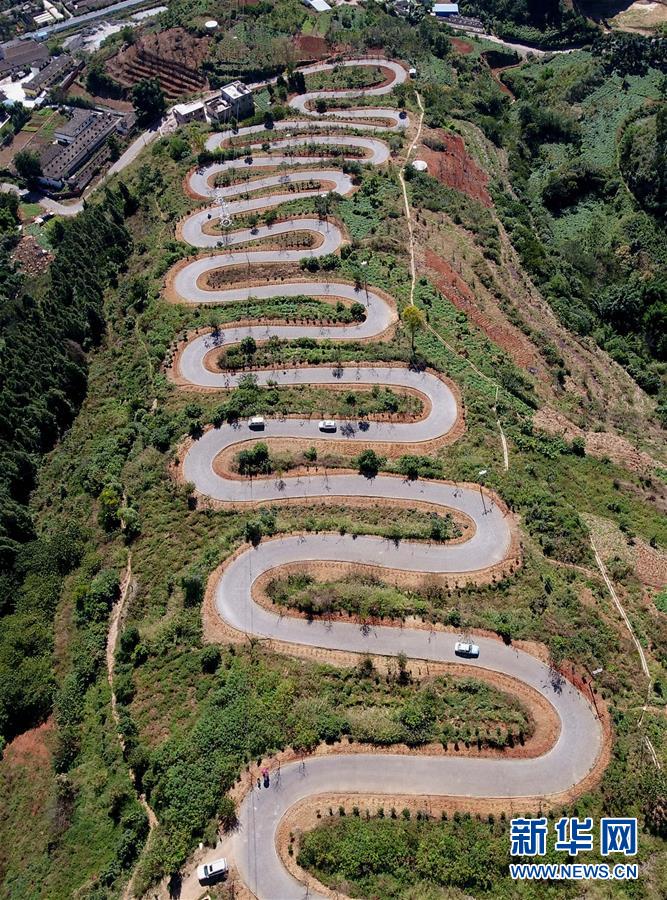
Photo shows a mountain road with 68 hairpin turns in Yiliang county, Kunming city, southwest China's Yunnan Province. (Photo/Xinhua)
The mountain road with 68 hairpin turns in Yiliang county, Kunming city, southwest China's Yunnan Province, connects the county seat with a local village. Built in 1995, it was designed to wind along the mountain ridge to reduce construction costs. From above, it resembles a giant dragon winding through the mountains.
Today, it is a popular route for hiking, walking and cycling. In recent years, the road has been extensively landscaped, with thousands of cherry trees planted along its route, complemented by flowers such as Chinese roses and sunflowers, creating a colorful floral corridor that blooms year-round.
With a vertical elevation change of more than 500 meters, the road is known for its dense sequence of sharp turns and steep gradients. The dramatic terrain gives it a distinctive appeal for outdoor sports enthusiasts. A cycling hill-climb challenge has been held here annually since 2013.

 Follow Us
 Scan the QR Code
