





- BRNN
- BRI News
- BRNN News
- Database
Official Documents Polices and Regulations
Inter-government Documents International Cooperation BRI Countries
Business Guide Economic Data BRI Data
Trade
Investment Projects Latest projects
Cases - Content Pool
Cheng Chuanhe, a villager from Sihe village in Zhongping town, Qiongzhong Li and Miao Autonomous County, south China's Hainan Province, was initially suspected of having hypocalcemia. But the local clinic lacked the capacity to run the necessary blood tests. In the past, that would have meant a 30-kilometer journey to reach the county hospital.
"Don't bother making the trip. We'll draw your blood and send it by drone," said Chen Zhao, a lab doctor at the health center in Zhongping town. Within moments, an "air relay" was underway.
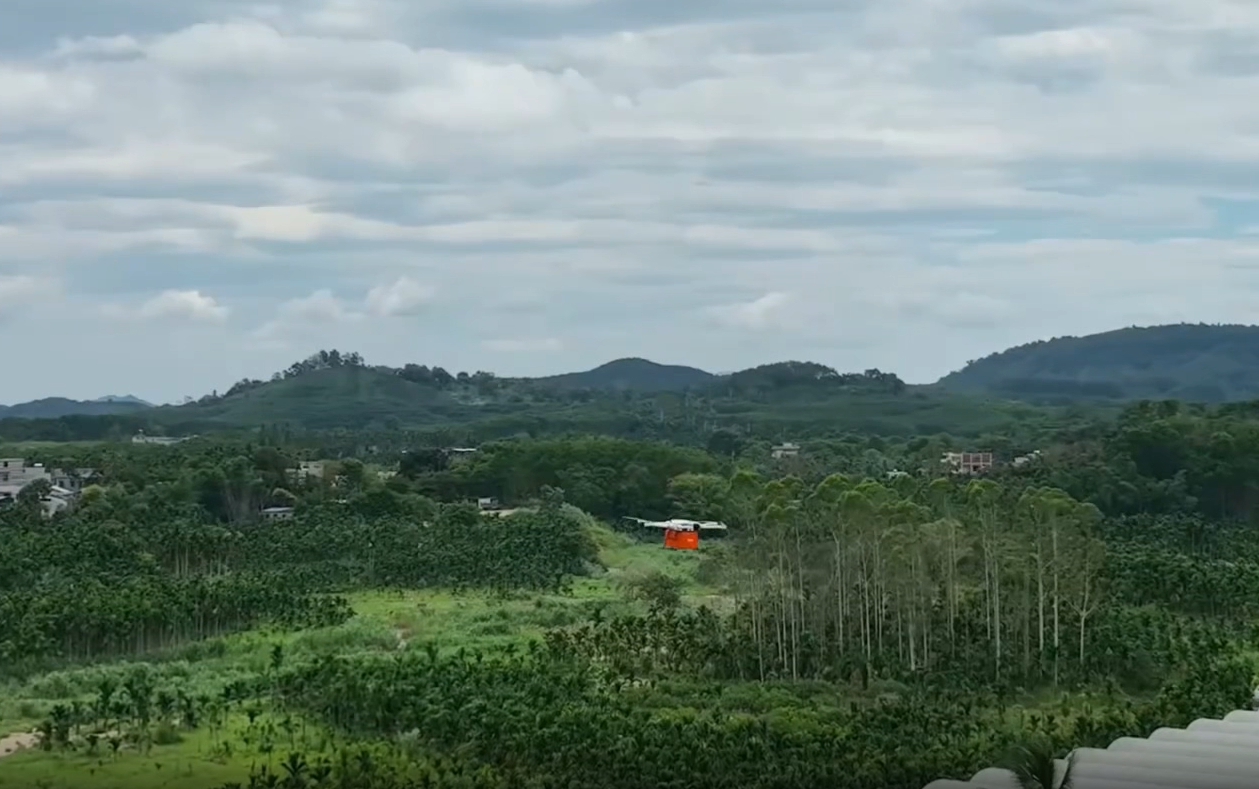
At a drone base near Qiongzhong County Central People's Hospital, a staff member quickly swapped batteries and uploaded pre-flight checks. Over 100 kilometers away in Haikou, an operations specialist gave the all-clear. With a tap, the drone shot into the air, cruising along a preset route.
In less than 30 minutes, it landed smoothly beside the health center. Chen replaced the battery, loaded the blood sample, and synced the data. The drone lifted off again, making a quick stop at a hospital to swap batteries and pick up additional samples—then continued on its way.
Just over 40 minutes later, the clinical lab at Qiongzhong County Central People's Hospital received samples from two health centers. About two hours after that, Cheng's test results came through via the provincial government affairs platform.
The invisible "air corridor" now runs through the mountains, carrying lab samples, emergency medicines, and medical supplies swiftly to where they're needed, while bringing hospitals in the county and those in towns and townships into much closer coordination.
In 2022, Qiongzhong launched a county-wide integrated health care system. Specialists were deployed to township and town health centers, while local doctors received training at county hospitals. As a result, primary care capacity was strengthened, and fewer patients needed to travel long distances for treatment.
But geography remained a major bottleneck. With rugged terrain covering 80 percent of the county, patients often had no choice but to travel long distances or depend on staff to manually transport samples for complex testing—a process that is slow, costly, and vulnerable to disruption in bad weather.
That's where drones come in.
In April 2025, Hainan Shikong Jiedi Aviation Services Co., Ltd. was established, with medical logistics identified as a key entry point into the low-altitude economy. One month later, it partnered with a local enterprise, and just a month after that, Hainan's first fully integrated county-wide low-altitude medical logistics network completed its maiden flight.
The system is built around two hubs, Qiongzhong County Central People's Hospital and Qiongzhong County Hospital of Traditional Chinese Medicine. It uses two drones operating four routes to link 15 township and town health centers across a 205-kilometer network.
The drones offer a 30-kilometer range, a payload capacity of up to 9 kilograms, and straightforward operation with minimal maintenance requirements, said Li Baoming from Hainan Shikong Jiedi Aviation Services Co., Ltd.
To further improve efficiency, the system uses an aerial logistics chain where drones make scheduled stops along the route to swap batteries and collect samples. This step-by-step handoff keeps the network running smoothly and ensures timely deliveries.
By the end of March, the network had completed 225 safe flights, covering over 2,276 kilometers in total. It facilitated 130 routine sample deliveries, 80 urgent infectious disease tests, and numerous shipments of emergency medicines and critical medical supplies, reducing delivery times by 50 percent.

Tel:86-10-65363107, 86-10-65368220, 86-10-65363106
 Scan the QR Code
 Follow Us