





- BRNN
- BRI News
- BRNN News
- Database
Official Documents Polices and Regulations
Inter-government Documents International Cooperation BRI Countries
Business Guide Economic Data BRI Data
Trade
Investment Projects Latest projects
Cases - Content Pool
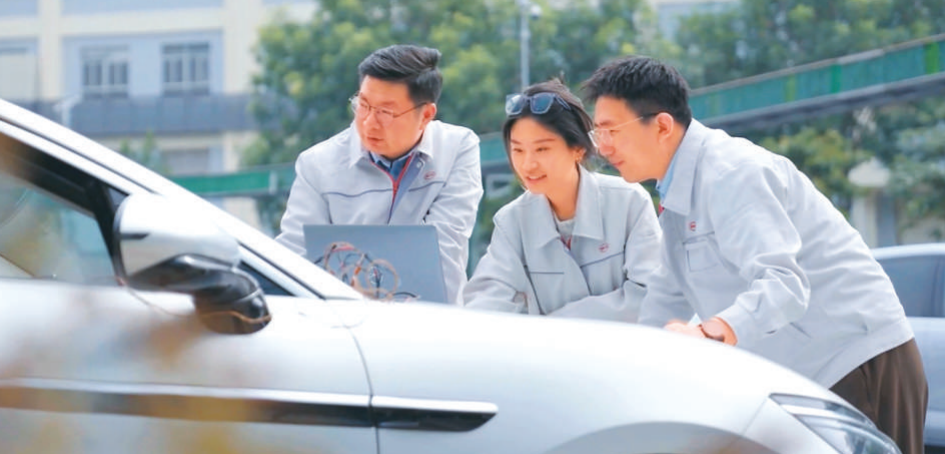
Engineers of the BYD Auto Engineering Research Institute work in a group in Shenzhen, south China's Guangdong province. (Photo/Chen Zezhao)
China has cemented its position as the world's largest new energy vehicle (NEV) market, leading global production and sales for 11 consecutive years. At the heart of this achievement lies a formidable force: the nation's young engineering talent. What drives China's remarkable NEV advancement, and how have these professionals propelled its rise?
Seeking answers, a documentary crew from South Korea's Korean Broadcasting System (KBS) visited BYD's Shenzhen headquarters in Guangdong province this April.
Their observations revealed a striking contrast: while South Korea's top students traditionally pursue medicine, China has cultivated deep engineering expertise that now powers cutting-edge technological breakthroughs -- moving decisively beyond its former reputation for low-end manufacturing.
Intrigued by what they termed "China speed," KBS producers expanded their documentary focus from education comparisons to China's NEV sector. What astonished them most wasn't just industrial scale, but the youth of China's engineering corps.
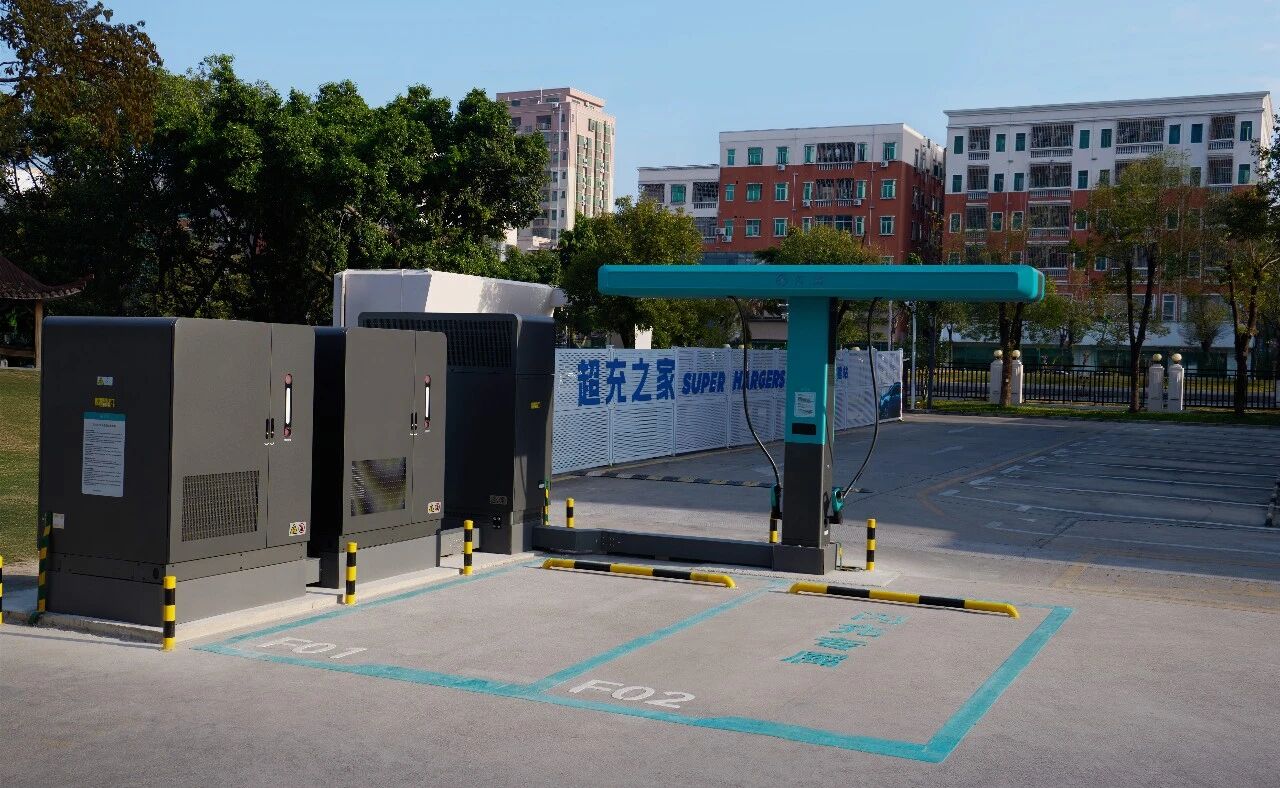
Photo shows a flash-charging facility of BYD. (Photo provided by BYD)
BYD exemplifies this trend with over 120,000 engineers on staff. Between 2023 and 2025, the company recruited over 50,000 fresh university graduates, with nearly 80 percent entering research and development (R&D) positions. About 70 percent hold master's or doctoral degrees.
Ye Zi, head of BYD human resources, said the company's well-developed training system, flexible job assignments and tolerant attitude toward trial and error have helped young recruits transition quickly from graduates into engineers.
At BYD, engineers in their twenties and thirties routinely lead core technical projects. KBS producer Jeong Yong-jae noted his surprise: "When I requested to interview younger engineers, they responded, 'Everyone here is young.' Witnessing professionals in their thirties making critical technical decisions would be extraordinary in South Korea."
"Youth is the greatest source of innovation for China," Jeong said after visiting schools and companies across the country. In his view, China encourages creativity and exploration from an early stage of education, giving students opportunities to engage with cutting-edge technologies and hands-on innovation projects. That environment, he said, has planted the seeds of innovation early and created a steady pipeline of young talent for industries such as NEVs.
"What people call 'China speed' is not a miracle," he said. "It is the result of talent, education, national strategies and collective determination coming together."
Near BYD's headquarters, ultra-fast charging stations showcase this innovation. There, People's Daily met Qiu Song, who leads BYD's Pure Electric Platform development. His team pioneered 1,500A ultra-fast charging technology, achieving stable extreme-current transmission through thinner cables. This breakthrough addresses critical consumer pain points: slow charging and excessive wait times.
Qiu joined BYD in 2016 when China's annual NEV barely surpassed 500,000 units and has witnessed production surge past 16 million units annually -- with NEVs now dominating over half of new car sales. For him, the industry's ethos is clear: "Dare to dream big, act boldly, and experiment fearlessly."
Cao Zhiyuan, born in 1995, represents a new generation of engineers driving that momentum. A PhD graduate in electrical engineering from Xi'an Jiaotong University, Cao joined BYD in 2023 and now leads development work on overseas ultra-fast charging products.
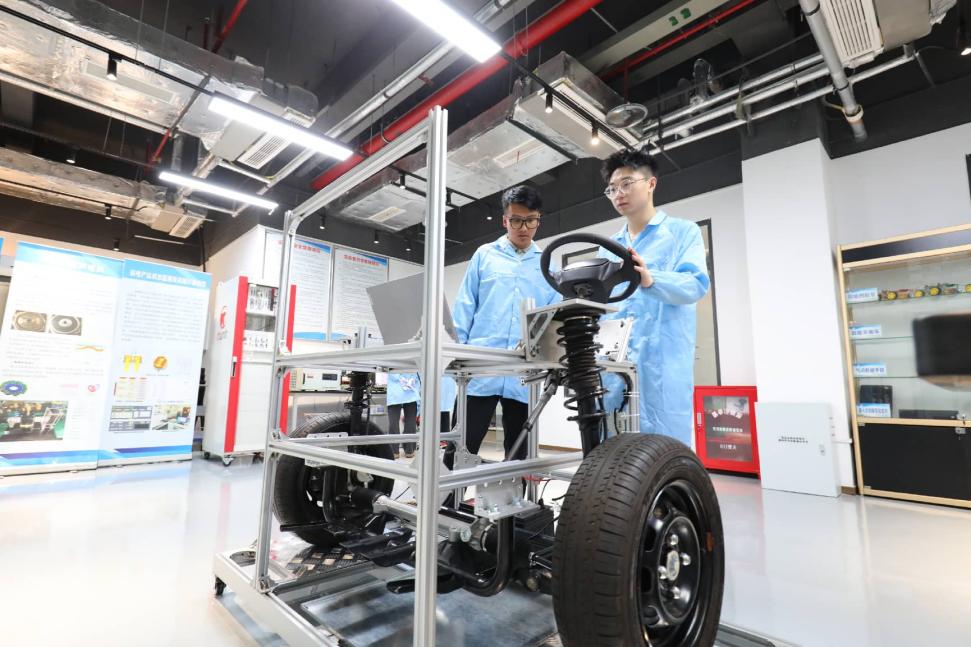
Technicians of a tech firm in southwest China's Chongqing municipality work to develop automobile electric control and power transmission systems. (Photo/Sun Kaifang)
Much of his daily work revolves around one goal: making charging faster.
Experiments, data analysis, cross-team brainstorming sessions and daily reviews have become routine for him and his colleagues. The challenge they are tackling is one of the core bottlenecks facing the global EV industry: charging speed.
"We want charging an electric vehicle to be as fast as refueling a gasoline car," Cao said. "That's the goal we keep working toward every day."
Inside the laboratory, engineers repeatedly test charging performance under different current levels and temperature conditions. The team operates with a highly open culture: ideas are evaluated by data and verification rather than hierarchy or seniority. That technology-first environment has enabled many young engineers to quickly grow into key contributors capable of leading major projects on their own.
After relentless refinement, BYD's flash-charging technology can now charge a battery from 10 percent to 97 percent in just nine minutes, placing it among the global leaders in charging speed.
Through hard work and continuous innovation, China's NEV engineers are giving real meaning to the phrase "China speed," while injecting sustained momentum into the future development of the industry.

Tel:86-10-65363107, 86-10-65368220, 86-10-65363106
 Scan the QR Code
 Follow Us