





- BRNN
- BRI News
- BRNN News
- Database
Official Documents Polices and Regulations
Inter-government Documents International Cooperation BRI Countries
Business Guide Economic Data BRI Data
Trade
Investment Projects Latest projects
Cases - Content Pool
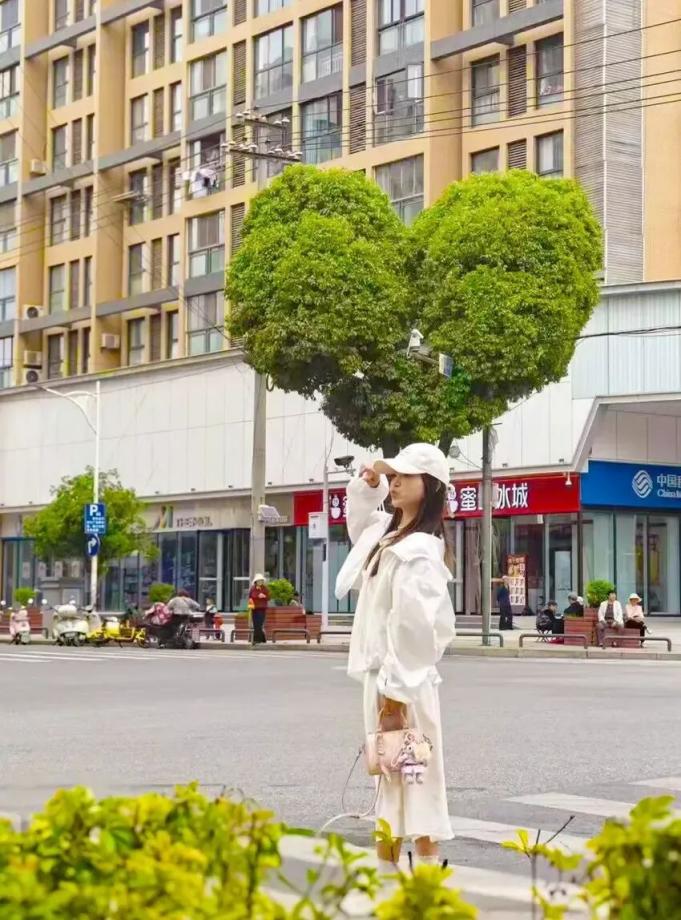
A woman poses for a picture with the heart-shaped camphor tree in Yunxi county, Shiyan, central China's Hubei province.
A camphor tree lining a street in Yunxi county, Shiyan, central China's Hubei province, has recently gone viral online. What drew locals' eyes was its naturally heart-shaped crown. Residents snapped photos of the tree and shared them across social media, floating a proposal: carefully prune the foliage to turn this natural oddity into a beloved photo spot.
Local landscaping officials acted promptly on the proposal and kept fine-tuning the tree based on public suggestions.
Making minor adjustments only, they prioritized the tree's healthy growth while ensuring a pleasant viewing experience for citizens. No elaborate landscaping or excessive funds were involved.
This simple makeover has turned an ordinary street tree into a heartwarming online hit, reflecting the thoughtful approach of urban governance.
From trimming and shaping to meticulous fine-tuning, local authorities turned three suggestions over three days into three rounds of action. Their efficient response transformed netizens' simple wishes into a lovely urban delight.
This willingness to listen closely to community feedback signals a meaningful shift away from inflexible, top-down administration toward citizen-centered public services. Yunxi stands out for prioritizing public needs and feedback in decision-making. It views online proposals as chances for improvement and taps public wisdom to boost governance effectiveness.
Of course, heeding public suggestions is not blind compliance, but a people-responsive approach based on scientific decision-making. Currently, some cities are plagued by a so-called "viral attraction anxiety." They blindly follow the trend to build viral landmarks and replicate popular business formats, investing massively yet achieving little effect, and even causing ecological damage and wasting public funds.
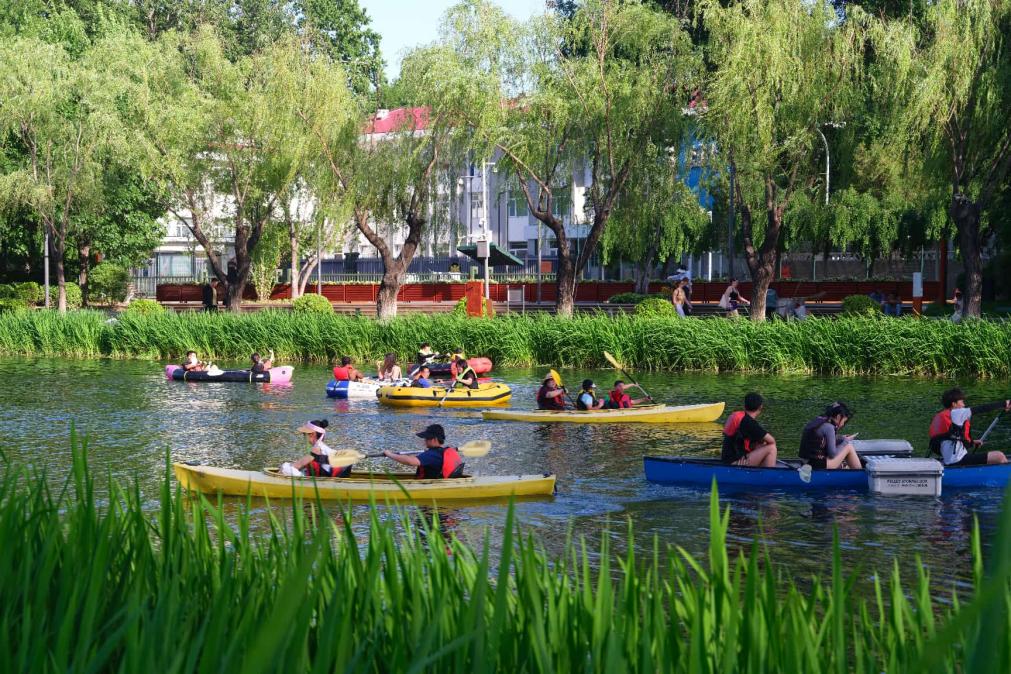
Citizens experience aquatic sports including paddle board and kayak on Liangma River, Beijing. (Photo/Guo Junfeng)
By contrast, the renovation of the heart-shaped tree adheres to scientific assessment and bottom-line principles. A local official stated that some netizens suggested covering the entire tree with light strips. After thorough internal deliberations, county officials opted to install only energy-efficient, waterproof colored lights tracing the outline of its heart-shaped canopy -- an approach guaranteed not to hinder the tree's healthy growth.
Authorities assessed the tree's growth status prior to pruning, prioritized public safety while adjusting monitoring facilities, and avoided damaging the tree during light strip installation. Such rational and prudent governance is particularly valuable.
Internet buzz is fleeting, but the quality of resident life remains the ultimate goal of urban governance. Urban planning should avoid short-term thinking. Only by respecting objective laws and upholding a people-centered stance can every construction and renovation project stand the test of time and public judgment.
Such public-responsive governance practices are widely seen across China. In response to citizens' and visitors' great affection for the "scruffy puppy," a giant plant sculpture in Shanghai that unexpectedly went viral, the "Blossom Pet Land" exhibition featuring the popular installation at the Shanghai International Flower Show has been extended until late June.
In Chenggong district, Kunming of Yunnan province, local authorities have taken public online feedback seriously, making vigorous efforts to upgrade infrastructure and optimize service and guarantee mechanisms at Dounan Flower Market, turning it into a must-visit tourist attraction.
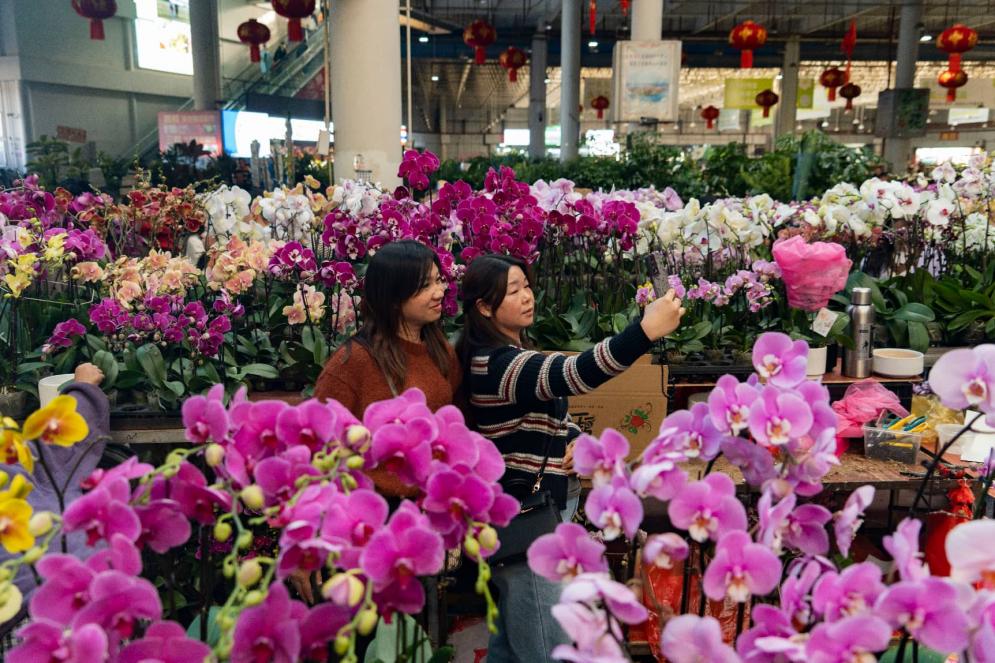
Citizens pose for a selfie at Dounan Flower Market in Kunming, southwest China's Yunnan province. (Photo/Zheng Yi)
In Shenzhen of Guangdong province in south China, a netizen known as "Tape Measure Brother" has released over 1,000 short videos reflecting urban problems in more than two years, and nearly every problem he raised have received official resolution within a week.
From online public feedback to offline practical implementation, and from solving individual demands to realizing overall urban improvement, cities across China are accelerating the transformation of urban development concepts and prioritizing people-centered development.
It is such positive two-way interactions between local governments and residents that keep improving urban construction and solidify the momentum of high-quality development.
Trivial as flowers and grass may seem, they bear directly on people's real-life experience. Along Beijing's ring roads, blooming flowers line the routes, beautifying citizens' daily trips. In Changde, central China's Hunan province, the Chuanzi River, once a polluted and stinking drainage waterway, has been renovated into a rippling scenic river, offering locals a new place for leisure and walking.
Residents' genuine sense of fulfillment and satisfaction fully proves that urban development achievements lie not only in towering skylines, but also in every meticulous detail of responding to public online messages and delivering small livelihood improvements, as well as in the sincere commitment to respecting public opinions and pooling public wisdom.
By consistently inviting residents to share their thoughts and ideas, cities can grow warmer and give locals a stronger sense of belonging -- uniting governments and communities to build, manage and share in the benefits of better urban spaces together.

Tel:86-10-65363107, 86-10-65368220, 86-10-65363106
 Scan the QR Code
 Follow Us