How one remote Chinese mountain town is rewriting its future with coffee
The mist slowly lifted from the Wa Mountains as morning light filtered into a small coffee shop in Menglian county, southwest China's Yunnan Province.
Zhao Hua stood behind the counter in a traditional Wa ethnic skirt, her short hair neatly cropped. With practiced grace, she poured hot water in slow circles over the coffee grounds. As the rich liquid dripped down, notes of caramel and bright fruit filled the air. She lifted the cup, took a gentle sip and smiled.
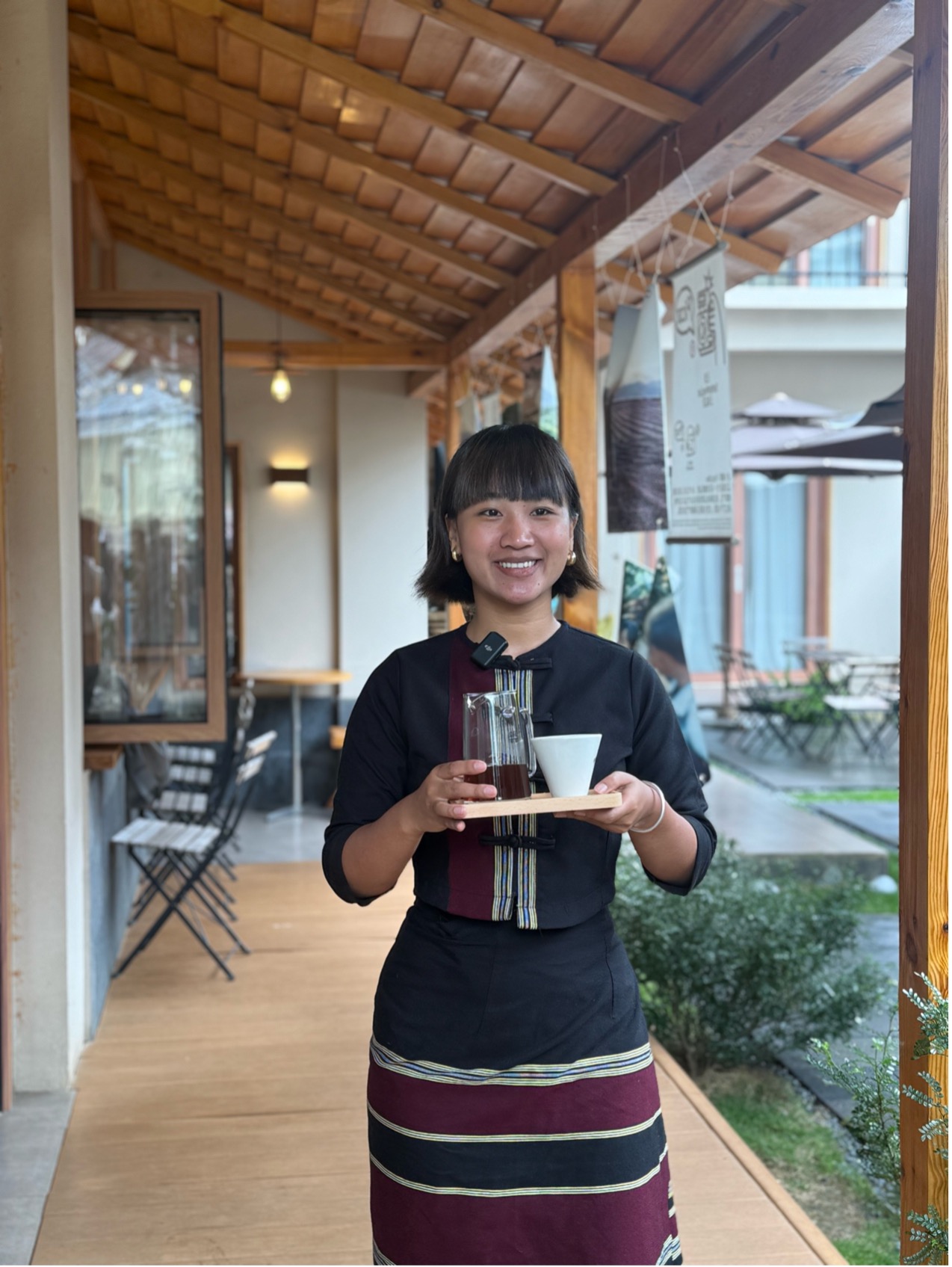
Zhao Hua and her sister run a charming café in Menglian county, southwest China's Yunnan Province, where they sell coffee beans from their own farm while proudly preserving Wa cultural heritage. Guests sipping their coffee can watch Wa women demonstrate the traditional brocade weaving techniques passed down through generations. (People's Daily Online/Hu Zunhui)
"My father spent his whole life growing coffee, but he could never bear to drink it himself," she said. "He had no idea where those bitter beans ended up — only that someone would come, buy them and give him a little money in return."
She set the cup down, her eyes softening. "It's different now. This cup? It's sweet."
Zhao is a proud daughter of Menglian's Wa people. Her parents were among the very first to plant coffee in the county. She named her brand "Picar Coffee" — a tribute to the ubiquitous pickup trucks that haul coffee cherries, furniture, sugarcane and everything else across these mountain roads, carrying the simple, hardworking rhythm of local life.
Today, Picar Coffee is one of the most popular shops on Menglian's specialty coffee street. Her short videos have introduced this remote border town and its coffee to a much wider audience, and her beans are now exported to Japan, Australia and beyond.
As a child, Zhao often rode in the back of her father's pickup as he delivered coffee seedlings across the hills. When she later sorted through his belongings, she found notebooks filled with his careful observations on how to grow better coffee.
"Life was really hard for them," she reflected. "They carried the weight of feeding the family. It's our generation that finally gets to taste the sweetness."
From bitter beans to sweet cups
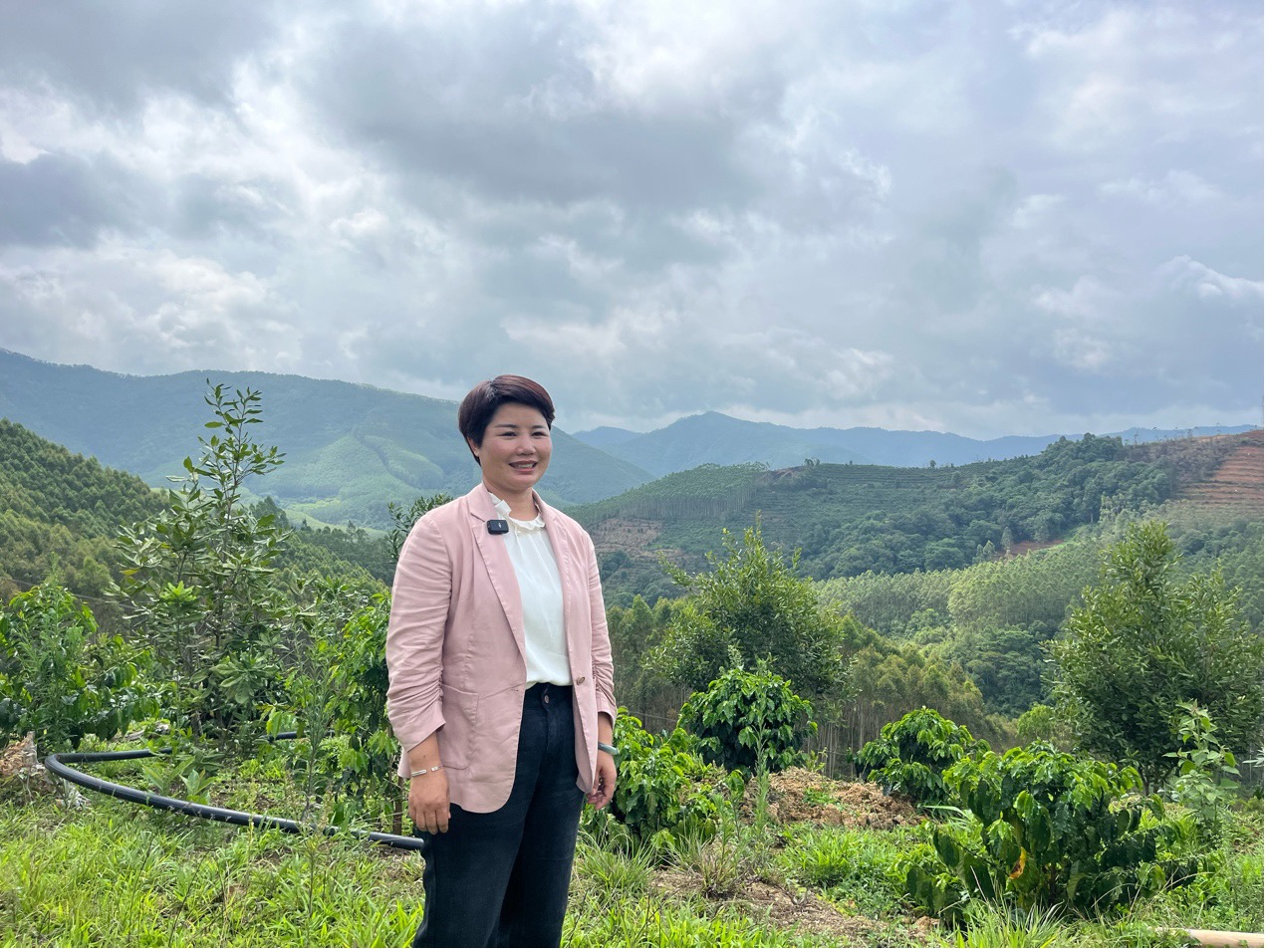
Li Meiying's work takes her across the hills and farmlands of Menglian county, southwest China's Yunnan Province. She knows every local coffee brand inside out and has a deep understanding of the region's coffee industry. (People's Daily Online/ Kou Jie)
The transformation from "bitter coffee beans" to "a sweet cup" mirrors the changing fate of this border town itself.
Menglian means "a good place discovered" in the Dai language. Its connection with coffee began in 1958, with large-scale planting taking off in the 1980s. Li Meiying, secretary and director of Menglian's Center for Tea and Specialty Biological Industries, still remembers watching government workers and villagers together carving terraces out of the hillsides, planting coffee seedling by seedling.
"As a child, I saw the older generation of cadres leading everyone to plant coffee," Li said. "Now I'm a cadre myself, helping take our coffee out into the world. This is how the legacy continues."
Zhao's father was one of those early farmers who followed the cadres to clear the land for cultivation. Decades later, when his daughter returned to start her business, the first person to offer real help was Li — a successor to those very same cadres.
When the local specialty coffee street opened in April 2023, many farmers and shop owners were uncertain of their business prospects. Li and her colleagues would finish their official work and then head straight to the shops to help serve customers and solve problems.
Zhao and her sister handed Li the keys to their shop, saying, "I trust you with this." To this day, Li still carries that key in her bag. It is a quiet symbol of the deep trust between local officials and the people they serve.
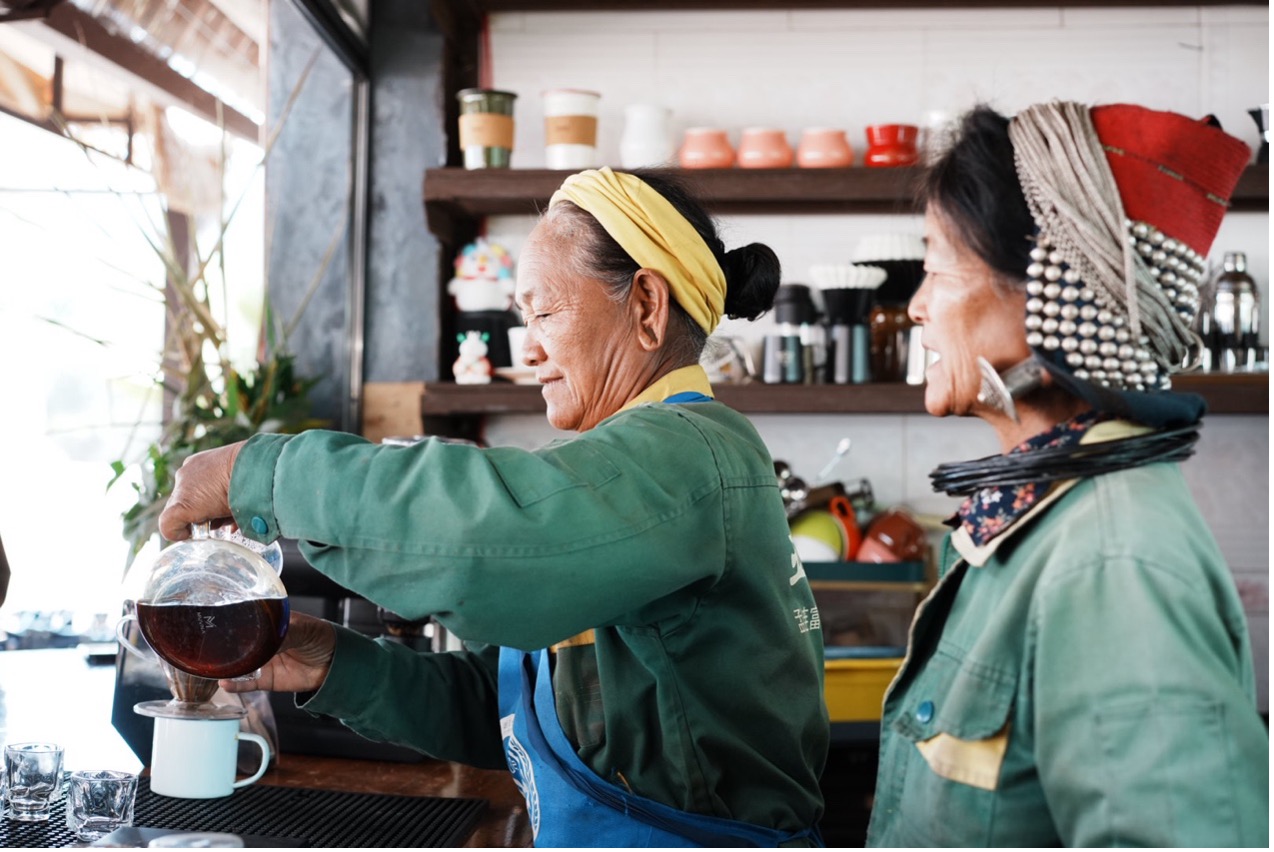
Wa women in Menglian county, southwest China's Yunnan Province, have found new opportunities and better incomes through the county's growing coffee industry. (Photo provided by Zhao Hua)
Li makes sure promising young entrepreneurs like Zhao get opportunities to exhibit outside the county. "These young people are great at telling Menglian's coffee story," she says. To encourage more youth to return, the county created an industry-focused "digital nomad community" consisting of government-built housing and workspaces available for under 1,000 yuan ($140) a month. Free training covers everything from farming and roasting to e-commerce and livestreaming.
Thanks to this support, Zhao Hua now runs a coffee farm with over 20 employees, many of them Wa women who had spent decades tending coffee but rarely left the mountains. Last year, she took them on a trip to Shangri-La, Lijiang and Dali. The women were as excited as children. They sang the classic song "Beijing's Golden Hill" and dreamed of one day visiting the capital. One cup of coffee had connected the frontier to the rest of China — and to bigger dreams.
The new path
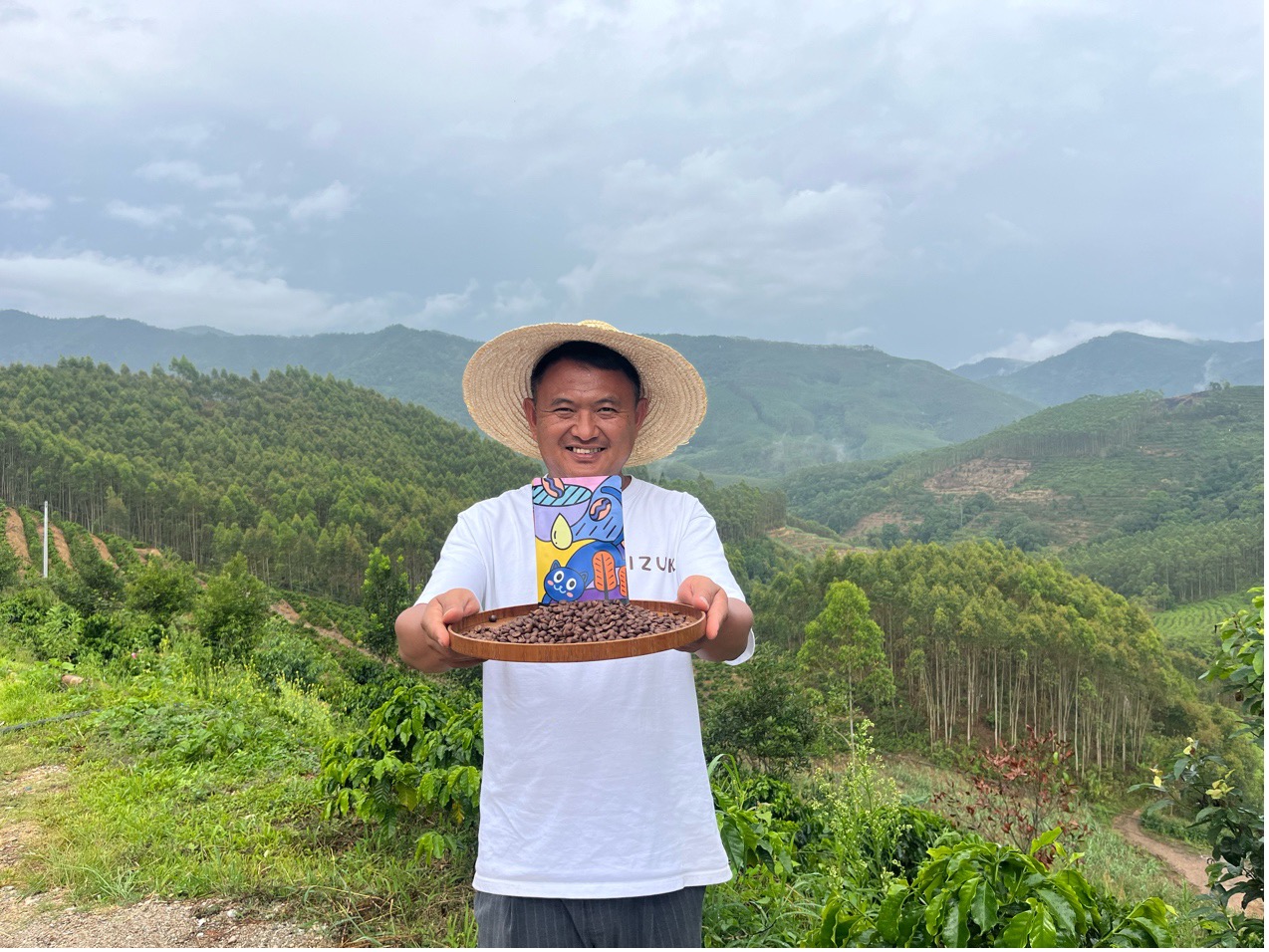
Tucked into the lush hills of Menglian county, southwest China's Yunnan Province, Guan Yong's Lizuk Estate blends eco-tourism, coffee culture, countryside escapes, tasting experiences and online sales. It has become one of the region's flagship coffee estates. (People's Daily Online/ Kou Jie)
Another local, Guan Yong, is walking a different but complementary path. Born and raised in Menglian, he named his estate "Lizuk," a word from the Lahu language meaning "the mountain that hides gold and silver treasures."
While working in Kunming, Guan tasted his first properly brewed specialty coffee and was inspired. In 2017, he returned home and took what seemed like a backward approach: he opened shops first, then built a roasting facility, set up processing, and finally developed his own plantations and estate.
"I wanted to understand where flavor really comes from," he explained. By starting from the market and working backward to the farm, he created a smarter, more responsive model.
While looking for land for his coffee business, he discovered an abandoned rural primary school deep in the mountains. Moved by nostalgia, he rented it and slowly restored it — turning the basketball court into a drying yard, classrooms into workshops, and the buildings into guest houses. Many former students and teachers now return to revisit their childhood memories.
Government support was once again crucial, providing water, electricity and roads. A 400,000-yuan subsidy also funded a smart water-fertilizer irrigation system that now covers over 300 mu (20 hectares) of premium coffee, including the demanding Gesha variety.
In the 2022-2023 season, Guan's estate distributed 6.5 million yuan to 86 households, raising average household income by 75,600 yuan. His wife runs the livestreams, his sister manages operations. Together they have turned one man's passion into a family business that supports an entire community.
A shared legacy
Three people. Three paths. One shared future.
From the older generation who carved terraces and planted the first coffee trees, to officials like Li who promote and support the industry, to young entrepreneurs like Zhao and Guan who returned home to build brands — this is a multiple-generation relay.
In 2021, China presented Menglian coffee beans to representatives of U.N. Security Council member states. The mist rises from the Wa Mountains each year, and the aroma of coffee from these hills drifts further and further — to Tokyo, Sydney, Beijing and beyond.
In Menglian, "lucid waters and lush mountains are invaluable assets" is not just a slogan. It is a lived reality, practiced one careful pour-over, one restored school and one trusted key at a time. The sweetest fruit here is not only coffee — it is what grows from quiet dedication, generational continuity and the simple but powerful idea of serving the people.
Lizuk may well be the mountain that hides treasure, but the people of these mountains have finally found it.

 Follow Us
 Scan the QR Code
