





- BRNN
- BRI News
- BRNN News
- Database
Official Documents Polices and Regulations
Inter-government Documents International Cooperation BRI Countries
Business Guide Economic Data BRI Data
Trade
Investment Projects Latest projects
Cases - Content Pool
Five years after its first generating units were connected to the grid, the Baihetan Hydropower Station continues to power millions of homes across the country while transforming the once-isolated mountain county where it is located.
A mega-project spanning southwest China's Yunnan Province and Sichuan Province, it is known as the "Mount Qomolangma of the global hydropower industry."
With a total installed capacity of 16 million kilowatts, Baihetan ranks as the world's second-largest hydropower station. It is equipped with 16 hydro-generating units, each with a capacity of 1 million kilowatts, the largest single-unit capacity in the world.
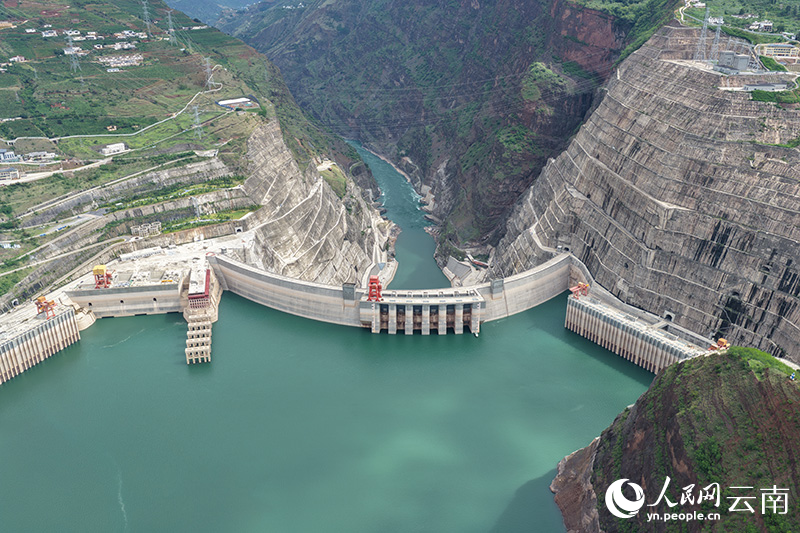
Aerial photo shows the Baihetan Hydropower Station. (Photo/Yue Shixian)
A single day of full-output operation generates enough electricity to meet the daily needs of nearly 150 million people.
It has now operated safely for more than 1,800 consecutive days, generating a cumulative 250 billion kilowatt-hours of electricity. Two ultra-high-voltage direct-current lines transmit the power more than 2,000 kilometers to the Yangtze River Delta in just seven milliseconds, together delivering over 60 billion kilowatt-hours a year to east China.
Baihetan is the linchpin of the world's largest clean energy corridor, which also includes the Wudongde, Xiluodu, Xiangjiaba, Three Gorges and Gezhouba dams along the mainstream of the Yangtze River.
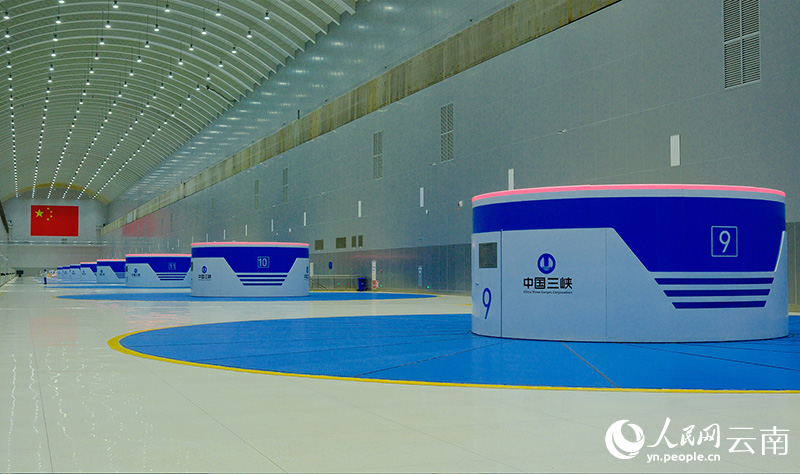
Photo shows the Baihetan Hydropower Station. (People's Daily Online/Lyu Renneng)
The station alone saves an estimated 19.68 million tonnes of standard coal annually and reduces carbon dioxide emissions by about 51.6 million tonnes.
Over the past five years, it has helped cut carbon dioxide emissions by more than 200 million tonnes, injecting momentum into the Yangtze River Delta's green industrial transition and the nation's carbon reduction efforts.
Baihetan has also reshaped Qiaojia county, a once-isolated mountain county, where the station is located, in Zhaotong city. Qiaojia's built-up area has grown to 7.96 square kilometers from less than 4, and its urban population has nearly doubled to 93,900. New roads, including the county's first expressway, a wetland park and other public facilities have followed.
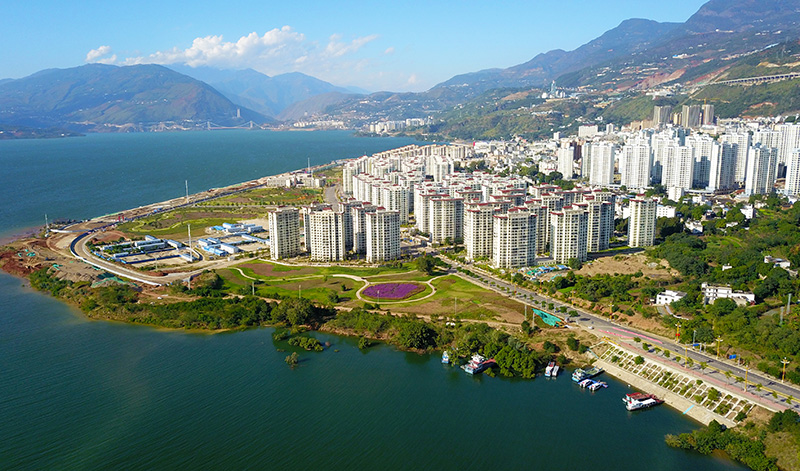
Photo shows a lakeside resettlement area in Qiaojia county, southwest China's Yunnan Province, formed as a result of the Baihetan Hydropower Station's construction. (Photo courtesy of the interviewee)
Qiaojia has completed ecological restoration across 35,000 mu (about 2,333 hectares) of the reservoir area and built 23 wastewater treatment plants, keeping reservoir water quality steadily at Grade II or above with a 100 percent compliance rate.
It has also released nearly 1.43 million rare fish fry into the Jinsha River to date. Together, these measures have helped reinforce the region's role as a key ecological barrier along the upper Yangtze.
The construction of Baihetan has also made Qiaojia a well-known winter retreat in southwest China, drawing more than 7,000 recreational vehicles and over 15,000 visitors annually for wellness tourism.
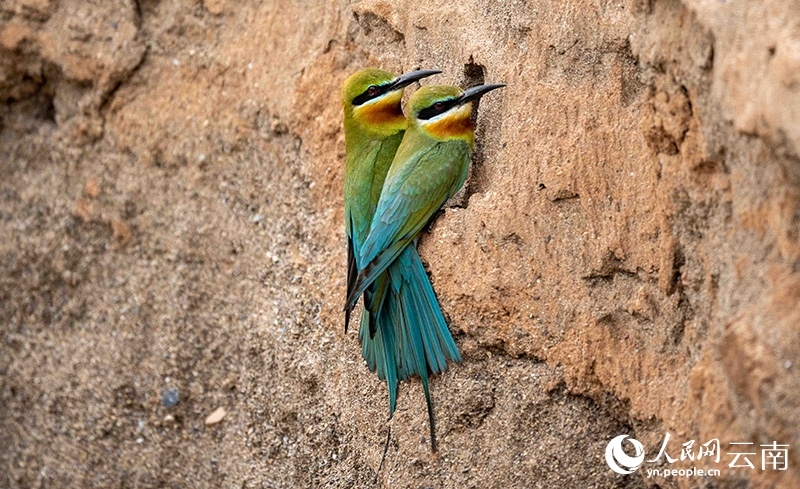
Blue-tailed bee-eaters build their nest near the Jinsha River. (Photo/Xiao Benyun)
In 2025, the county welcomed about 5.46 million tourist visits and generated 4.05 billion yuan (about $597 million) in tourism revenue, up 7.24 percent and 7.68 percent year on year, respectively, marking a new development path that integrates ecology and tourism.
More than 50,000 residents displaced by the project have been resettled into riverside housing with schools, clinics and markets nearby.
Qiaojia has invested 280 million yuan in post-resettlement support funds, launching 22 industrial projects and creating 1,910 public welfare jobs, alongside order-based and targeted vocational training, pushing the employment rate among resettled workers to 90.5 percent.
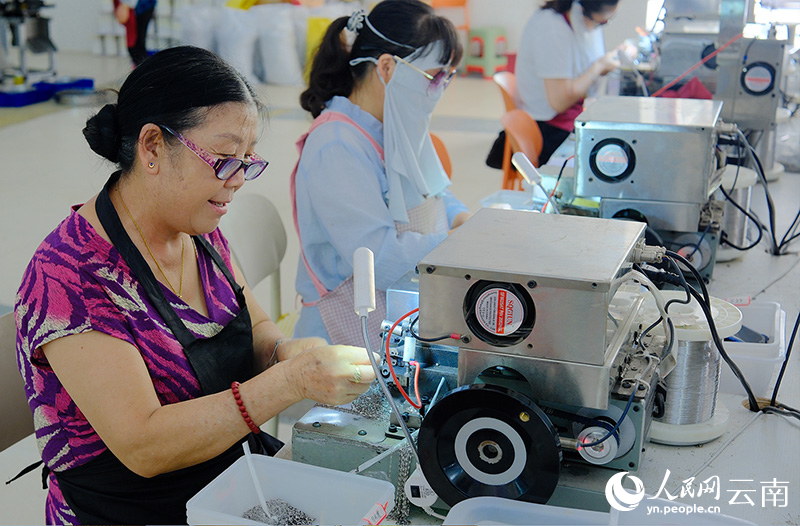
Women process necklaces at a factory in the Tianshengliangzi resettlement area in Qiaojia county, southwest China's Yunnan Province. (People's Daily Online/Lyu Renneng)
In Tianshengliangzi, a resettlement area, a necklace factory from Dongguan now employs more than 300 people, a third of them resettled migrants, drawn by the area's stable power supply and available workforce.
Specialty industries have taken root as well.
Sugarcane cultivation in Qiaojia covers 14,000 mu this year, with an expected annual output of 10,000 tonnes and a combined output value of about 400 million yuan. The crop involves more than 1,200 farming households across three townships, nearly 40 percent of them resettled migrants. The county's brown sugar is also recognized as a national-level geographical indication product.
The county has also developed 44,400 mu of mango, loquat and other warm-climate fruit orchards, with a combined output value surpassing 100 million yuan.
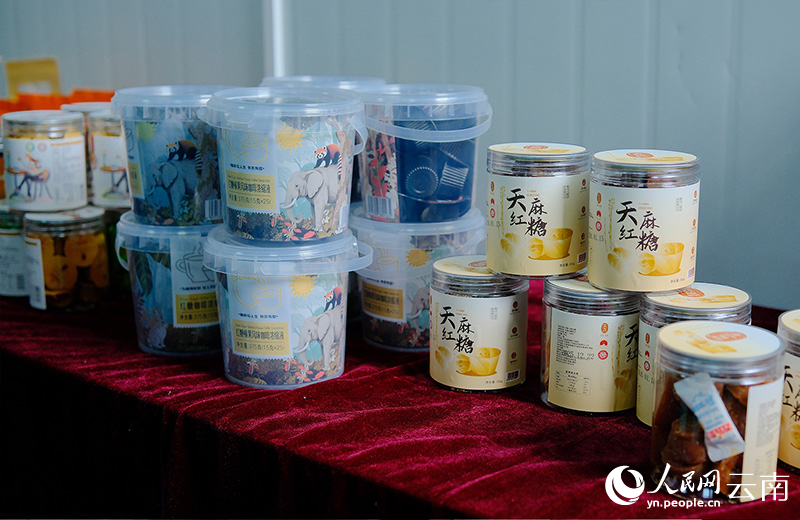
Photo shows a variety of brown sugar products derived from Qiaojia's specialty brown sugar. (People's Daily Online/Lyu Renneng)

Tel:86-10-65363107, 86-10-65368220, 86-10-65363106
 Scan the QR Code
 Follow Us