





- BRNN
- BRI News
- BRNN News
- Database
Official Documents Polices and Regulations
Inter-government Documents International Cooperation BRI Countries
Business Guide Economic Data BRI Data
Trade
Investment Projects Latest projects
Cases - Content Pool
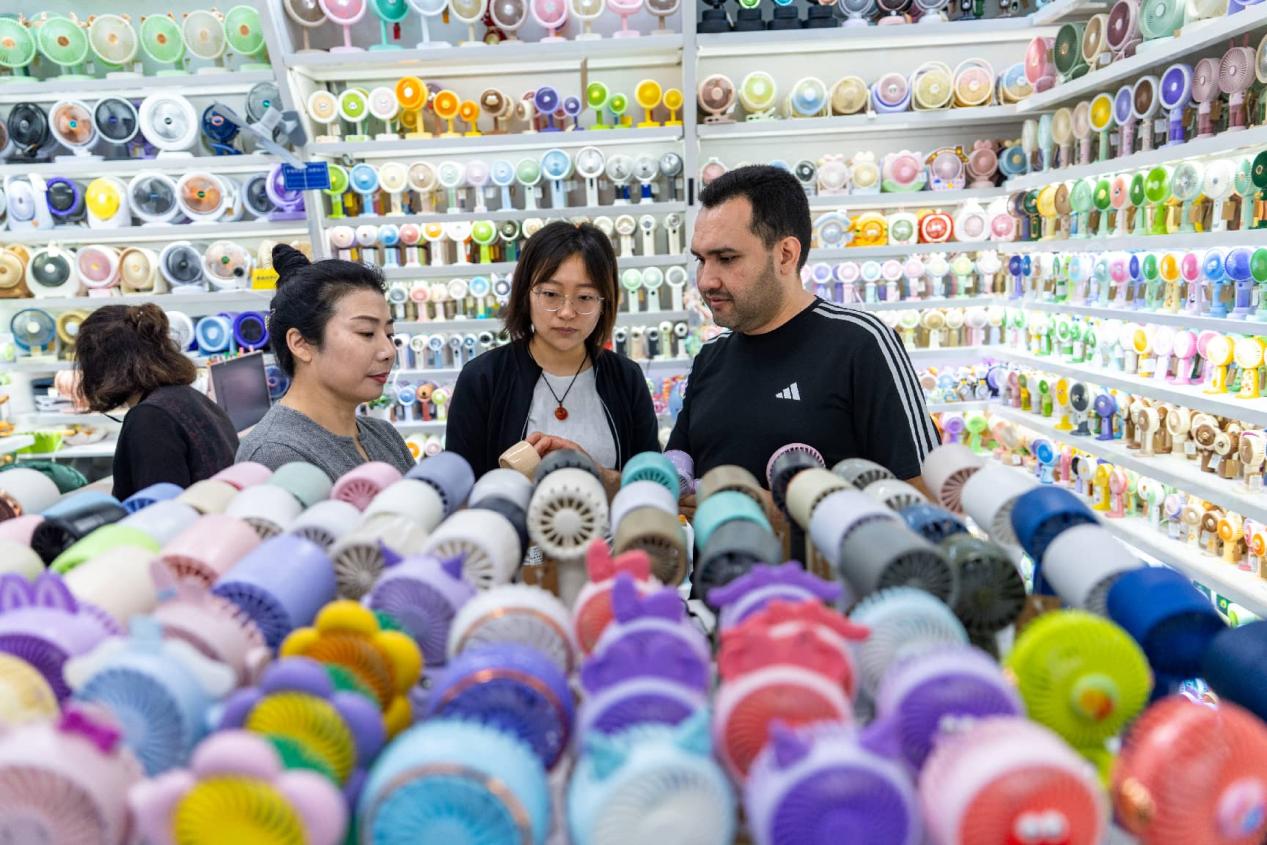
A foreign merchant purchases portable fans at the Yiwu International Trade Market in Yiwu, east China's Zhejiang province. (Photo/Yang Meiqing)
As Europe grapples with an intense heatwave, wholesale markets in Yiwu, east China's Zhejiang province, are entering another peak sales season, according to a recent article published on the website of Spanish newspaper El Mundo.
The article noted that a wide range of products made in Yiwu are helping Europeans cope with soaring temperatures. Over the past decades, the city has developed a remarkable ability to turn virtually any consumer trend into a business opportunity, leading many economists to regard it as a barometer of global trade.
Yiwu offers a vivid illustration of county-level development in China. As the basic building blocks of the Chinese economy, counties serve not only as key links in integrated urban-rural development, but also as valuable windows through which to observe the vitality and potential of China's economy.
In recent years, localities across the country have cultivated distinctive county-level economies based on their comparative advantages, while actively integrating into global industrial and supply chains. Their dynamism continues to grow.
Through these examples, the international community not only sees the steady upgrading of China's manufacturing sector but also gains a deeper understanding of the resilience that has enabled the Chinese economy to maintain steady progress amid a challenging external environment.
Modern Diplomacy, a European magazine, recently published an article titled "The Grassroots Secret of Chinese Manufacturing," which explores the source of China's economic resilience. Drawing on examples from several counties, the article illustrates how grassroots manufacturing has become a strong pillar supporting the country's broader economic strength.
In Shaodong, a county-level city in central China's Hunan province, virtually all of the dozens of components needed to produce a disposable lighter can be sourced locally within a radius of just 20 kilometers.
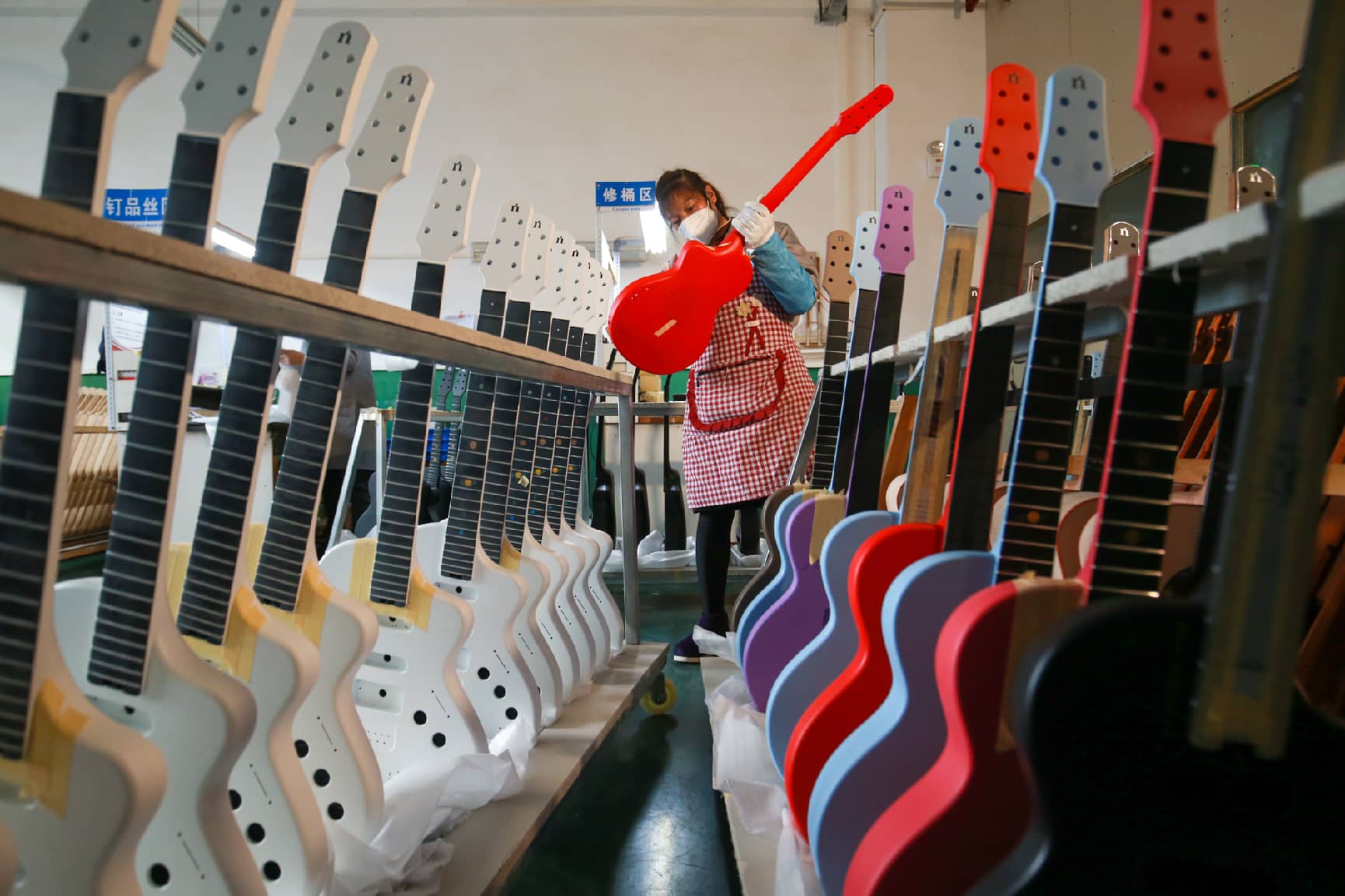
A worker inspects finished guitars for quality at a guitar manufacturing plant in Zheng'an county, southwest China's Guizhou province. (Photo/Wang Chunliang)
Supported by a highly integrated industrial collaboration network, Shaodong has maintained about 70 percent of global disposable lighter production capacity for more than a decade, while keeping retail prices at around one yuan ($0.15). This manufacturing model has enabled local firms to remain globally competitive while maintaining sustainable profitability.
In Dingxiang county, north China's Shanxi province, hundreds of forging-related enterprises covering the entire industrial chain have formed a highly integrated manufacturing cluster.
Local companies have broken the long-standing dominance of multinational corporations in the high-end flange market, building a forging industry cluster with an annual output value exceeding 20 billion yuan. Their products now supply leading global companies such as Siemens and General Electric.
As international observers noted, China's development model of "one specialty product for each township and one leading industry for each county" has proved highly effective.
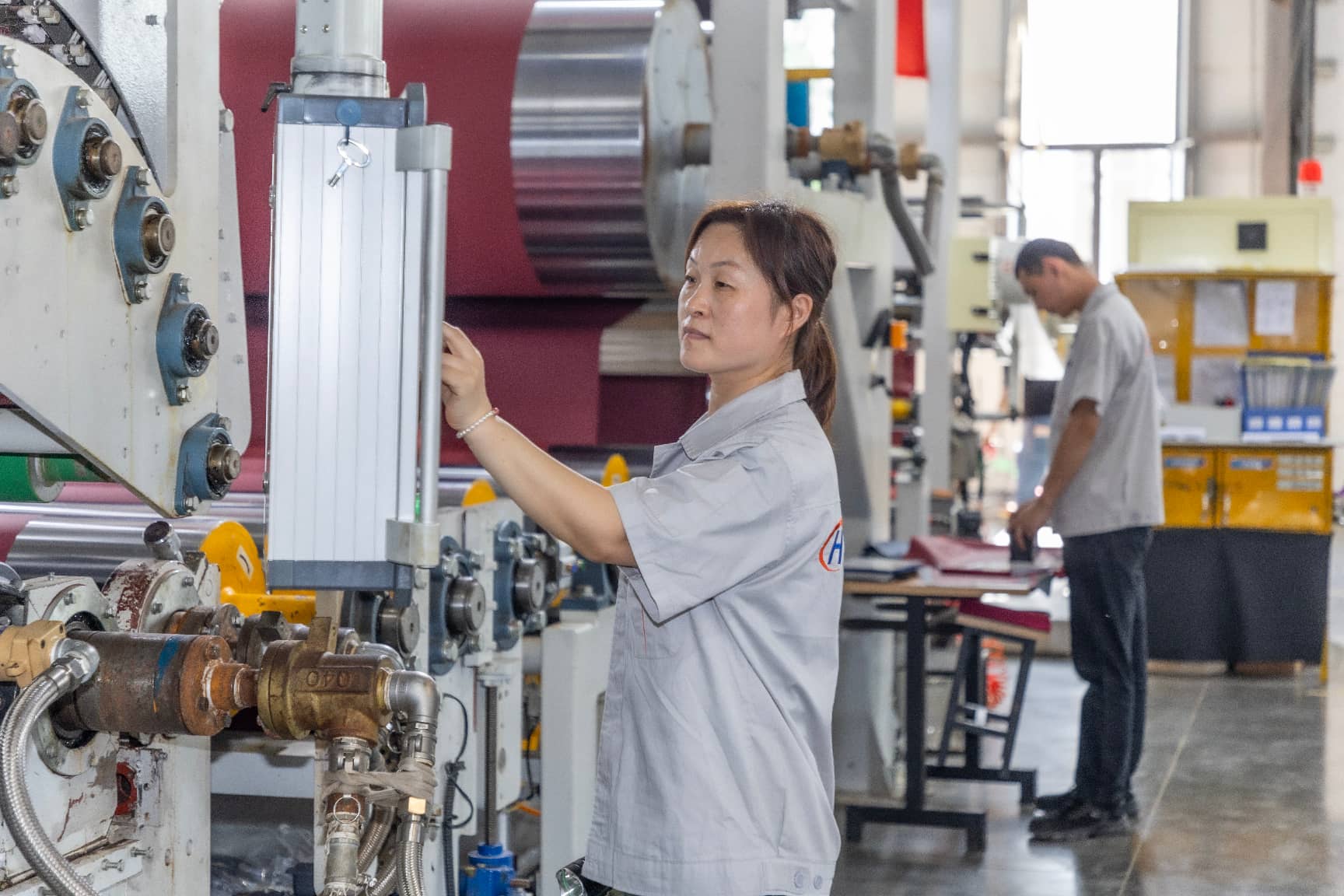
Workers step up production in a workshop of an auto interior materials firm in an industrial park in Pinglu county, north China's Shanxi province. (Photo/Quan Yongjun)
Through dense industrial clustering and close coordination across entire supply chains, this model helps overcome constraints such as limited financing and fragmented technologies faced by individual firms.
It transforms the vitality of individual enterprises into the collective industrial competitiveness, enabling Chinese manufacturing to move steadily toward the higher end of the global value chain.
Some international observers also believe that China's manufacturing sector is rapidly moving beyond its traditional reliance on low-cost production factors and embracing a new growth model driven by technological innovation and intelligent manufacturing.
In Zheng'an county, southwest China's Guizhou province, an American guitar maker witnessed firsthand how more than 100 local guitar manufacturers have continuously improved product quality through technological upgrading and process innovation. Today, Zheng'an-made guitars are exported to dozens of countries and regions, while their share in the mid- to high-end market continues to grow.
In Nanchang county, east China's Jiangxi province, local manufacturers of computer numerical control equipment have established "5G+" smart workshops that enable 24-hour flexible production through intelligent manufacturing. Their precision machine tools are now widely used by China's high-end equipment manufacturers and are becoming increasingly competitive in international markets.
As China's manufacturing sector shifts from leveraging a demographic dividend to harnessing a technology dividend, and from "Made in China" to "Intelligently Made in China," scientific and technological innovation continues to strengthen the endogenous drivers of county-level economic development.
Meanwhile, a continuously improving business environment and expanding high-standard opening up have provided strong institutional support for county-level economies to connect with global markets and create new development opportunities.
Building on its strength as a global commodity distribution hub, Yiwu has continued to advance institutional innovation in areas such as international commercial services and support for overseas business professionals, fostering an increasingly attractive international business ecosystem.
Jinjiang, in southeast China's Fujian province, has likewise translated its commitment to opening up into comprehensive institutional support. By leveraging various open platforms, the county-level city has established an innovative supply chain service system and strengthened logistics and trade infrastructure, enabling local brands to expand more effectively into international markets.
Moving beyond cost-based competition, China is creating a first-class business environment that is market-oriented, law-based and internationalized through deeper institutional reform. This has become an essential foundation for county-level economies to participate more deeply in global industrial cooperation and achieve mutually beneficial development.
The resilience of China's economy is rooted in the vibrant practices unfolding in every county, industrial park and enterprise nationwide.
This bottom-up, perpetual driving force underpins the steady and sustained growth of China's economy. It will also keep reinforcing stability and certainty in global industrial and supply chains, contributing more impetus to the recovery and expansion of the world economy.

Tel:86-10-65363107, 86-10-65368220, 86-10-65363106
 Scan the QR Code
 Follow Us