





- BRNN
- BRI News
- BRNN News
- Database
Official Documents Polices and Regulations
Inter-government Documents International Cooperation BRI Countries
Business Guide Economic Data BRI Data
Trade
Investment Projects Latest projects
Cases - Content Pool
Note: Over the next several days, I'll be traveling across northwest China's Xinjiang Uygur Autonomous Region as part of People's Daily Online's "China Momentum" program. I'll be writing daily about what I see and experience.
After a late-night drive through the desert from Turpan, my morning began in Urumqi, the capital of Xinjiang and one of the world's most landlocked cities. It's a strange thing to sit with, a metropolis of several million people, ringed by mountains, about as far from an ocean as a place can be, and yet everywhere I looked that morning, the world seemed to be arriving anyway.
The first and only stop in Urumqi made that feeling literal. The Urumqi Bonded Exhibition and Trading Center felt, in a strange way, like a modern reimagining of what the old Silk Road bazaars must have been, minus the camels and the haggling, plus a barcode scanner.
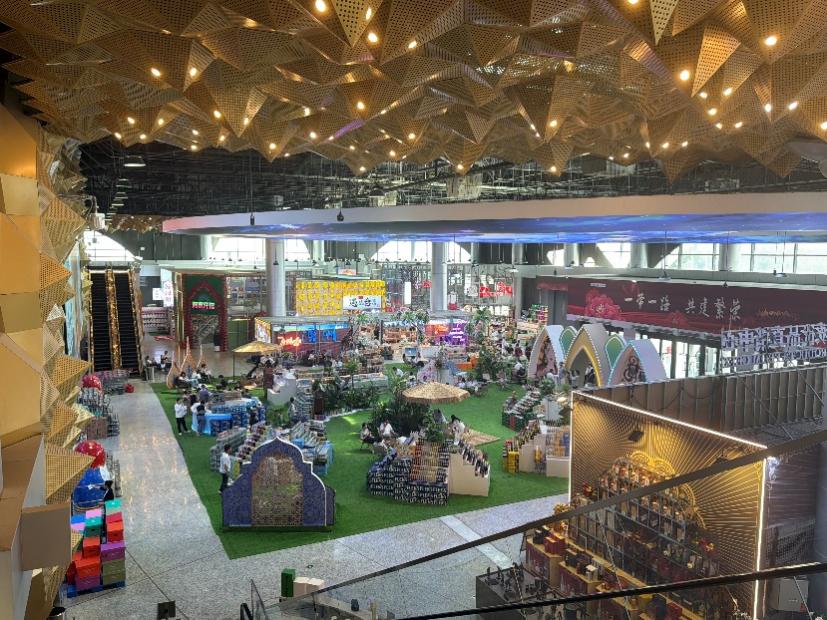
A view of the Urumqi Bonded Exhibition and Trading Center in Urumqi, northwest China's Xinjiang Uygur Autonomous Region. (People's Daily Online/Michael Kurtagh)
Products from the U.S., Italy, Thailand, Japan, Australia and Russia sat within arm's reach of each other. Korean face masks, German beer, Indonesian coffee and French wine, all headed into the same shopping basket. What amazed me most was that none of it sat behind some duty-free mechanism requiring a boarding pass. It was simply a store, open to anyone who happened to walk in, tourist or local.
The center sits inside one of Urumqi's open-trade zones, and goods from more than 70 countries are sold there, both off the shelf and through an online mall. But the physical store is only half the story. Livestreams supported by AI translation run in more than 30 languages, carrying Xinjiang and other Chinese goods out to buyers around the world.
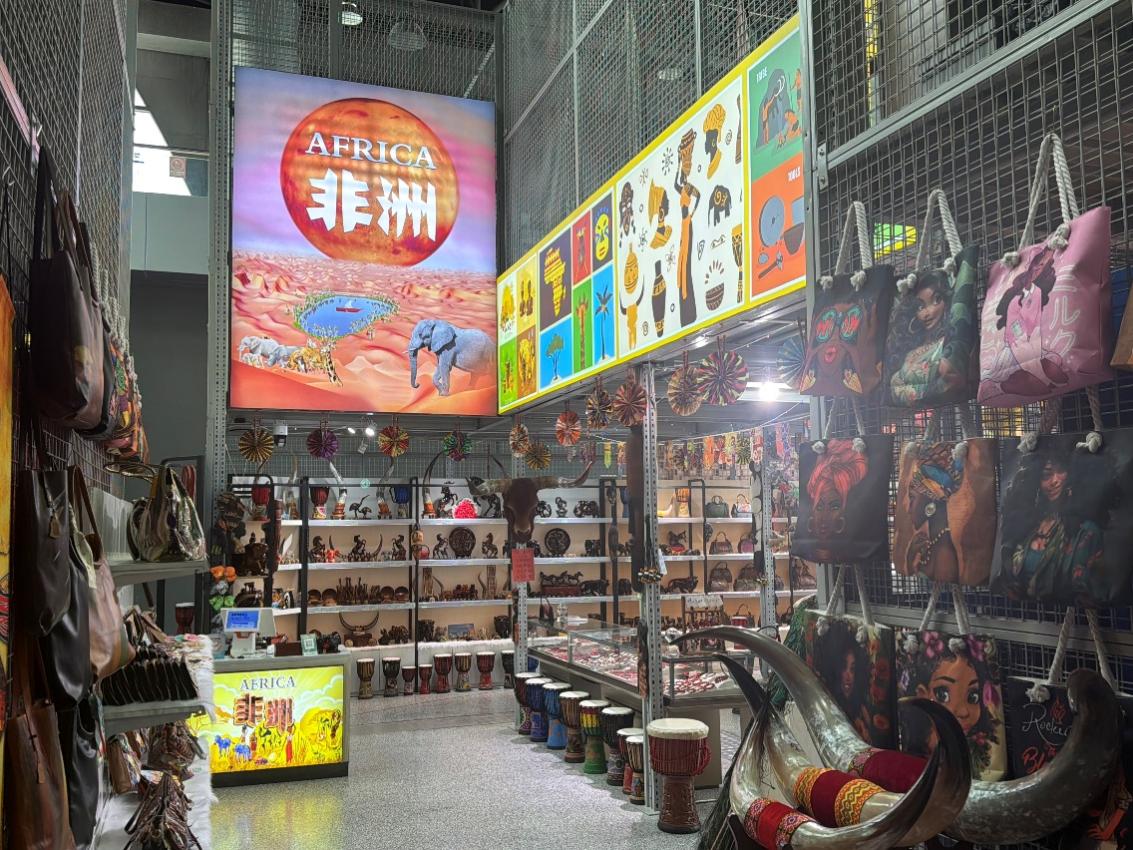
African products for sale at the Urumqi Bonded Exhibition and Trading Center in Urumqi, northwest China's Xinjiang Uygur Autonomous Region. (People's Daily Online/Michael Kurtagh)
The old Silk Road markets probably had a rhythm to them, haggling, waiting, the slow choreography of a deal getting done. I don't think that spirit is gone so much as it's been rewired, running now through a phone screen instead of a merchant's hands.
From there we moved on to Changji, an autonomous prefecture that sits close enough to Urumqi to live in its shadow, at least in terms of name recognition.
That undersells it.
The afternoon in Changji was all about agriculture, and specifically, how little of it these days actually involves a person standing in a field.
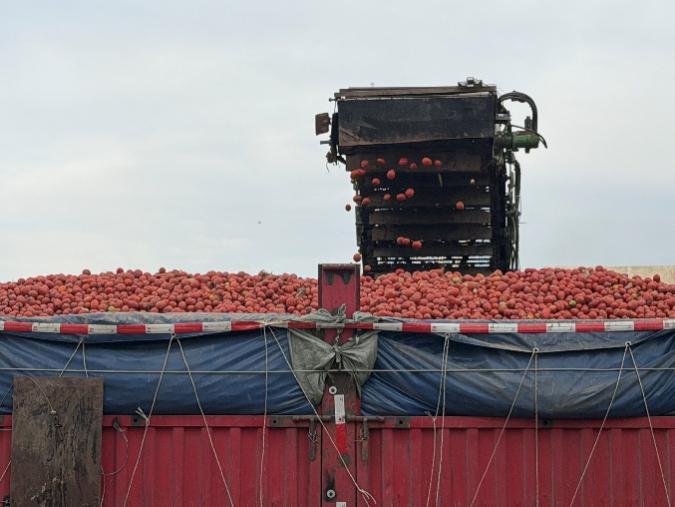
Tomatoes are collected by machine in Changji, northwest China's Xinjiang Uygur Autonomous Region. (People's Daily Online/Michael Kurtagh)
At one stop, tomatoes were being collected by the truckload, probably destined to become the ketchup on someone's next order of fries. At another, the fields were full of corn, sunflowers, wheat and sorghum.
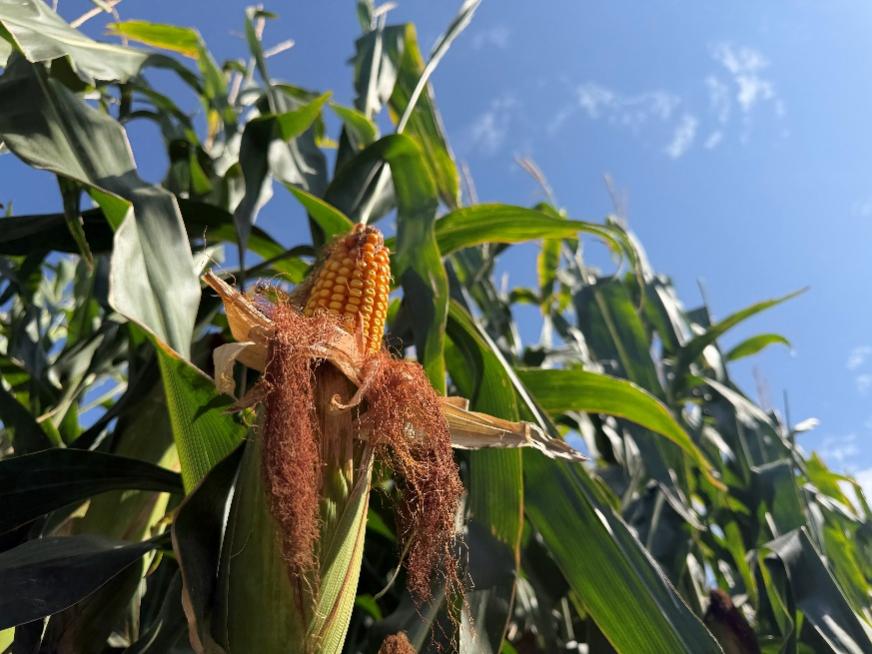
An ear of corn in a corn field in Changji, northwest China's Xinjiang Uygur Autonomous Region. (People's Daily Online/Michael Kurtagh)
Then we got to the cotton.
At the Changji National Agricultural High-tech Demonstration Zone, I walked a field that, as far as I could tell, didn't need me, or anyone else, to be there at all.
I kept looking for the people.
There weren't many to find.
Robots guided by satellite positioning and AI handle the weeding, spraying and even topping of the cotton plants, working around the clock and covering roughly 600 mu, about 100 acres, in a single day. The AI can reportedly identify what it's looking at with 99 percent accuracy. The whole operation is managed from a dashboard, with a farmer's phone doing the work a crew of hands once would have done.
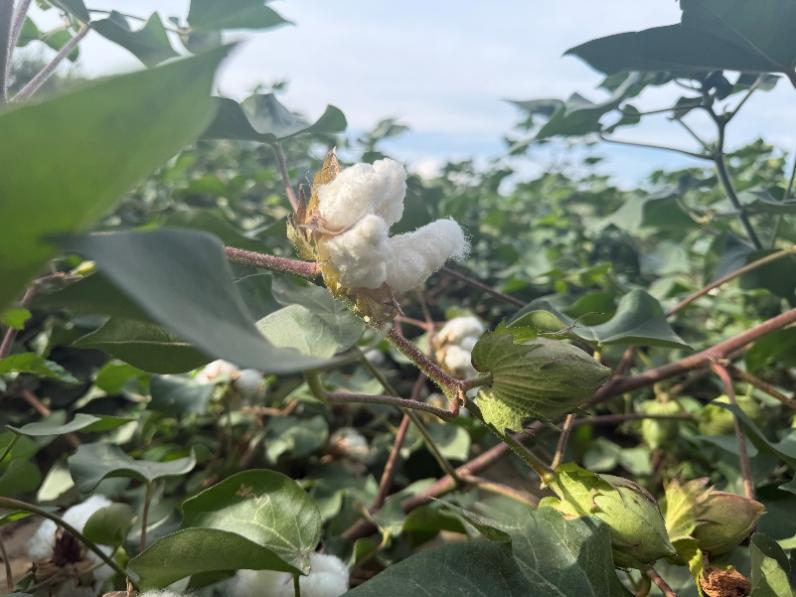
A cotton plant at the Changji National Agricultural High-tech Demonstration Zone in Changji, northwest China's Xinjiang Uygur Autonomous Region. (People's Daily Online/Michael Kurtagh)
Standing there, I found myself thinking less about how impressive the machines were than about how strange the field felt without people in it. Agriculture has always seemed like one of those things that requires someone physically present, hands in the soil, watching the plants. Here, the plants were being watched by something else.
Except there was one person there. She'd spent 40 years in the cotton industry, long enough to remember when a field like this one would have needed dozens of workers bent over the rows for weeks at a time. She'd lived through nearly every stage of the change herself, watched the hand tools give way to tractors, the tractors give way to precision equipment, and now, the precision equipment giving way to machines that can sense what the plants need.
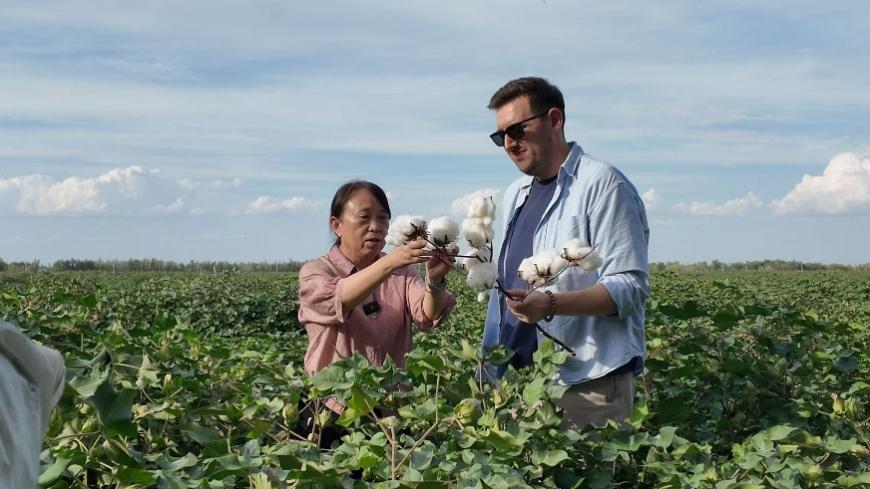
This article's author learns about the cotton fields at the Changji National Agricultural High-tech Demonstration Zone in Changji, northwest China's Xinjiang Uygur Autonomous Region. (People's Daily Online)
When I asked her what she thought of it all, she didn't hesitate, and there wasn't a trace of nostalgia in her answer. She was, if anything, the most excited person I met all day, walking me through what the sensors could see that the human eye used to miss, and what that meant for a crop she'd spent her whole working life around.
Talking to her, I understood the field differently. It wasn't empty because people had been pushed out of it. It was empty because someone like her had spent 40 years working to get it there.
The day ended at the Snack Street, Changji's night market, and I will never turn down a chance to eat my way through one of these. This one was all about bread, some baked, some fried, some sweet, some savory, mountain after mountain of it.
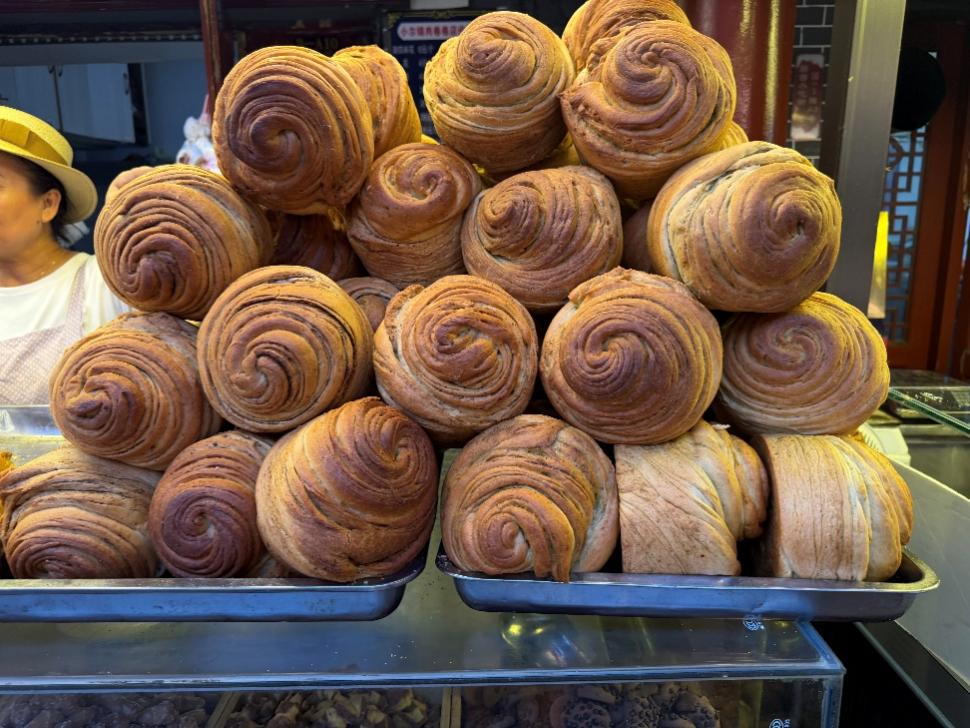
A mountain of baked breads at the Snack Street in Changji, northwest China's Xinjiang Uygur Autonomous Region. (People's Daily Online/Michael Kurtagh)
After sampling more than I should admit to, I sat down with a plate of grilled skewers and just watched.
Families, couples, elderly folks, tourists, everyone out for the evening together. A stage in the middle of the market filled up with a man singing, and around me people ate, talked, laughed and passed plates between them.
After a day spent seeing Xinjiang connect itself to the world and watching its farmers use technology to get more from the land, it was nice to see what all of that looks like when the workday is over. The robots and satellites and shipping manifests felt very far away. What was in front of me was families sitting down together over food, children running between tables, grandparents listening to music, and people who had finished their work for the day with somewhere to go and someone to share it with.
Sitting there, I found myself thinking that maybe this is what all those changes are ultimately supposed to make possible: not some abstract vision of modernization, but more room for people to live their lives, together.

Tel:86-10-65363107, 86-10-65368220, 86-10-65363106
 Scan the QR Code
 Follow Us