





- BRNN
- BRI News
- BRNN News
- Database
Official Documents Polices and Regulations
Inter-government Documents International Cooperation BRI Countries
Business Guide Economic Data BRI Data
Trade
Investment Projects Latest projects
Cases - Content Pool
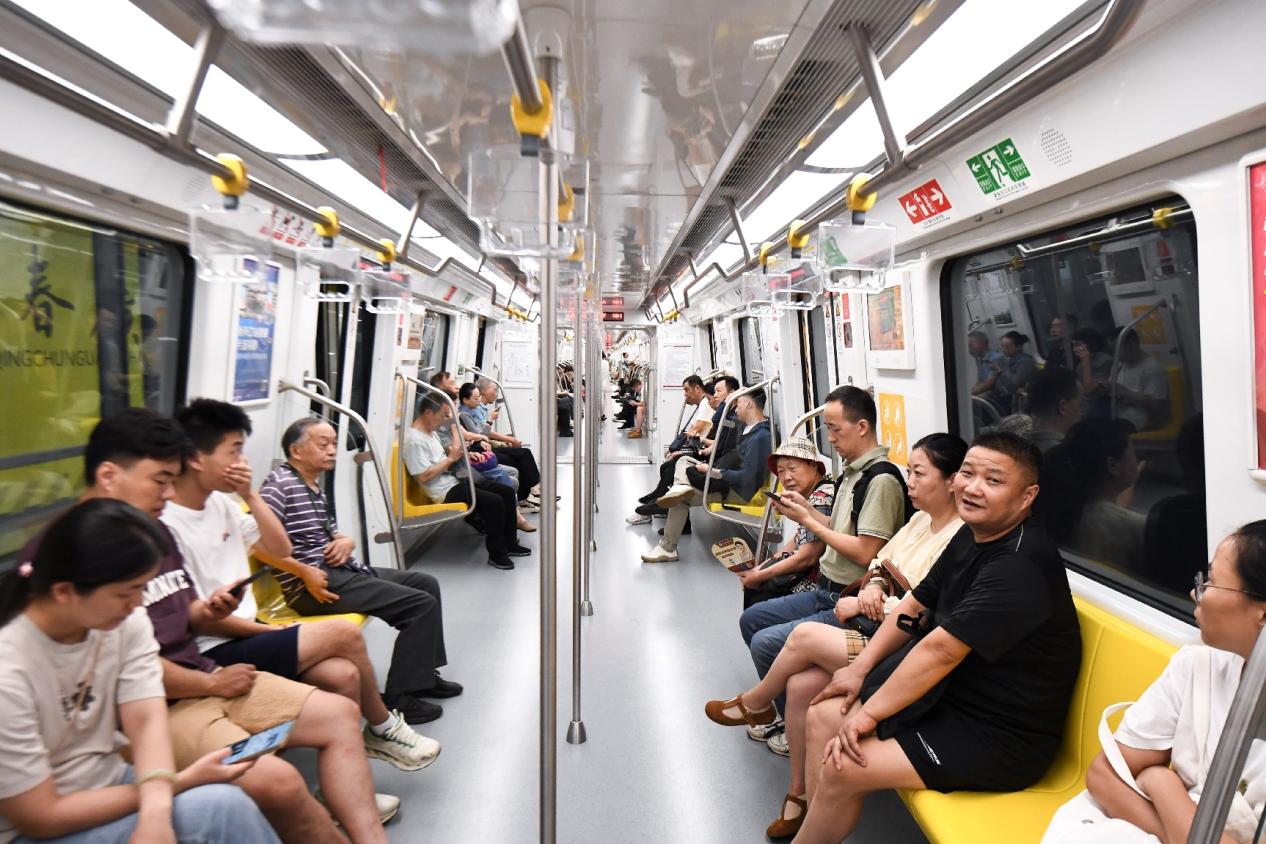
Citizens take Metro Line 5 in Nanjing, east China's Jiangsu province. (Photo/Yang Suping)
At 8 a.m., in Beijing's Chaoyang district, a resident surnamed Wang scanned a QR code to unlock a shared bicycle. He mounted his phone on the handlebars using a navigation app and began cycling the six kilometers to his pet shop.
"Cycling gets me to work while fitting in some exercise at the same time. It's an efficient two-in-one solution," Wang said.
His experience is far from unique. According to online local services provider Meituan, over the past five years, users of its shared bicycles and e-bikes have clocked up a total of 46.2 billion kilometers of rides, reducing carbon emissions by roughly 2.64 million tons. Shared two-wheelers have become deeply embedded in urban life and are now a preferred commuting option for millions.
Subways, buses, and bicycles -- these combinations of transport have quietly become a daily routine in many Chinese cities. In 2025, over 200 million trips across China were made via green mobility modes each day.
"Green mobility refers to an eco-friendly, low-carbon, high-capacity, and efficient transport system centered on urban public transport and non-motorized transport," explained Chen Xumei, chief engineer at the China Urban Sustainable Transportation Research Center, China Academy of Transportation Sciences.
Transport accounts for roughly 10 percent of China's total carbon emissions, with road transport being the dominant contributor. Promoting green mobility is therefore critical to easing traffic congestion and advancing energy conservation and emissions reduction.
In Chen's view, green mobility in Chinese cities has evolved from a policy-driven initiative into a public preference.
The scale keeps expanding. At present, around 100 million people ride urban rail transit, another 100 million take ground buses, and 24 million use shared bicycles each day nationwide.
According to a 2024 report on green mobility development in typical Chinese cities, green mobility accounts for an average of 73.9 percent of all trips across 36 surveyed cities, rising to 75.4 percent in megacities. Urban commuting patterns are steadily becoming greener.
A large pool of potential users remains untapped. As metropolitan areas grow rapidly, cross-city commuter populations keep rising.
A 2025 report on commuting in major Chinese cities found that about 100 million people commute in China's 22 megacities and super-large cities, with around 4 percent commuting across city boundaries.
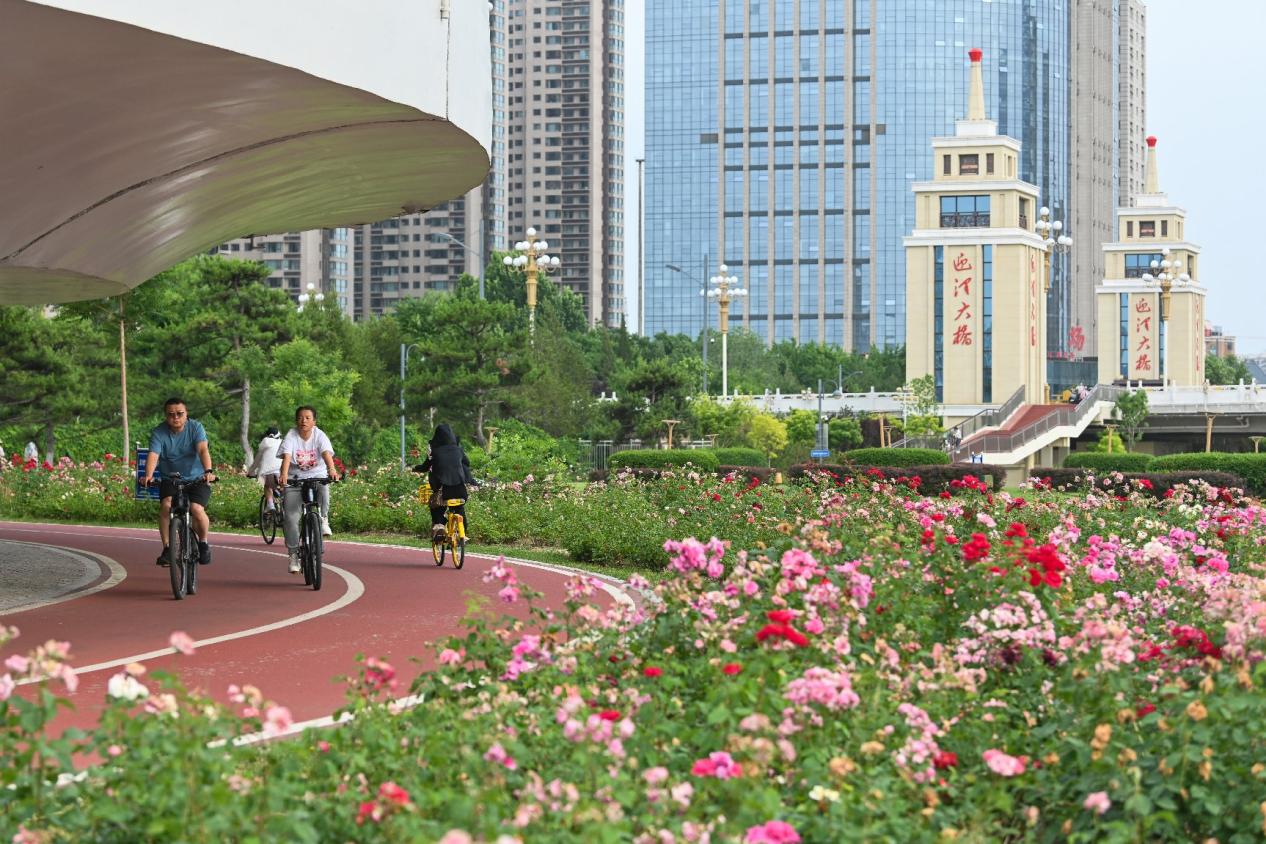
Citizens ride bikes in Taiyuan, north China's Shanxi province. (Photo/Wang Ruoyuan)
Nearly 90 percent of people who currently rely on motorized transport but do not yet take urban public transit said they would consider reducing their use of private cars and taxis if public transport became more efficient and convenient.
What has driven the widespread adoption of green mobility? Behind this trend lies the continuous improvement of urban public transport infrastructure.
For example, Metro Line 11 in Guangzhou, south China's Guangdong province, links five major downtown areas, with an average daily ridership exceeding 550,000. Custom shuttle buses serving the Beijing-Tianjin-Hebei region connect multiple areas around Beijing, delivering more than 5 million passenger trips in total. The ever-expanding, increasingly interconnected public transport network shrinks travel time between cities and extends the reach of green mobility.
After years of development, an efficient and eco-friendly urban public transport infrastructure system has taken shape. In 2025, 54 cities operated over 11,000 kilometers of urban rail lines. For urban buses, the total length of operating routes stood at 1.776 million kilometers, and new-energy buses made up 87.5 percent of the fleet.
Beyond hardware, public transport also offers a smoother riding experience. Chengdu in southwest China's Sichuan province has rolled out "on-time bus" routes, using intelligent arrival-time forecasting and real-time electronic stop signs to help passengers plan their waits.
Hangzhou, in east China's Zhejiang province, deploys a "public transport large model" for intelligent scheduling and passenger flow monitoring, enabling more precise arrival predictions in core districts.
Better transfer connections and smarter operations -- digital upgrades have effectively boosted the competitiveness of green mobility across China.
Widespread public recognition for green mobility stems not only from robust hardware, but also from an enabling environment.
Riding a shared bike to the metro, taking the metro for three stops, and then walking 800 meters from the station to the office -- that's how Shanghai resident Wang Chen gets to work every day, and this trip earns Wang about 600 "carbon points" in his personal account in Amap, a popular navigation app in China.
"I only need 4,400 more points to redeem a transit pass," Wang said. He once thought carbon reduction had little to do with him, but now contributes through his daily commute and finds it rewarding.
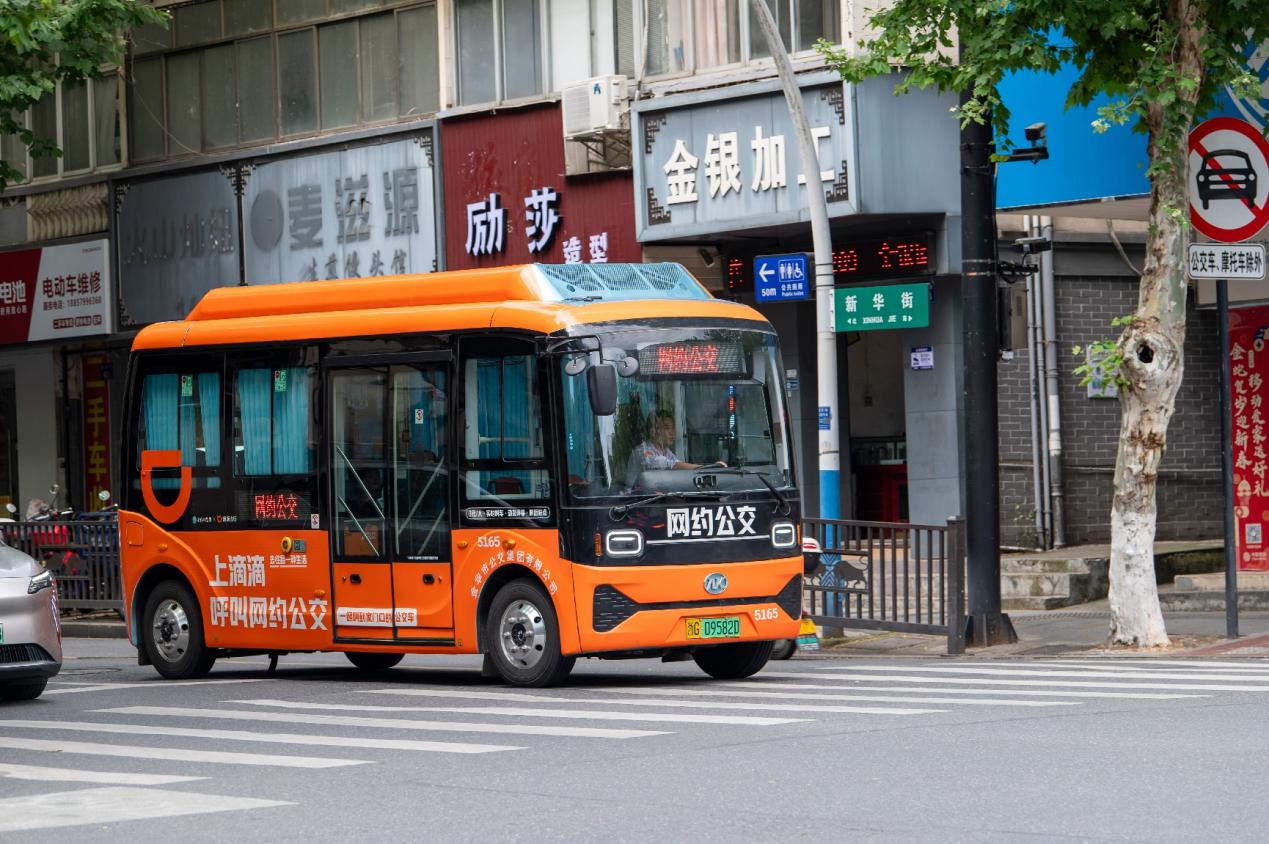
An online-hailed bus runs on a street in Jinhua, east China's Zhejiang province. (Photo/Hu Xiaofei)
In 2020, Beijing pioneered a carbon inclusion mechanism: residents earn recorded and calculated carbon emission reductions for walking, cycling and riding buses or subways.
"In recent years, many regions have rolled out carbon accounts and carbon inclusion initiatives. The goal is to shift mindsets from 'we ought to do this' to 'we want to do this', making green mobility a voluntary choice," said Li Yutao, researcher at the institute of comprehensive transportation of China's National Development and Reform Commission.
When every travel choice can be tracked, quantified and rewarded, green mobility moves beyond an abstract concept and becomes a tangible lifestyle, Li added.

Tel:86-10-65363107, 86-10-65368220, 86-10-65363106
 Scan the QR Code
 Follow Us