China Haul: Why foreign visitors are now leaving with full suitcases
Foreign visitors once left China with little more than a handful of souvenirs. Now many arrive with empty suitcases and leave with them packed. On TikTok, the trend has a name: China Haul.
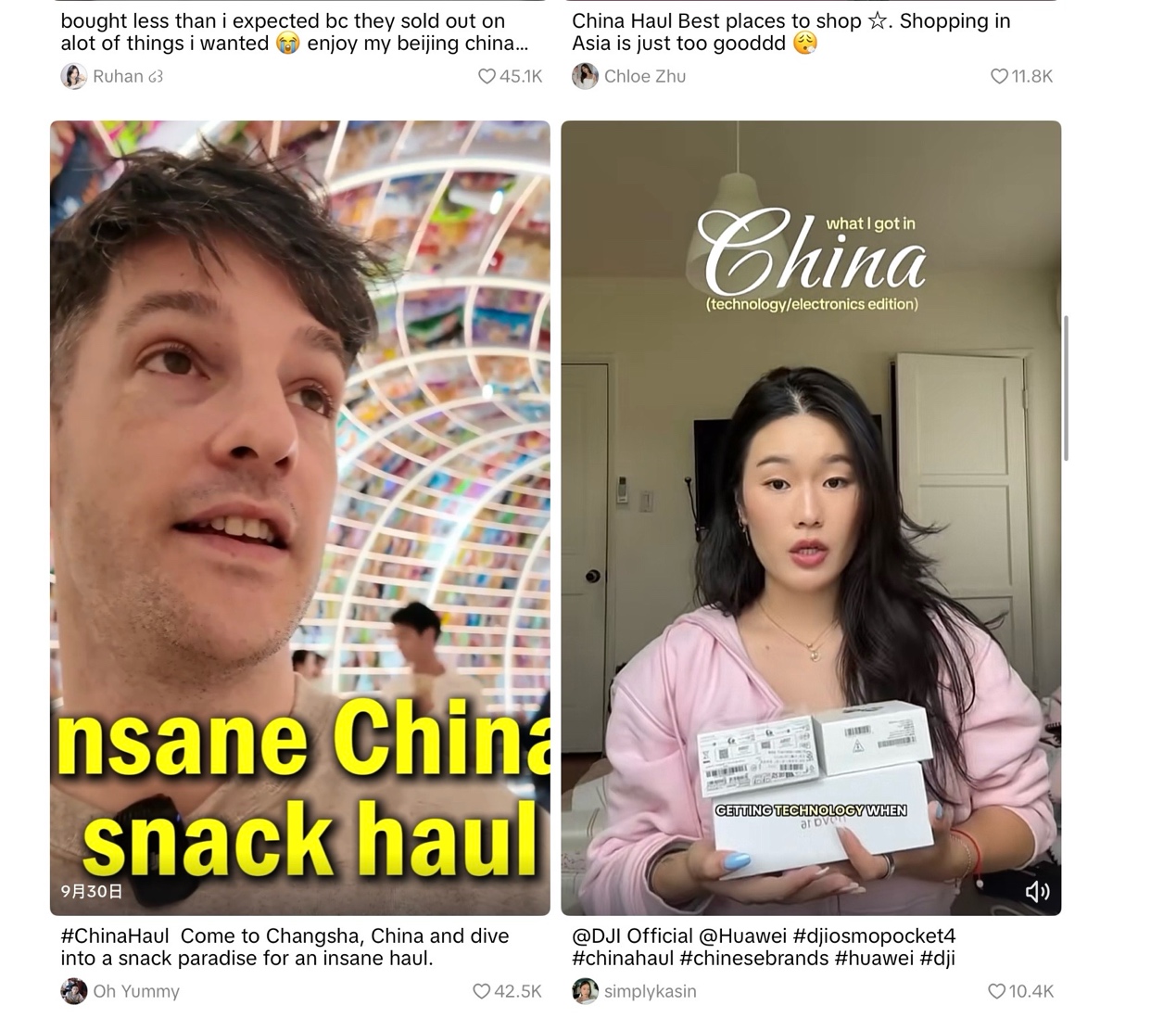
"China Haul" has become a new trend on social media platforms such as TikTok, in which foreign visitors unpack the items they bought in China and offer shopping suggestions to their audiences.
South African creator Grace Mondlana filmed herself unboxing her haul—ranging from carefully designed cultural pieces to snacks—and the video pulled in more than 500,000 likes. The food account "Oh Yummy" walked into a snack shop in Changsha, central China's Hunan Province, stared at shelves lined with thousands of options, and called China a "snack paradise." That video surpassed 3 million views. Drones, foldable phones, and AI glasses turn up just as frequently. What used to be the occasional tourist souvenir has turned into serious shopping, and the range of products foreign visitors can buy in China keeps growing.
This is no longer rare. From AI glasses at electronics market in Shenzhen, south China's Guangdong Province, to Chinese-style clothing and beauty products in shopping malls in east China's Shanghai, and from folding fans and fragrant sachets at riverside shops in Suzhou, southeast China's Jiangsu Province to herbal teas and cultural goods in boutiques in southwest China's Chongqing, it has become commonplace to see foreign tourists arriving with empty suitcases and leaving with fully packed luggage.
Empty suitcases in, full suitcases out
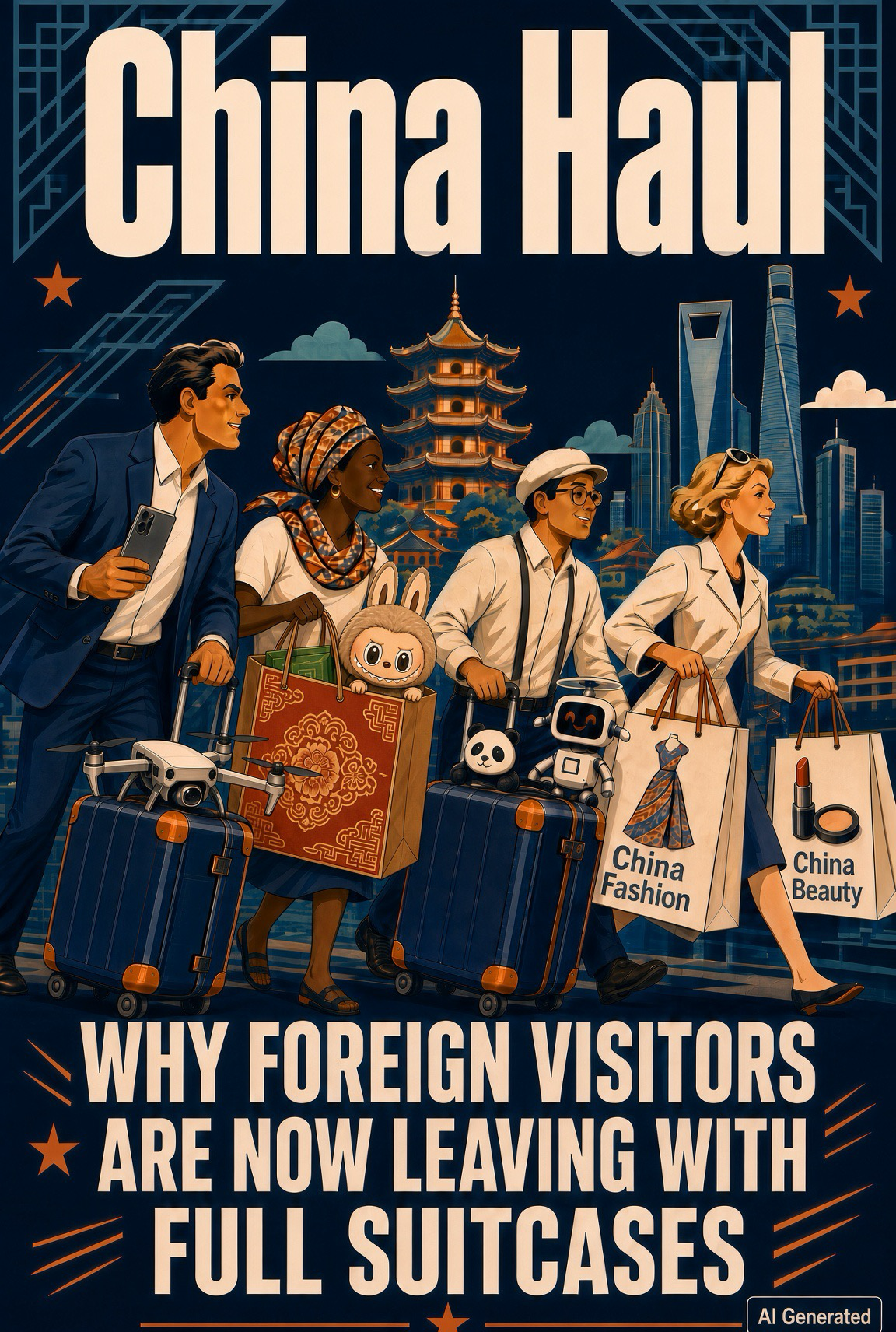
"Bring extra luggage for a shopping spree in China" has become common advice among foreign visitors. During the 2026 National Day holiday, China recorded 15.46 million inbound and outbound trips, averaging 2.21 million a day, up 6.7 percent year on year, according to the National Immigration Administration. In the first half of the year, 22.914 million foreign nationals entered China, a 20.4 percent year-on-year increase, with 77.7 percent of them arriving visa-free.
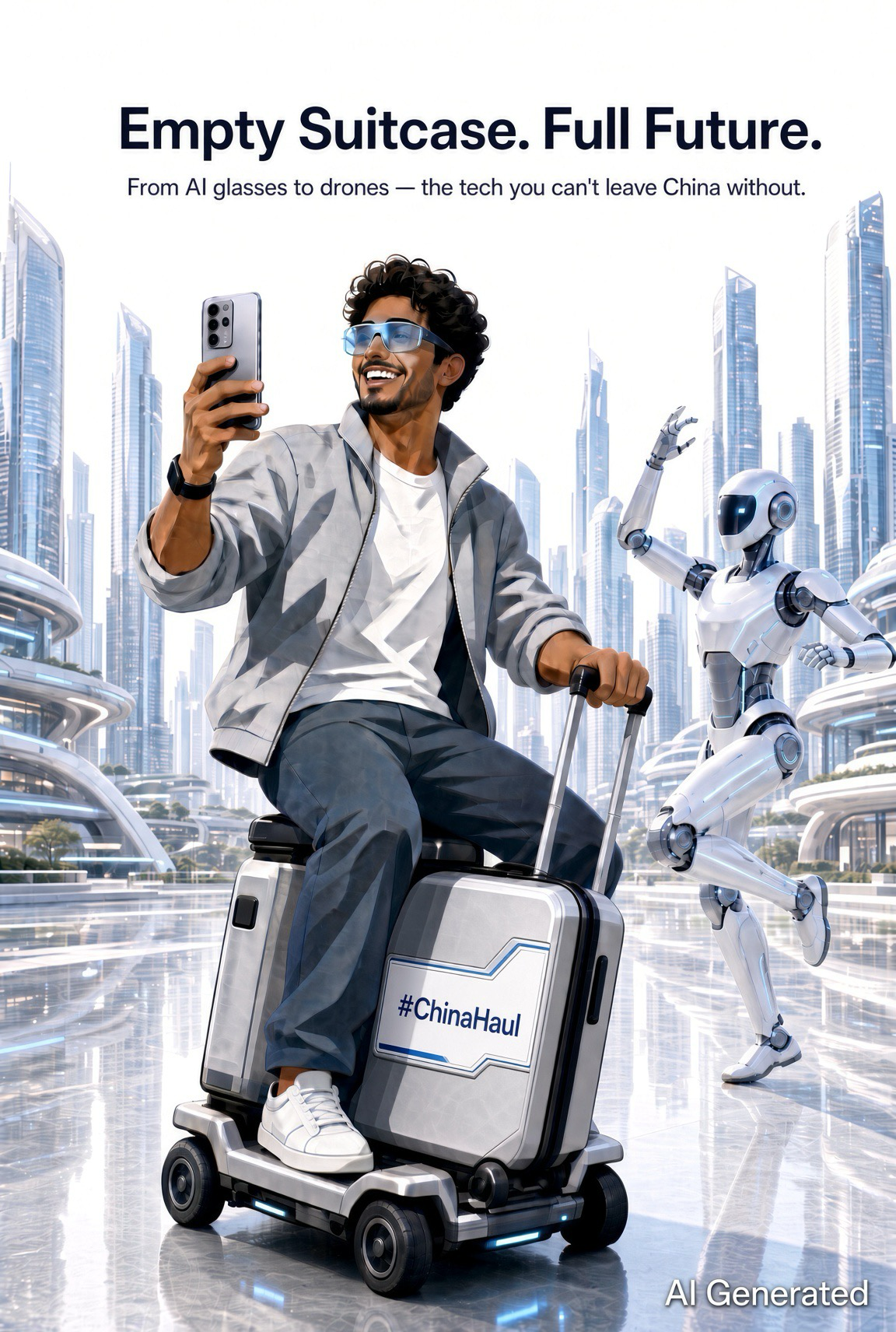
Tech products dominate their shopping lists. Data from the Huaqiangbei Subdistrict in Shenzhen shows that nearly 8,000 foreign merchants have come to Huaqiangbei for procurement every day this year. As of July 2026, AI products made up 61 percent of electronics products in the commercial zone, a sharp jump from 41 percent in 2025. Overall AI-product sales in Huaqiangbei grew more than 55 percent year-on-year, while AI glasses sales doubled, and drone and robot sales rose 60–70 percent, according to a CCTV report.
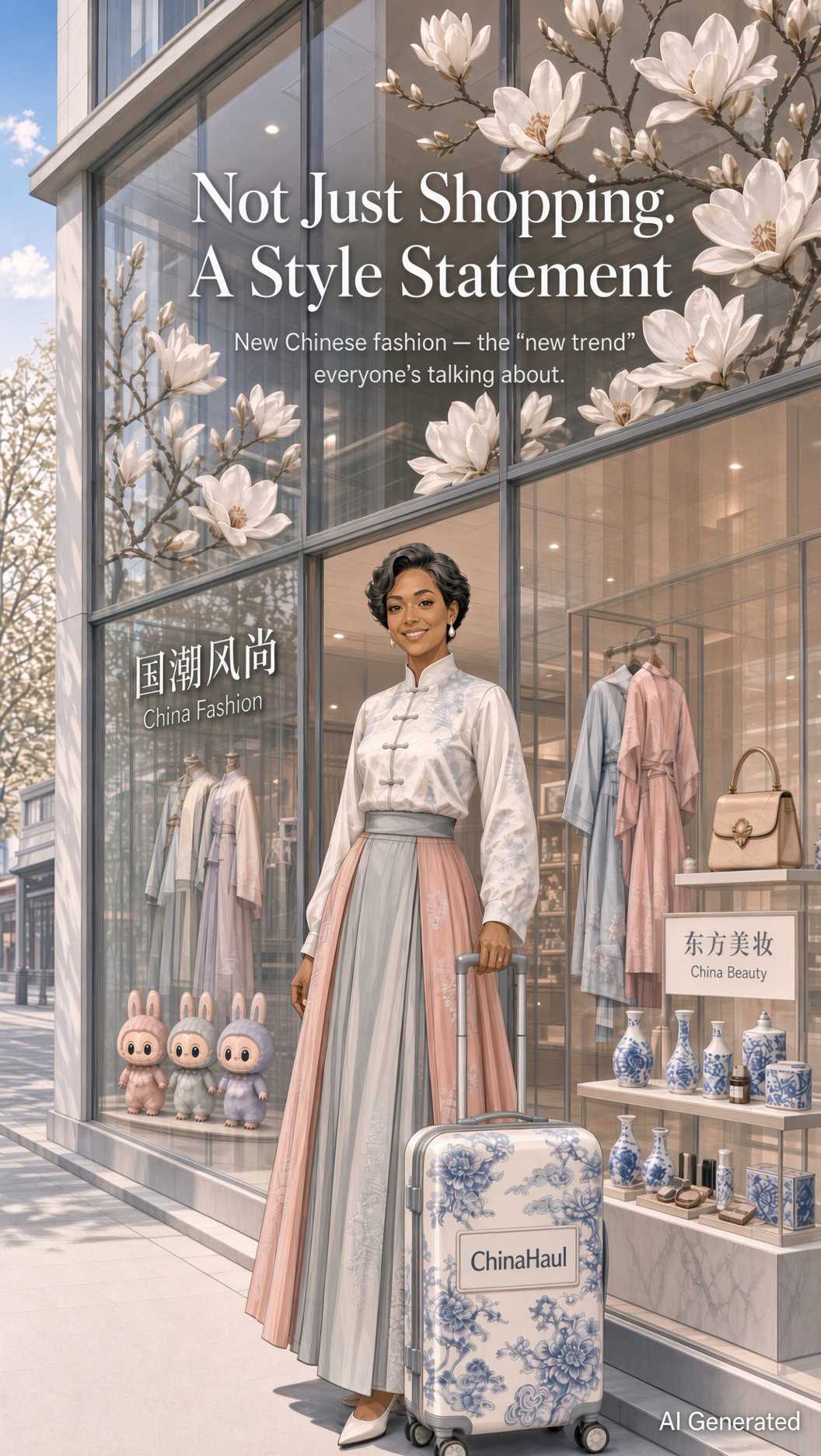
Cultural and creative products rooted in Chinese aesthetics come next. Suzhou's Pingjiang Road historic district is lined with intangible-heritage shops where visitors can buy Su embroidery fans and sachets—or try making them on the spot. Items such as loquat paste with fritillary bulb and moxibustion tools have been nicknamed "Chinese miracle remedies" by overseas users.

Local fashion is the latest draw. At PANE, a Shanghai-based footwear brand, foreign customers account for 30 percent of foot traffic and 35 percent of sales. Chinese pop culture brand Pop Mart reported 37.12 billion yuan in revenue for 2025, with overseas sales making up more than 40 percent. Domestic beauty brands are also gaining ground: Florasis became the first Chinese beauty brand to enter Ulta Beauty, a major U.S. retailer.
Why "China Haul" is catching on
Looking at the recent "China+" trends on overseas social media, "China Haul" makes more sense. During the "China Travel" phase, people mostly filmed the scenery. In the "Chinamaxxing" period, they started recording high-speed trains, night markets, and drone deliveries—stuff that felt like a high-tech, slightly futuristic China. Now with "China Haul," they're actually packing their suitcases. Seeing it, going there, and bringing something home is what makes the impression stick. Once the products end up in someone's daily life—used, unboxed on camera, and flooded with "link please" comments—they stay familiar and gradually build trust.
China's opening up policies have helped sustain the trend. China now offers unilateral visa-free entry to citizens of 50 countries and 240-hour visa-free transit to those of 57 countries. In the first half of 2026, the number of foreign travelers claiming departure tax refunds rose 366 percent year-on-year, while both refundable sales and the refund amounts themselves grew 69 percent. The "2.0 version" departure tax refund policy introduced in May 2026 extended the "refund upon purchase" window to 28 days nationwide before departure and introduced paperless processing with mutual recognition across locations.
The continuous upgrading and expanding variety of Chinese products is the other major driver. Motivation has shifted from "because it's cheap" to "because it's good." Chinese manufacturing and design—backed by solid quality, distinctive Chinese aesthetics, and emotional resonance—continue to generate desire among overseas consumers.
From the old staples of tea, silk, and panda plush toys to AI glasses, domestic running shoes, iconic cultural landmarks, and the loquat paste that foreign creators now call a "Chinese miracle remedy," the shopping experience for foreigners in China has become far richer. Suitcases packed to capacity and the rise of "China Haul" illustrate both the appeal of Chinese manufacturing and the practical results of China's continued opening.

 Follow Us
 Scan the QR Code
