The Canton Fair: A window into China's evolving economic and cultural identity
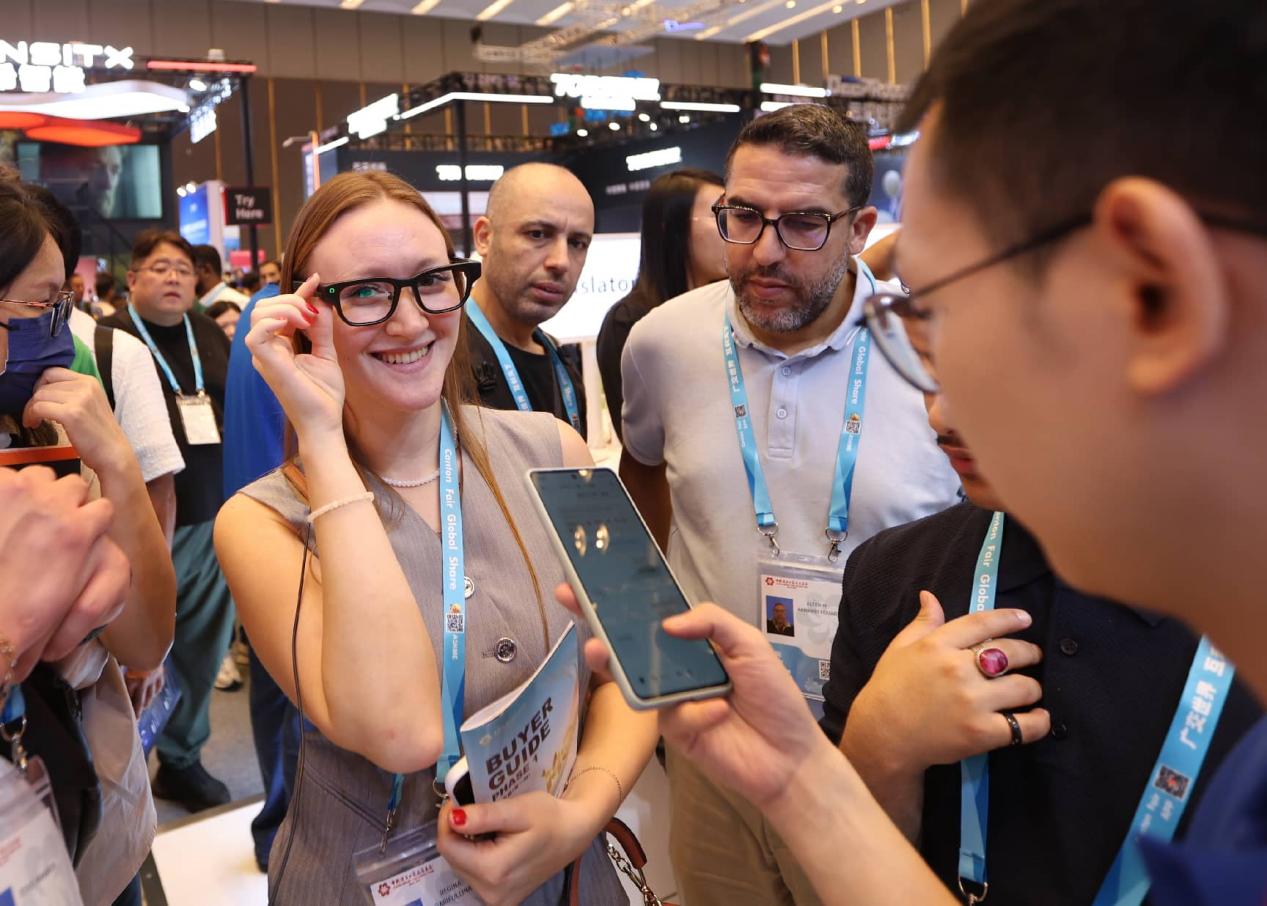
A buyer tries out a pair of smart glasses at the 140th Canton Fair in Guangzhou, south China's Guangdong province. (Photo/Huang Jiming)
For seven decades and 140 editions, the China Import and Export Fair, commonly known as the Canton Fair, has convened without interruption. It is a legend in the history of international trade fairs and serves as a living record of China's modernization journey.
Through this annual gathering, observers can trace the transformation of entire industries, the rise of dynamic urban centers, and the emergence of new cultural expressions. The fair also sheds light on the foundations, ambitions, and long-term vision guiding China's development, while reflecting its growing integration into the global economy and its distinct approach to industrial progress.
Manufacturing remains the backbone of any modern economy, and a robust industrial system provides the material and technological foundation for national development.
In 2000, some 50 flashlight manufacturers from Xidian town in Ninghai county, east China's Zhejiang province, made their debut at the 88th Canton Fair, in Guangzhou, south China's Guangdong province.
Lacking permanent booths and marketing budgets, they shared exhibition space and pooled funds to produce promotional materials. At the time, competitive pricing was their primary advantage.
More than two decades later, that same sector has undergone a dramatic shift. Foshan Electrical and Lighting Co., Ltd. and Tsinghua University recently developed an ergonomic desk lamp featuring diffused, glare-free lighting. The product earned top honors at the Canton Fair Design Award, a competition established to recognize excellence and drive industrial innovation.
This progression mirrors a broader trend across Chinese manufacturing. Today's exhibitors no longer showcase isolated products; they demonstrate integrated supply chains and the technological capabilities underpinning China's modern industrial base. At this edition of the Canton Fair, 64 percent of participating companies have adopted advanced technologies such as the industrial internet and artificial intelligence. New and environmentally friendly products now represent record-high shares of the exhibition lineup.
From agricultural specialties to the "old three" products (clothing, furniture, home appliances) and the "new trio" products (electric vehicles, lithium batteries, and solar products); from printed catalogs to face-to-face product displays and transactions, and now to full-chain solutions, the evolution of the Canton Fair reflects the transformation of Chinese manufacturing.
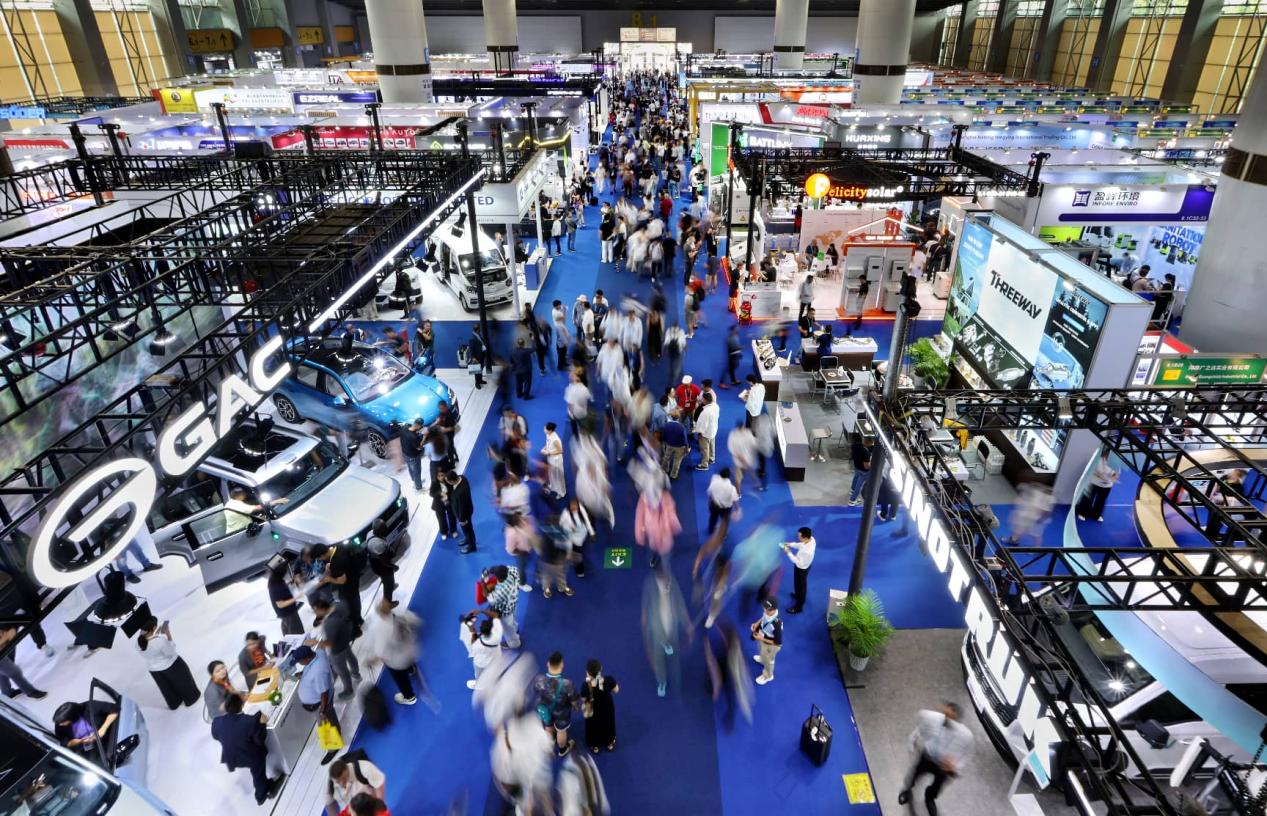
Visitors throng the exhibition halls at the 140th Canton Fair in Guangzhou, south China's Guangdong province. (Photo/Huang Jiming)
Moving beyond OEM (original equipment manufacturing) to develop their own brands, and shifting from competing on price to creating greater value through innovation, Chinese industries are upgrading by bringing sci-tech innovation and industrial innovation into closer alignment.
China's drive for innovation is also opening up new opportunities for the world.
China's exports of new energy equipment are helping developing countries build their own industrial capabilities. Chinese algorithms and AI models are finding applications around the world, helping bridge the global digital divide. Through innovation and green development, China's industrial system is bringing greater stability and certainty to the world economy.
China is stepping up efforts to make breakthroughs in cutting-edge technologies, develop industries of the future, foster emerging industries as new pillars of growth, and transform and upgrade traditional industries, unlocking tremendous potential and vitality for high-quality development.
The exhibition economy creates value not only of industries, but even for cities.
In Guangzhou, improved sea-air transport links are making logistics more efficient, contactless customs clearance is making trade more convenient, and riverside greenbelts are enhancing the urban environment. Additionally, low-carbon exhibitions and digital technologies are adding fresh momentum to innovation. Located on Pazhou Island in Guangzhou, the Canton Fair Complex, the world's largest exhibition complex, reflects a new vision for high-level opening-up.
Today, the Canton Fair is more than a platform for bringing buyers and sellers together. It has become a hub for business exchanges across the Guangdong-Hong Kong-Macao Greater Bay Area. Leveraging the strength of China's unified national market, Guangzhou is becoming increasingly adept at allocating high-end global resources. The city has also been named one of China's "Happiest Cities" for several consecutive years.
An exhibitor badge at the Canton Fair is also an invitation to discover Chinese culture.
Inside the exhibition halls, ChangingTek Robotics Technology (Suzhou) Co., Ltd., uses a robotic hand equipped with tactile sensors to make lacquer fans, bringing traditional Chinese aesthetics to life through technology. Foshan Fosun Chancheng Hospital's AI-powered pulse diagnosis device has also caught the attention of overseas buyers, offering them a glimpse of the appeal of traditional Chinese medicine.
By incorporating cultural elements into product design and giving traditional culture a new lease on life through sci-tech innovation, exhibitors are winning over international customers.
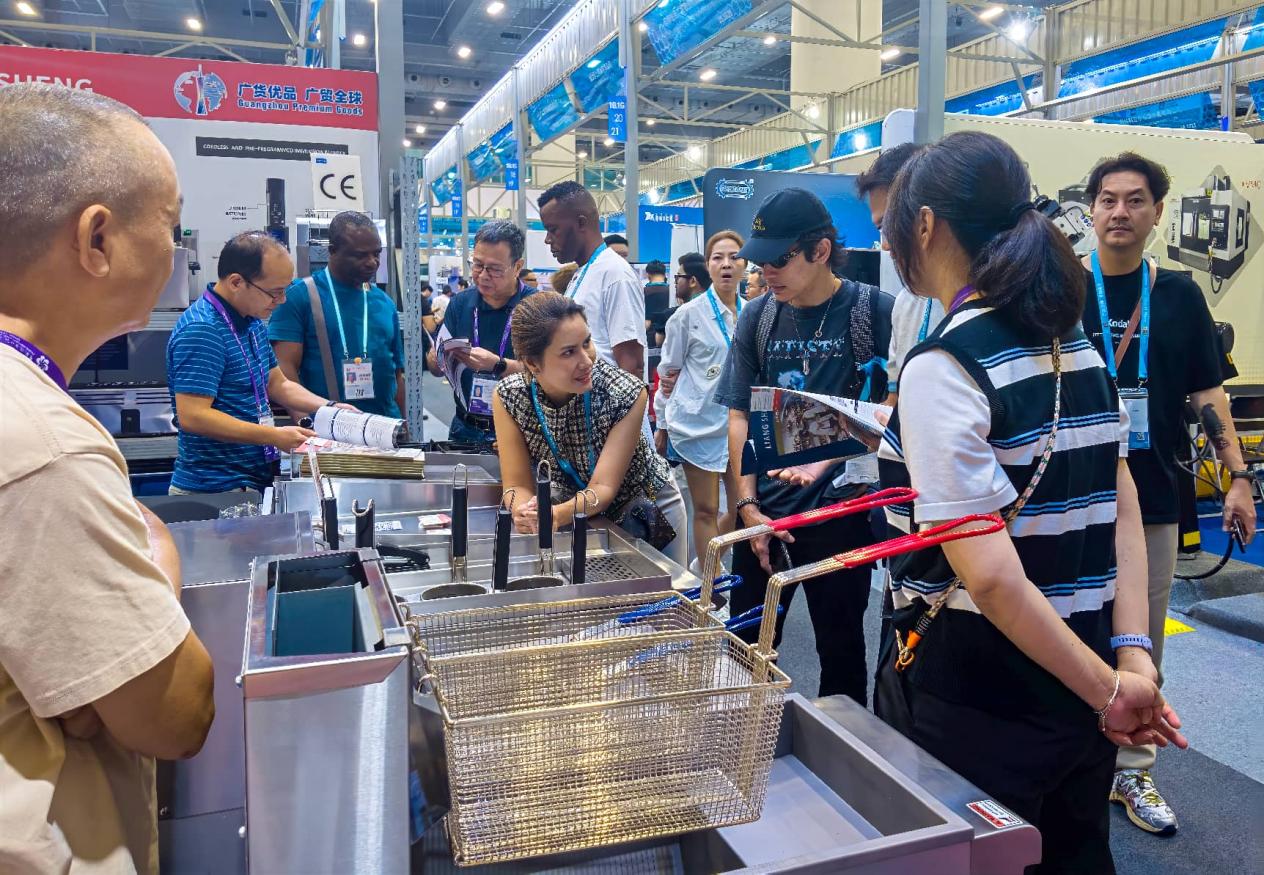
Chinese and international buyers discuss business in the machinery and equipment exhibition area of the 140th Canton Fair in Guangzhou, south China's Guangdong province. (Photo/Wang Meiyan)
Beyond the exhibition halls, Guangzhou has issued 20 million yuan (about $3 million) in dining vouchers, organized a food festival during the fair and arranged complimentary one-day tours exclusively for overseas buyers. Doing business starts with making friends, and a visit to the fair is also an opportunity to experience life in China.
Cultural influence runs deep.
The growing popularity of "China Travel" and "China Shopping," along with the rise of "Chinamaxxing" (embracing Chinese-style living) on overseas social media, shows that China's cultural appeal is reaching an ever-wider international audience. Chinese online literature, online drama series and video games are further strengthening the country's cultural influence abroad.
What draws the world to China is no longer just its goods and services, but also its vibrant, relatable culture and the values and ideas that underpin it.
Amid geopolitical uncertainty and a sluggish global economic recovery, China's major fairs, including the China International Import Expo, the Canton Fair, the China International Fair for Trade in Services, the China International Consumer Products Expo and the China International Supply Chain Expo, underscore the country's commitment to common development in harmony, solidarity and win-win cooperation.
"Visiting the fair feels like coming home" and "China remains a reliable hub for global trade" reflect both confidence in Chinese market opportunities and appreciation for China's cooperative development model
Through its efforts to advance the four major global initiatives, champion the open source and inclusive AI initiative, build platforms for international economic and trade cooperation, and share development experience with other Global South countries, China offers insights into what makes a better life and how humanity can build a better future together.

 Follow Us
 Scan the QR Code
