Shenzhen's innovation creates new opportunities for Asia-Pacific
Over the past four decades, Shenzhen in south China's Guangdong Province has grown into an innovation hub — and in 2014 it became home to the country's first national independent innovation demonstration zone to cover an entire city. "Innovation capital" has become the city's signature label.
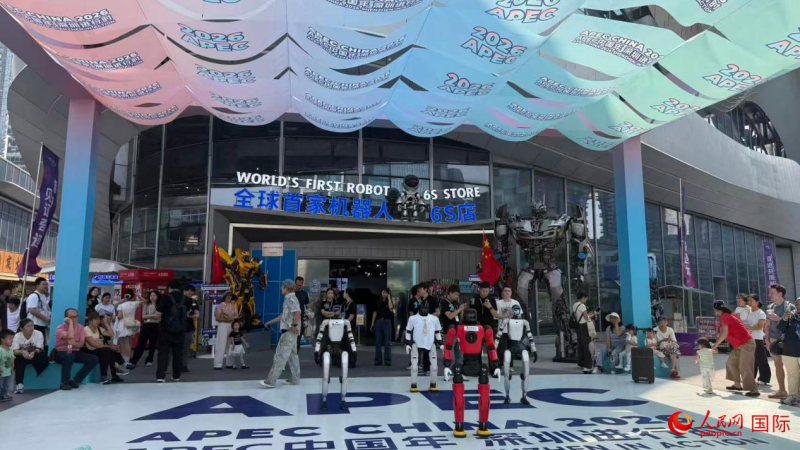
Visitors watch a robot performance outside the world's first robot 6S store in Longgang district, Shenzhen, south China's Guangdong Province, Oct. 21. (People's Daily Online/Yang Qian)
Shenzhen will host the 33rd Asia-Pacific Economic Cooperation (APEC) Economic Leaders' Meeting from Nov. 18 to 19. Under the theme "Building an Asia-Pacific Community to Prosper Together," the meeting has identified openness, innovation and cooperation as its three priority areas.
The economies should fully harness new technologies to empower and propel them forward, seize the opportunities of digital, smart and green development, and move faster to nurture and promote new quality productive forces, Chinese President Xi Jinping said at the second session of the 32nd APEC Economic Leaders' Meeting held last year.
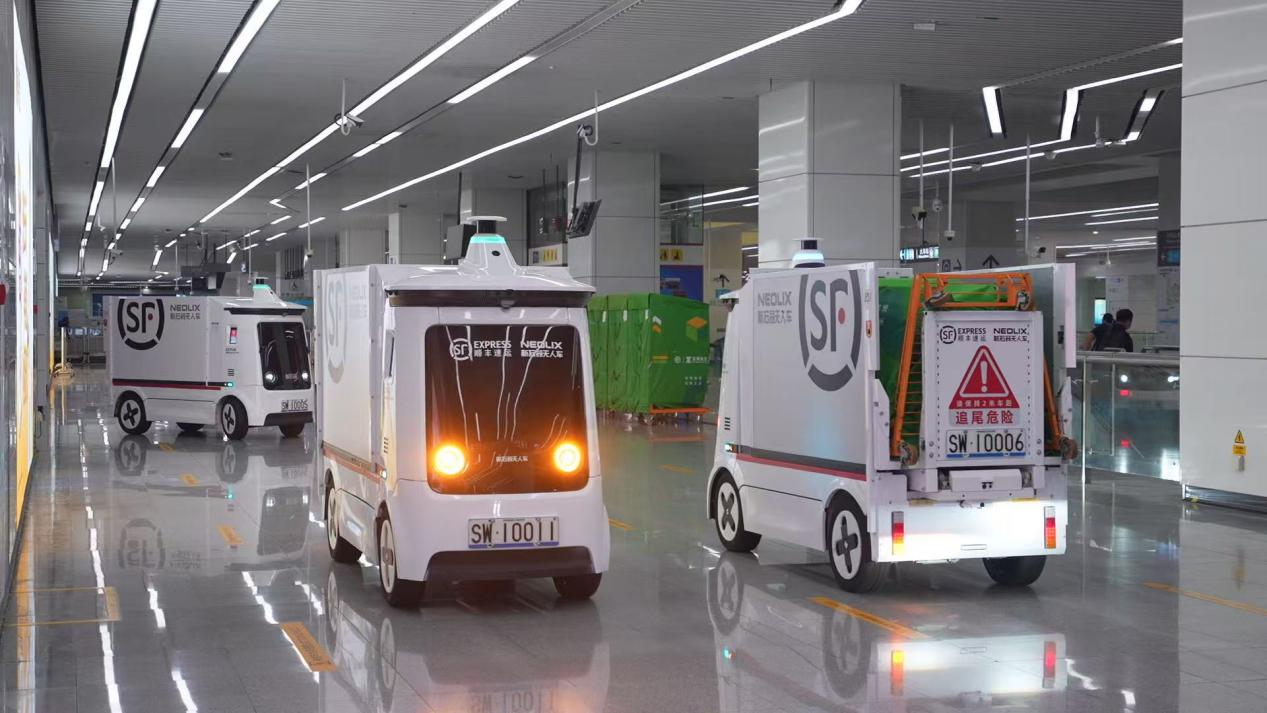
Unmanned delivery vehicles made by autonomous vehicle company Neolix sets off to deliver goods after completing a subway shuttle trip at Futian subway station in Shenzhen, south China's Guangdong Province. (Photo courtesy of the integrated media center of Longgang district)
Shenzhen's innovation can be seen on the ground. Driverless delivery vehicles made by autonomous vehicle company Neolix, powered by a self-developed AI model and Level 4 autonomous driving technology, now handle cold-chain fresh food, retail and medicine delivery alongside express parcels. Chen Xuelin, head of the company's Shenzhen operations, told People's Daily Online that the fleet numbers more than 30,000 vehicles across more than 20 countries and regions, and has cut end-to-end logistics costs by 30 to 50 percent.
These advances rest on a complete ecosystem for intelligent connected vehicles in Shenzhen, spanning legislation, uses, algorithms and manufacturing. In 2022, the city became the first in China to pass legislation governing such vehicles, making it a testing ground for new technologies and products.
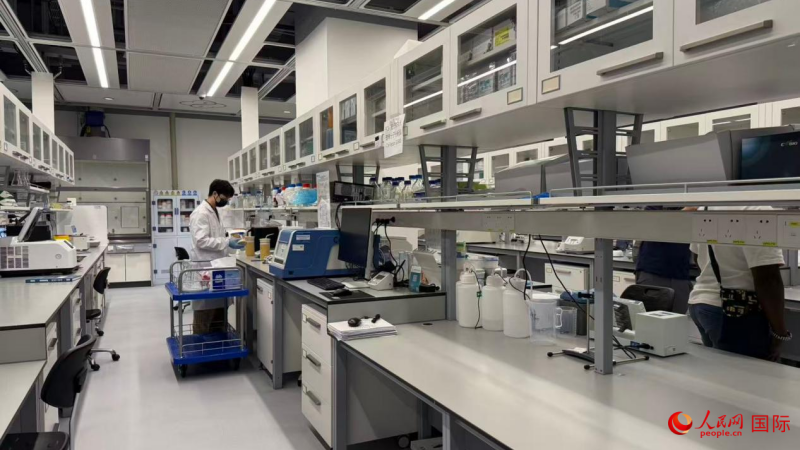
A researcher works at a shared laboratory platform for scientists and doctors provided by the Shenzhen Medical Academy of Research and Translation. (People's Daily Online/Yang Qian)
In Guangming district, the Shenzhen Medical Academy of Research and Translation and the Shenzhen Bay Laboratory have joined forces to build a biomedical innovation chain covering basic research, technological breakthroughs and clinical translation. Their shared public platforms have served hundreds of institutions and logged more than 30,000 user visits, helping bring down research and development costs.
Nearby, Bay Charm, a biomedical incubator run jointly by the Guangming district government and the Shenzhen Bay Laboratory, has helped launch more than 40 companies in three years, said Wu Yulun, its operations manager.
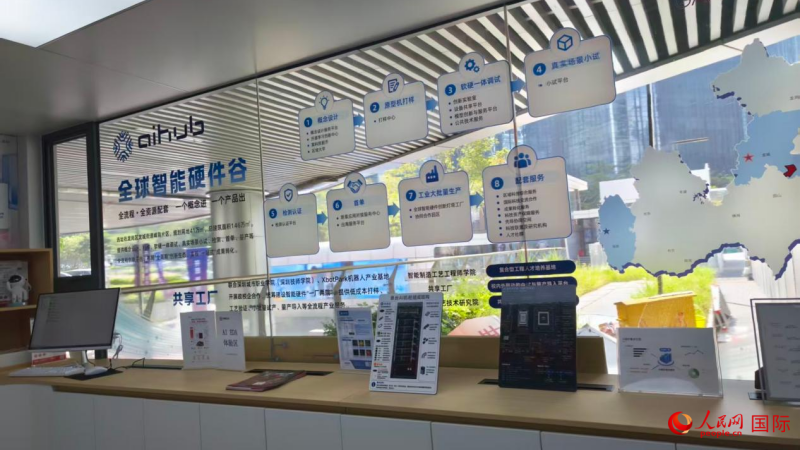
Photo shows a corner of the world's first AI 6S store in Shenzhen, south China's Guangdong Province. (People's Daily Online/Xu Xiangli)
The robot block in Longgang district is home to two world firsts: an AI 6S store and a robot 6S store. Since the AI store opened in July 2025, it has drawn an average of more than 500 visitors a day, 30 percent of them from overseas. Foreign visits to the block have risen from 80,000 to 500,000 a year.
Many foreign buyers now bring product ideas to Shenzhen to turn them into reality. An AI doll that can talk can go from concept to prototype in as little as 48 hours, at a cost of no more than 3,000 yuan (about $450).
"Shenzhen is the first choice for anyone who wants to bring hardware products to market efficiently," said Huang Qiao, head of the AI store.
Longgang's dense network of suppliers at every stage of production lets buyers source components, prototyping and manufacturing in one place.
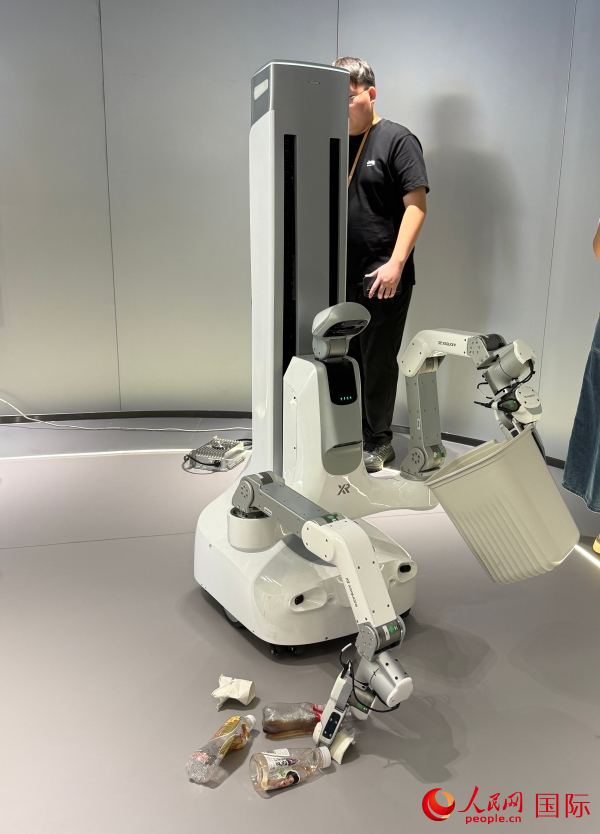
A robot works at X Square Robot Technology (Shenzhen) Co., Ltd. in Shenzhen, south China's Guangdong Province. (People's Daily Online/Yang Qian)
Platforms and mechanisms lay the groundwork, but what matters in the end is whether businesses themselves are thriving. That depends on technology, finance and talent working together.
X Square Robot Technology (Shenzhen) Co., Ltd. released the world's first unified world model, WALL-B, in April. Its household service has been selected for APEC's Case Collection of Digital and AI Empowerment in Asia-Pacific Region at the High-level Dialogue: Leveraging Digital and AI Technologies to Empower the APEC Community.
WeBank, a Shenzhen-based online bank, has served nearly 450 million individual customers and provided credit to more than 8.4 million micro, small and medium-sized enterprises (SMEs).
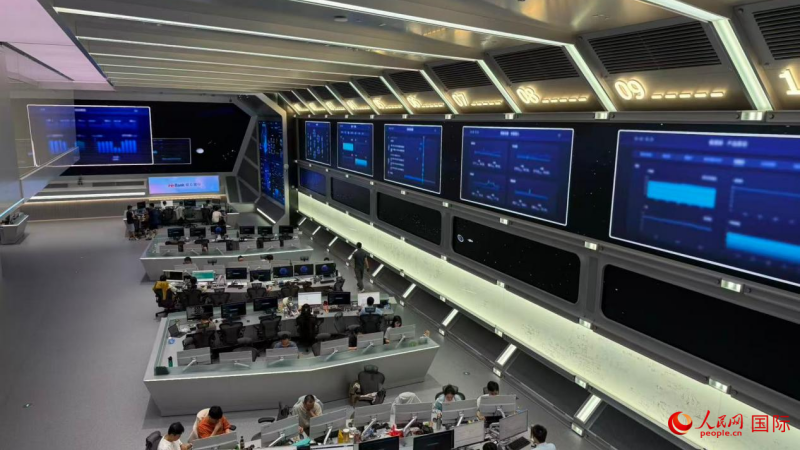
Photo taken on Oct. 23, 2026 shows the office area of WeBank in Qianhai, Shenzhen, south China's Guangdong Province. (People's Daily Online/Yang Qian)
Shenzhen's total R&D spending reached 245 billion yuan (about $34 billion) in 2025, with R&D intensity at 6.67 percent, the highest among Chinese cities. The Shenzhen-Hong Kong-Guangzhou cluster ranked first in WIPO's Global Innovation Index.
Huawei, ZTE, Tencent, BYD and DJI all grew out of Shenzhen's innovation ecosystem, one now supported by 128 proof-of-concept centers and pilot testing bases, and more than 4,000 innovation platforms at national, provincial and municipal levels.
Shenzhen is exporting more than goods. Its service hall for SMEs expanding overseas brokers cooperation deals worth an average of more than 10 billion yuan (about $1.4 billion) a year. WeBank's technology arm has partnered with more than 35 institutions across Belt and Road partner countries — Indonesia, Thailand and the UAE among them — to upgrade their digital banking systems. And the Longgang Energy Eco-Park has taken its waste-to-energy technology to Southeast Asia and Kazakhstan.
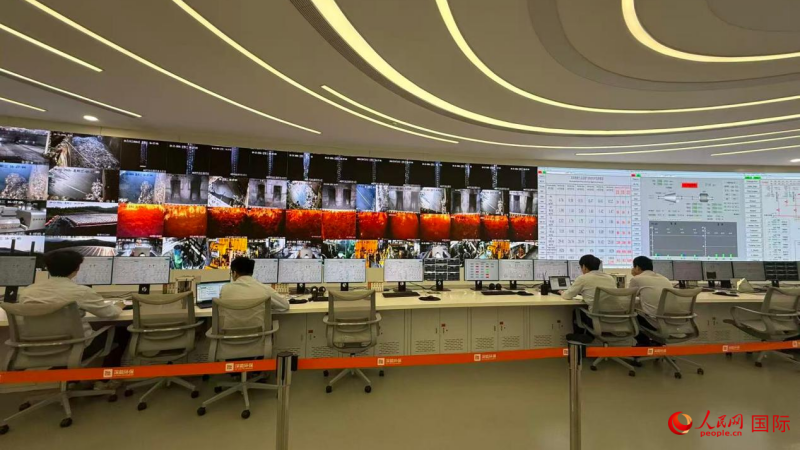
Employees at the Longgang Energy Eco-Park monitors real-time footage of each stage of waste incineration in Shenzhen, south China's Guangdong Province, Oct. 21. (People's Daily Online/Yang Qian)
Innovation is not only Shenzhen's hallmark but also a powerful engine for the Asia-Pacific region to overcome challenges. China stands ready to work with all parties to harness innovation and pave the way for win-win outcomes.

 Follow Us
 Scan the QR Code
