What does "China Haul" reveal about China?
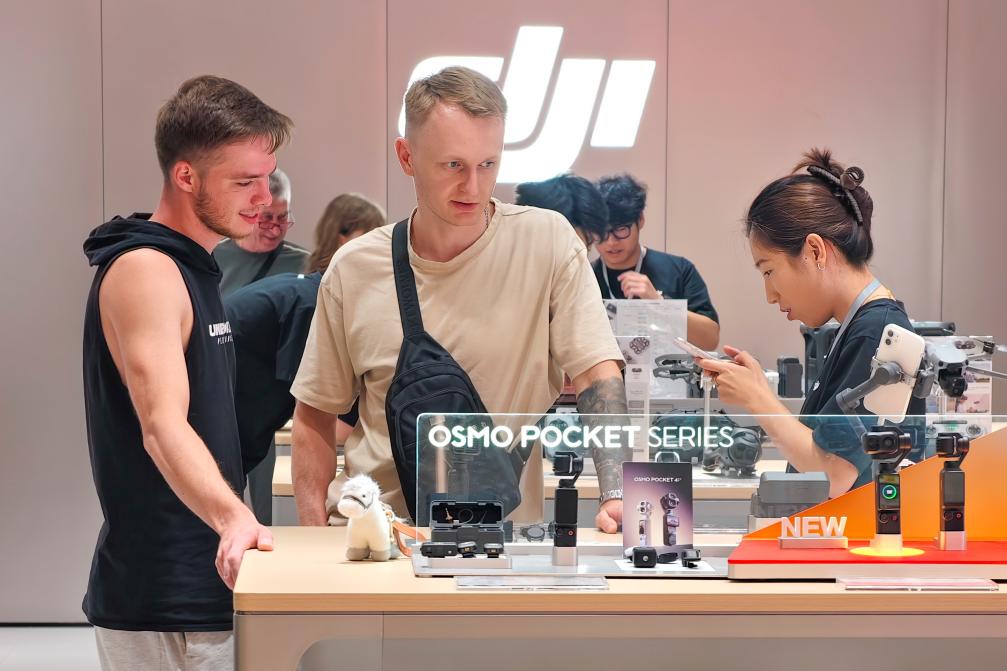
Foreign visitors learn about a pocket-sized gimbal camera at a retail store of Chinese drone maker DJI in Pudong New Area, east China's Shanghai. (Photo/Wang Chu)
A trend known as "China Haul" has recently been gaining momentum across global social media platforms.
Foreign social media users have been enthusiastically sharing their shopping experiences in China, with many saying they plan to bring larger or additional suitcases on their next trips, while others mention that they buy novel products every time they vacation in China.
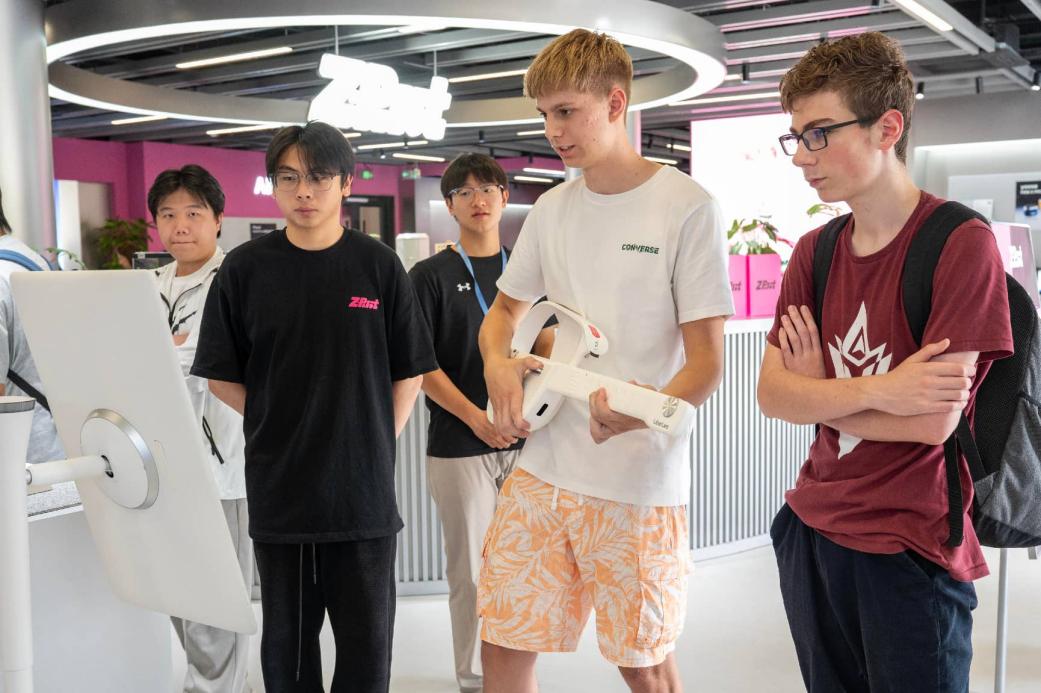
Smart products made in China, from children's smartwatches to virtual reality (VR) headsets, have become popular topics of discussion.
As online buzz continues to grow, visitor numbers are also on the rise. The latest figures from China's National Immigration Administration show that China recorded more than 11.6 million inbound visits by foreign nationals in the third quarter this year, up 15.6 percent year on year. Of these, over 8.99 million were visa-free entries, accounting for 77.5 percent of the total, a year-on-year increase of 24.1 percent.
Behind the "China Haul" phenomenon lies a deeper shift in how the world views Chinese products.
Technology wins hearts through innovation
Foreign influencers' unboxing lists feature not only Guochao (China chic) garments and accessories from Chinese sportswear brands such as Li-Ning and Anta, but also what have become popular Chinese tech specialties, including DJI drones, Insta360 action cameras, and Huawei foldable smartphones.
Immersive experiences with cutting-edge technology are also emerging as a new draw for inbound tourists.
At a 3D-printing flagship store in Nanshan district, Shenzhen, south China's Guangdong province, visitors can scan a QR code to start a personalized 3D-printing experience. In Huaqiangbei, a major electronics hub in Shenzhen, they can browse an array of advanced products, including artificial intelligence (AI)-powered glasses and companion robots.
Tours of smart factories, meanwhile, are becoming increasingly popular, giving visitors a close-up look at China's advanced manufacturing capabilities.
The growing popularity of Chinese tech products reflects foreign visitors' growing recognition of China's innovation capabilities.
Insta360, a Chinese camera and imaging technology company headquartered in Shenzhen, has shipped more than 10 million cameras worldwide. Its first flagship store in New York City attracted more than 1,000 visitors on its first day of operation.
Chinese drone maker DJI has long maintained a leading position in the global consumer drone market with a market share of more than 70 percent, and continues to dominate major markets in North America, Europe, and the Asia-Pacific region.
Chinese tech giant Huawei's foldable smartphones have recorded cumulative global shipments of more than 20 million units, reflecting their continuously growing market acceptance.
Boasting technological prowess and rapid innovation, Chinese brands are reshaping long-held perceptions among consumers worldwide.
A foreign visitor tries out a stringless guitar at Yingyueli Block in Huishan Ancient Town, Wuxi, east China's Jiangsu province. (Photo/Pan Zhengguang)
Chinese aesthetics strike a chord
White Rabbit, a household Chinese candy brand, has unexpectedly become a hit overseas, garnering more than 6 million views on social media.
Its signature red, blue, and white color scheme, together with its clean, crisp lines and patterns, gives the small candy wrapper a distinctive visual identity. It embodies the understated elegance of Chinese aesthetics while offering an instantly recognizable design.
Many foreign internet users have hailed it as a "masterpiece of graphic design," sharing it voluntarily and even creating their own interpretations.
The White Rabbit-themed store on Nanjing Road in east China's Shanghai has also become a popular tourist destination, with foreign visitors accounting for as much as 30 percent of orders during peak seasons.
Behind this growing fascination with Chinese aesthetics is a profound shift in how foreign visitors approach China: they are increasingly experiencing the country with an open mind, free of prejudice and preconceived notions.
From historic sites and intangible cultural heritage to popular snacks and trendy cultural and creative products, everyday consumer goods are becoming vibrant carriers for Chinese culture today, turning the country's rich heritage into everyday experiences that people can touch, collect, and taste.
Chinese aesthetics, blending traditional charm with modern creativity, are winning an increasingly enthusiastic global following.

Foreign visitors shop for cultural and creative souvenirs at a store in Xi'an, northwest China's Shaanxi province. (Photo/Zhang Cheng)
Convenient services encourage visitors to stay and shop
The growing enthusiasm among foreign visitors for shopping in China is underpinned by concrete policy measures that make travel and consumption easier.
China has granted unilateral visa-free entry to nationals of 50 countries and implemented a 240-hour visa-free transit policy for nationals of 57 countries. The latter covers 65 designated ports of entry across 24 provincial-level regions. Such favorable policies are making spontaneous trips to China more accessible than ever.
The consumer experience has also continued to improve. China's departure tax refund policy 2.0 has taken effect, with instant tax refund services being rolled out nationwide. The allowable departure period for instant tax refunds has been extended to 28 days nationwide, making it easier for visitors to shop in one place and leave the country from another.
The rising share of visa-free entries, coupled with increasing convenience in border clearance and shopping services, is making China an increasingly attractive destination where foreign visitors are willing to visit, stay longer, and spend more.
Arriving with empty suitcases and leaving with them full, visitors unpack their bags, revealing a China that combines technological prowess, rich aesthetic traditions, and a genuine commitment to openness, while also showing the world a real China that is modern, lively, and full of the vitality of everyday life.

 Follow Us
 Scan the QR Code
